
နှစ်ပေါင်းများစွာ အလှကုန်ထုပ်ပိုးမှုဆိုင်ရာ ဆုံးဖြတ်ချက်များသည် ရိုးရှင်းသောယုတ္တိဗေဒကို လိုက်နာခဲ့ကြသည်။ ပလတ်စတစ်သည် ပြောင်းလွယ်ပြင်လွယ်ရှိပြီး ကုန်ကျစရိတ်နည်းပါးသည်။ ဖန်သည် ပရီမီယံခံစားမှုကို ပေးစွမ်းသည်။ စက္ကူသည် ရေရှည်တည်တံ့ခိုင်မြဲမှုဆိုင်ရာ ဇာတ်လမ်းများကို ပံ့ပိုးပေးသည်။
အဲဒီယုတ္တိဗေဒက မလုံလောက်တော့ဘူး။
ယနေ့ခေတ်ထုပ်ပိုးမှုသည် စည်းမျဉ်း၊ ဖော်မြူလာတည်ငြိမ်မှုနှင့် ထောက်ပံ့ရေးကွင်းဆက်ထိရောက်မှုတို့၏ တစ်ပြိုင်နက်တည်းဖိအားအောက်တွင် ရှိနေသည်။ ရလဒ်အနေဖြင့်၊အလှကုန်ထုပ်ပိုးမှုကို အမှတ်တံဆိပ်ဆက်စပ်ပစ္စည်းတစ်ခုအဖြစ် မဟုတ်ဘဲ ထုတ်ကုန်၏ဖွဲ့စည်းပုံဆိုင်ရာ တည်တံ့မှု၏ အစိတ်အပိုင်းတစ်ခုအဖြစ် ပြန်လည်စဉ်းစားလျက်ရှိသည်။
ဒီပြောင်းလဲမှုအတွင်းမှာပဲ၊အလှကုန်သံဗူးထုပ်ပိုးမှုခေတ်ရေစီးကြောင်းတစ်ခုအဖြစ် ပြန်လည်ပေါ်ပေါက်လာခြင်း မဟုတ်ပါ။ ပိုမိုတင်းကျပ်သော ကန့်သတ်ချက်များအပေါ် လက်တွေ့တုံ့ပြန်မှုတစ်ခုအဖြစ် ပြန်လည်အကဲဖြတ်နေပါသည်။
ဘာကြောင့် ဒီပြန်လည်အကဲဖြတ်မှုကို အခုလုပ်ဆောင်နေရတာလဲ။
အင်အားသုံးရပ် ပေါင်းစည်းနေသည်။
ပထမဦးစွာ၊စည်းမျဉ်းစည်းကမ်းဆိုင်ရာ တာဝန်ခံမှု. တိုးချဲ့ထုတ်လုပ်သူတာဝန်ယူမှု (EPR)ထို့အပြင် ထုပ်ပိုးစွန့်ပစ်ပစ္စည်းဆိုင်ရာ စည်းမျဉ်းများသည် ပြန်လည်အသုံးပြုနိုင်မှုဆိုင်ရာ တောင်းဆိုမှုများကိုသာမက တကယ့်ပြန်လည်ရယူခြင်းနှင့် ပြန်လည်အသုံးပြုခြင်းစွမ်းဆောင်ရည်ကို ပိုမိုအကဲဖြတ်လာကြသည်။
ဒုတိယ၊ဖော်မြူလာ အာရုံခံနိုင်စွမ်းရေမပါဝင်သော ထုတ်ကုန်များ၊ သဘာဝပါဝင်ပစ္စည်းများနှင့် လျှော့ချထားသော တာရှည်ခံစနစ်များ ကြီးထွားလာမှုကြောင့် အောက်ဆီဂျင်၊ အလင်းနှင့် အစိုဓာတ်ထိတွေ့မှုအပေါ် ခံနိုင်ရည် လျော့နည်းလာပါသည်။ ထုပ်ပိုးမှုစွမ်းဆောင်ရည်သည် ယခုအခါ ထုတ်ကုန်ထိရောက်မှုနှင့် တည်ငြိမ်မှုဆိုင်ရာ တောင်းဆိုချက်များကို တိုက်ရိုက်အကျိုးသက်ရောက်စေပါသည်။
တတိယ၊ထောက်ပံ့ရေးကွင်းဆက် ရိုးရှင်းစေခြင်း။ အမှတ်တံဆိပ်များသည် ပစ္စည်းရှုပ်ထွေးမှုကို လျှော့ချနေကြသည်။ ပိုလီမာများ လျော့နည်းသွားသည်။ ပေါင်းစပ်ဖွဲ့စည်းပုံများ လျော့နည်းသွားသည်။ ရင်းမြစ်ရှာဖွေခြင်းနှင့် လိုက်နာမှု ပိုမိုခန့်မှန်းနိုင်သည်။
ဒီဖိအားတွေက အကြောင်းရင်းကို ရှင်းပြပါတယ်သတ္တုအလှကုန်ဘူးများစားပွဲပေါ် ပြန်ရောက်နေပါပြီ။
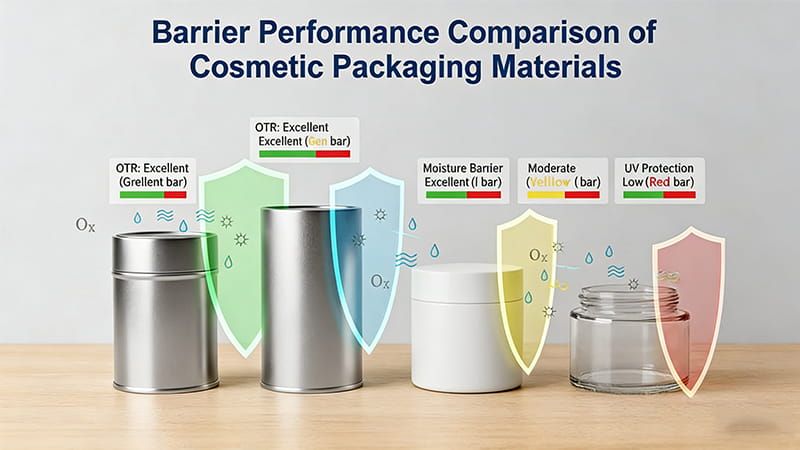
အတားအဆီးစွမ်းဆောင်ရည်အလှကုန်ဘူးတွေက တိုင်းတာနိုင်တဲ့တန်ဖိုးကို ဖန်တီးပေးတဲ့နေရာ
“ကြာရှည်ခံသောသက်တမ်း” ကို မကြာခဏ ကိုးကားလေ့ရှိသော်လည်း ပမာဏအားဖြင့် တွက်ချက်မှု ရှားပါးပါသည်။
လက်တွေ့မှာ သက်တမ်းက အပေါ်မှာ မူတည်ပါတယ်အတားအဆီးအင်ဂျင်နီယာပိတ်ဒီဇိုင်းတင်မကပါဘူး။ သံဖြူပြားနှင့် အလူမီနီယမ်တို့သည် ကောင်းမွန်စွာ ထုတ်လုပ်ပြီး အတွင်းပိုင်းတွင် အုပ်ထားသည့်အခါ အောက်ဆီဂျင်ပို့လွှတ်မှု သုညနီးပါးရှိသည်။
အောက်ဆီဒေးရှင်း-အာရုံခံနိုင်သော တက်ကြွပါဝင်ပစ္စည်းများအတွက်၊ သတ္တုကွန်တိန်နာများရှိ ပြိုကွဲမှုနှုန်းသည် စံ HDPE ထုပ်ပိုးမှုထက် ၂-၃ ဆ နှေးကွေးနိုင်သည်၊ထုတ်ဝေထားသောထုပ်ပိုးမှုအတားအဆီးလေ့လာမှုများတန်ဖိုးမြင့် ဖော်မြူလာများအတွက်၊ ဤကွာခြားချက်သည် တည်ငြိမ်မှု ပျက်ကွက်မှု နည်းပါးခြင်း၊ ဖောက်သည် တိုင်ကြားမှု နည်းပါးခြင်းနှင့် အသုံးပြုနိုင်သော သက်တမ်း ပိုရှည်ခြင်းတို့ကို ဖြစ်ပေါ်စေပါသည်။
ဒီအားသာချက်က အောက်ပါတို့အတွက် အသင့်တော်ဆုံးပါပဲ-
- ဆီအခြေခံ လိမ်းဆေးများနှင့် လိမ်းဆေးများ
- အစိုင်အခဲရေမွှေးများ
- ရေဓာတ်မပါဝင်သော အသားအရေထိန်းသိမ်းမှု တုတ်ချောင်းများ
- တက်ကြွစွာပါဝင်သော သို့မဟုတ် တာရှည်ခံပစ္စည်း အနည်းဆုံးပါဝင်သော ဖော်မြူလာများ
သတ္တုသည် မူရင်းအားဖြင့် ဓာတုဗေဒအရ အစွမ်းမဲ့မဟုတ်ပါ။အစားအသောက်အဆင့် သို့မဟုတ် အလှကုန်အတည်ပြုထားသော အတွင်းပိုင်းအလွှာများများသည် မရှိမဖြစ်လိုအပ်ပါသည်။ ၎င်းတို့သည် ကုန်ကျစရိတ်နှင့် လုပ်ငန်းစဉ်အဆင့်များကို ထည့်သွင်းပေးသော်လည်း ၎င်းတို့ကို လျစ်လျူရှုခြင်းသည် လက်မခံနိုင်သော ဖော်မြူလာအန္တရာယ်ကို ဖြစ်ပေါ်စေပါသည်။
အတားအဆီးဂုဏ်သတ္တိ နှိုင်းယှဉ်ချက် (ညွှန်ပြချက်)
| ပစ္စည်း | အောက်ဆီဂျင် ထုတ်လွှတ်မှုနှုန်း (OTR၊ cc/m²/နေ့) | အစိုဓာတ်အတားအဆီး | ခရမ်းလွန်ရောင်ခြည်ကာကွယ်မှု |
|---|---|---|---|
| သံဖြူပြား | < ၀.၀၅ | အလွန်ကောင်းမွန်သည် | ပြီးမြောက်ပါပြီ |
| အလူမီနီယမ် | < ၀.၁ | အလွန်ကောင်းမွန်သည် | ပြီးမြောက်ပါပြီ |
| PCR PET | ၅-၁၀ | ကောင်းသည် | တစ်စိတ်တစ်ပိုင်း |
| HDPE | ၁၅-၃၀ | အလယ်အလတ် | နိမ့်ကျသော |
| ဖန် (ကြည်လင်သော) | ~0 | အလွန်ကောင်းမွန်သည် | နိမ့် (အလွှာမအုပ်ထားလျှင်) |
OTR တန်ဖိုးများသည် ညွှန်ပြချက်များဖြစ်ပြီး အထူနှင့်ဖွဲ့စည်းပုံအလိုက် ကွဲပြားသည်။
ကြာရှည်ခံမှုနှင့် ဖြန့်ဖြူးမှုအန္တရာယ်
ထုပ်ပိုးမှုချို့ယွင်းမှုများသည် စင်များပေါ်တွင် ရှားရှားပါးပါးသာ ဖြစ်ပွားလေ့ရှိသည်။ ၎င်းတို့သည် သယ်ယူပို့ဆောင်ရာတွင် ဖြစ်ပွားလေ့ရှိသည်။
ပလတ်စတစ်သည် အပူနှင့် ဝန်အောက်တွင် ပုံပျက်သွားသည်။ ဖန်သည် ထိခိုက်မှုအောက်တွင် ကွဲသွားသည်။သတ္တုအလှကုန်ဘူးများစိတ်ဖိစီးမှုကို စုပ်ယူပြီး ပုံသဏ္ဍာန်ကို ထိန်းသိမ်းပါ။
ကမ္ဘာတစ်ဝှမ်းသို့ တင်ပို့ရောင်းချသော သို့မဟုတ် ပူနွေးစိုစွတ်သောဒေသများတွင် ရောင်းချသော အမှတ်တံဆိပ်များအတွက် ဤစက်ပိုင်းဆိုင်ရာတည်ငြိမ်မှုသည် ဒုတိယထုပ်ပိုးမှုလိုအပ်ချက်များကို လျှော့ချပေးပြီး ပျက်စီးမှုနှုန်းကို လျှော့ချပေးသည်။ ထုတ်လုပ်မှုရှုထောင့်မှကြည့်လျှင် သတ္တုကွန်တိန်နာများသည် ခန့်မှန်းနိုင်သော အရည်အသွေးထိန်းချုပ်မှုကိုလည်း ပေးစွမ်းသည် - ဖွဲ့စည်းပြီးနောက် ပုံပျက်ခြင်းမရှိပါ။
ဤနေရာတွင် ကြာရှည်ခံမှုသည် အလှအပမဟုတ်ပါ။ လုပ်ဆောင်နိုင်မှုအပေါ် မူတည်ပါသည်။
သန့်ရှင်းရေး၊ ပြန်လည်အသုံးပြုခြင်းနှင့် လက်တွေ့ကန့်သတ်ချက်များ
သတ္တုဘူးများတွင် ချောမွေ့ပြီး ရေစိမ့်ဝင်ခြင်းမရှိသော မျက်နှာပြင်များပါရှိပြီး သန့်ရှင်းရေးလုပ်ရလွယ်ကူပါသည်။ ၎င်းသည် အရေပြား သို့မဟုတ် နှုတ်ခမ်းပေါ်တွင် တိုက်ရိုက်လိမ်းထားသော ထုတ်ကုန်များအတွက် ပိုမိုမြင့်မားသော သန့်ရှင်းရေးစံနှုန်းများကို ပံ့ပိုးပေးပါသည်။
သို့သော် စားသုံးသူအပြုအမူကို ထိန်းချုပ်၍မရပါ။ ပြန်လည်အသုံးပြုခြင်းနှင့် သန့်ရှင်းရေးလုပ်ငန်းစဉ်များ ကွဲပြားပါသည်။
သို့သော် အန္တရာယ်ရှုထောင့်မှကြည့်လျှင်၊ အလှကုန်သံဗူးများသည် liners၊ press-fit seals နှင့် shrink bands ကဲ့သို့သော ခိုးဝှက်ထည့်သွင်းနိုင်သော အင်္ဂါရပ်များကို ပံ့ပိုးပေးပြီး အမှန်တကယ်နှင့် ထင်မြင်ယူဆထားသော ညစ်ညမ်းမှုအန္တရာယ် နှစ်မျိုးလုံးကို လျှော့ချပေးသည်။
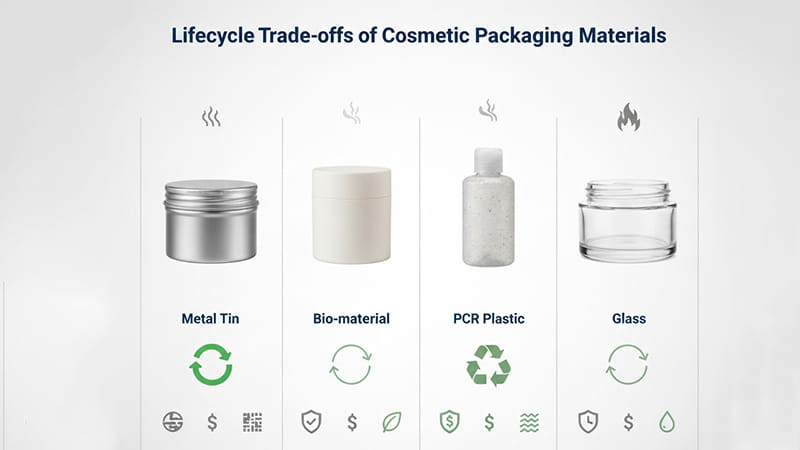
ရေရှည်တည်တံ့ခိုင်မြဲမှုဆိုင်ရာ အပေးအယူများ: တစ်သက်တာသံသရာ အပြည့်အစုံ မေးခွန်း
သတ္တုထုပ်ပိုးမှုသည် သက်တမ်းကုန်ဆုံးချိန်တွင် အထူးကောင်းမွန်စွာ စွမ်းဆောင်ရည်ရှိသည်။ သံဖြူပြားနှင့် အလူမီနီယမ်တို့ကို ကျယ်ကျယ်ပြန့်ပြန့် ပြန်လည်အသုံးပြုနိုင်ပြီး အနည်းဆုံးပျက်စီးမှုဖြင့် ပိတ်ထားသောကွင်းဆက်များဖြင့် လည်ပတ်နိုင်သည်။ ဒေသများစွာတွင် ၎င်းတို့၏တကယ့်ပြန်လည်အသုံးပြုနှုန်းထားများ“ပြန်လည်အသုံးပြုနိုင်သော” ဟု တံဆိပ်ကပ်ထားသော ပလတ်စတစ်များ၏ ပမာဏထက် ကျော်လွန်သည်။
သို့သော်၊ သတ္တုထုတ်လုပ်မှုသည် စွမ်းအင်များစွာအသုံးပြုရသည်။ထုတ်လုပ်မှုအဆင့် ကာဗွန်ခြေရာPCR ပလတ်စတစ်များ သို့မဟုတ် စက္ကူအခြေခံ အစားထိုးပစ္စည်းများနှင့် နှိုင်းယှဉ်ပါက သတ္တုသည် မကြာခဏ စွမ်းဆောင်ရည် နိမ့်ကျလေ့ရှိသည်။
၎င်းက အကဲဖြတ်ခြင်း နယ်နိမိတ်ကို အရေးကြီးစေသည် - ဤအချက်ကို အလေးပေးဖော်ပြထားသည်
နိုင်ငံတကာထုပ်ပိုးမှု ရေရှည်တည်တံ့မှု မူဘောင်များ.
ရေရှည်တည်တံ့မှုကို တိုင်းတာပါသလားကလေးဘဝမှ သေသည်အထိသို့မဟုတ်ကလေးဘဝမှ ပြန်လည်အသုံးပြုခြင်းအထိ?
ယခင်တစ်ခုသည် သတ္တုကို အားနည်းချက်ဖြစ်စေနိုင်သည်။
နောက်ဆုံးတစ်ခုက ၎င်း၏ အဓိကအစွမ်းသတ္တိကို မီးမောင်းထိုးပြသည်။
သက်တမ်းစက်ဝန်း လဲလှယ်မှု နှိုင်းယှဉ်ချက်
| အကဲဖြတ်ခြင်းဆိုင်ရာ ရှုထောင့် | သတ္တုဘူးများ | ဇီဝပစ္စည်းများ | PCR ပလတ်စတစ်များ | ဖန် |
|---|---|---|---|---|
| ထုတ်လုပ်မှု ကာဗွန်ခြေရာ | အလယ်အလတ်-မြင့်မားသော | အနိမ့်-အလတ် | နိမ့်ကျသော | မြင့်မားသော |
| ပြန်လည်အသုံးပြုခြင်း ထိရောက်မှု | အလွန်မြင့်မားသည် | လီမိတက် (စက်မှုလုပ်ငန်းသုံး မြေဩဇာ) | အလယ်အလတ် | အလွန်မြင့်မားသည် |
| ပစ္စည်းယိုယွင်းပျက်စီးခြင်း | အနည်းဆုံး | မြင့်မားသော | အလယ်အလတ်-မြင့်မားသော | အနည်းဆုံး |
| သက်တမ်းကာကွယ်မှု | အလွန်ကောင်းမွန်သည် | အလယ်အလတ် | ကောင်းသည် | အလွန်ကောင်းမွန်သည် |
| ဒီဇိုင်းနှင့် အမှတ်တံဆိပ်ပြောင်းလွယ်ပြင်လွယ်ရှိမှု | မြင့်မားသော | အလယ်အလတ် | အလယ်အလတ် | အလယ်အလတ် |
| ကုန်ကျစရိတ် (နှိုင်းရ) | $$ | $$ | $ | $$$ |
မက်ထရစ်အားလုံးတွင် ရုပ်ဝတ္ထုအကျိုးအမြတ်မရှိပါ။ အပေးအယူလုပ်ခြင်းများကို မလွှဲမရှောင်သာ ပြုလုပ်နိုင်ပါသည်။
ဒီဇိုင်းလွတ်လပ်ခွင့်နှင့် ကိရိယာတန်ဆာပလာလက်တွေ့
သတ္တုသံဗူးများသည် ဖောင်းကြွခြင်း၊ နုတ်ယူခြင်း၊ မျက်နှာပြင်အသွင်အပြင်အပြီးသတ်ခြင်းနှင့် အရည်အသွေးမြင့်ပုံနှိပ်ခြင်းတို့ကို ပံ့ပိုးပေးပါသည်။ ဤလုပ်ငန်းစဉ်များသည် ရင့်ကျက်ပြီး ယုံကြည်စိတ်ချရသည်။
သတ္တုက မပေးစွမ်းနိုင်တာက ကတိကဝတ်မပါဘဲ အကန့်အသတ်မရှိ ပြောင်းလွယ်ပြင်လွယ်ရှိမှုပါ။
စိတ်ကြိုက်ပုံသဏ္ဍာန်များအတွက် ကိရိယာတန်ဆာပလာများ လိုအပ်ပါသည်။ ကိရိယာတန်ဆာပလာများသည် ထုထည်လိုအပ်သည်။ နောက်ပိုင်းအဆင့် ဒီဇိုင်းပြောင်းလဲမှုများသည် ကုန်ကျစရိတ်များပါသည်။
ထုတ်လုပ်မှုရှုထောင့်မှကြည့်လျှင် ၎င်းသည် တည်ငြိမ်သော SKU များနှင့် ရေရှည်စီမံကိန်းရေးဆွဲထားသော အမှတ်တံဆိပ်များကို ဦးစားပေးပါသည်။ သတ္တုထုပ်ပိုးမှု၏ အကျိုးကျေးဇူးများဆုံးဖြတ်ချက်ချနိုင်သော ထုတ်ကုန်ဗျူဟာမြန်ဆန်စွာ ထပ်ခါတလဲလဲ လုပ်ဆောင်ခြင်း မဟုတ်ပါ။
Brand တွေ မကြာခဏ လျှော့တွက်လေ့ရှိတဲ့ အရာများ
လက်တွေ့ကျသော ကန့်သတ်ချက်အနည်းငယ်ကို ရှင်းလင်းစွာ အသိအမှတ်ပြုသင့်သည်-
- စတော့ပလတ်စတစ်ထုပ်ပိုးမှုနှင့်နှိုင်းယှဉ်ပါက ပို့ဆောင်ချိန်ပိုကြာသည်
- အနည်းဆုံး မှာယူမှု ပမာဏကို ပုံသေသတ်မှတ်ထားသည်
- အတွင်းပိုင်းအပေါ်ယံလွှာသတ်မှတ်ချက်များကို စောစီးစွာ အပြီးသတ်ခြင်း
အတွေ့အကြုံရှိအလှကုန်သံဗူးထုတ်လုပ်သူများပွတ်တိုက်မှုကို လျှော့ချနိုင်သော်လည်း ဤကန့်သတ်ချက်များသည် ပျောက်ကွယ်သွားခြင်းမရှိပါ။ သတ္တုထုပ်ပိုးမှုသည် တီထွင်ဖန်တီးမှုထက် စီစဉ်မှုကို ဦးစားပေးသည်။
လက်တွေ့ကျသောအလှကုန်ထုပ်ပိုးမှုဆုံးဖြတ်ချက် မူဘောင်
တစ်ကမ္ဘာလုံးဆိုင်ရာ ဖြေရှင်းချက် မရှိပါဘူး - ပိုကောင်းတဲ့ ညှိနှိုင်းမှုပဲ ရှိပါတယ်။
- သင့်ရဲ့ ဦးစားပေးက တကယ်လို့ထိခိုက်လွယ်သော သို့မဟုတ် တက်ကြွသော ဖော်မြူလာများအတွက် အမြင့်ဆုံးကာကွယ်မှု, အလှကုန်ဘူးများယှဉ်နိုင်စရာမရှိသော အတားအဆီးစွမ်းဆောင်ရည်ကို ပေးဆောင်သည်။
- သင့်ရဲ့ ဦးစားပေးက တကယ်လို့အနိမ့်ဆုံး ကနဦး ကာဗွန်ခြေရာနှင့် ကုန်ကျစရိတ်, PCR ပလတ်စတစ်ထုပ်ပိုးမှုပိုမိုသင့်လျော်နိုင်ပါသည်။
- သင့်ရဲ့ ဦးစားပေးက တကယ်လို့အစွမ်းမဲ့ပစ္စည်းအပြုအမူဖြင့် ဇိမ်ခံစင်၏သက်ရောက်မှု, ဖန်ထုပ်ပိုးမှုထောက်ပံ့ပို့ဆောင်ရေးက ခွင့်ပြုသည့်အခါ သက်ဆိုင်မှုရှိနေဆဲဖြစ်သည်။
- သင့်ရဲ့ ဦးစားပေးက တကယ်လို့ဇီဝပျက်စီးမှုမြန်ဆန်ခြင်းနှင့် ထုတ်ကုန်သက်တမ်း တိုတောင်းခြင်း, အသိအမှတ်ပြုလက်မှတ်ရဇီဝပစ္စည်းထုပ်ပိုးမှုသင့်လျော်နိုင်ပါသည်။
သတ္တုသည် လက်တွေ့ကျသော အလယ်အလတ်အဆင့်ကို ရယူထားသည်- တာရှည်ခံခြင်း၊ ပြန်လည်အသုံးပြုနိုင်ခြင်း၊ အကာအကွယ်ပေးခြင်းနှင့် လည်ပတ်မှုအရ ခန့်မှန်းနိုင်ခြင်း။
အဆုံးသတ်ရှုထောင့်
ဒီပြောင်းလဲမှုဟာ အတိတ်လွမ်းဆွတ်မှု ဒါမှမဟုတ် အလှအပနဲ့ မပတ်သက်ပါဘူး။
၎င်းသည် ထုပ်ပိုးမှု၏ ပိုမိုကျယ်ပြန့်သော ပြန်လည်စဉ်းစားမှုကို ထင်ဟပ်စေသည်အခြေခံအဆောက်အအုံ, အလှဆင်ပစ္စည်း မဟုတ်ပါ။
မျက်နှာပြင်အဆင့် အမှတ်တံဆိပ်ဒြပ်စင်ထက် ထုတ်ကုန်သမာဓိ၏ အရေးကြီးသောအလွှာတစ်ခုအဖြစ် ထုပ်ပိုးမှုကို ရှုမြင်သော အမှတ်တံဆိပ်များအတွက် ပြန်လည်အကဲဖြတ်ရန် အချိန်တန်ပါပြီ။ အလှကုန်သံဗူးထုပ်ပိုးမှုပိုမိုလက်တွေ့ကျပြီး အတွေ့အကြုံကို အခြေခံသော ရှုထောင့်ဖြင့်။
သတ္တုက ပြီးပြည့်စုံလို့ မဟုတ်ပါဘူး။
ဒါပေမယ့် ဖိအားအောက်မှာတော့ တသမတ်တည်း ရှိနေလို့ပါ။
အမြဲမေးလေ့ရှိသောမေးခွန်းများ
Q1: အလှကုန်ဗူးများသည် ဖော်မြူလာအားလုံးအတွက် သင့်လျော်ပါသလား။
မလိုအပ်ပါ။ ရေအခြေခံ သို့မဟုတ် အလွန်အမင်း ဓာတ်ပြုမှုဖြစ်စေသော ဖော်မြူလာများသည် အထူးပြုလုပ်ထားသော အပေါ်ယံလွှာများ သို့မဟုတ် အစားထိုးပစ္စည်းများ လိုအပ်နိုင်သည်။
Q2: သတ္တုဘူးများသည် သက်တမ်းကို အမြဲတမ်း တိုးစေပါသလား။
အတားအဆီးဂုဏ်သတ္တိများ ဖော်မြူလာ၏ အာရုံခံနိုင်စွမ်းနှင့် ကိုက်ညီပြီး သင့်လျော်သော အတွင်းပိုင်းအပေါ်ယံလွှာများ လိမ်းသည့်အခါတွင်သာ။
Q3: အလှကုန်ဘူးတွေက ပလတ်စတစ်ထက် ပိုပြီး ရေရှည်တည်တံ့နိုင်ပါသလား။
၎င်းသည် ရေရှည်တည်တံ့မှုကို ထုတ်လုပ်မှုထုတ်လွှတ်မှုဖြင့် တိုင်းတာခြင်း သို့မဟုတ်ရေရှည်ပစ္စည်းစက်ဝိုင်း။
Q4: သတ္တုသံဗူးတွေကို ပြောင်းသုံးတဲ့အခါ အကြီးမားဆုံးအန္တရာယ်က ဘာလဲ။
ဖွံ့ဖြိုးတိုးတက်မှုအစောပိုင်းတွင် ပို့ဆောင်ချိန်၊ ကိရိယာကတိကဝတ်နှင့် အပေါ်ယံလွှာလိုအပ်ချက်များကို လျှော့တွက်ခြင်း။
ကိုးကားချက်များ
- ၂၀၂၄ ခုနှစ်တွင် ကိုယ်ရေးကိုယ်တာစောင့်ရှောက်မှုတွင် သတ္တုထုပ်ပိုးမှု၏ အနာဂတ် – smithers.com
- ထုပ်ပိုးခြင်းနှင့် ထုပ်ပိုးမှုစွန့်ပစ်ပစ္စည်း စည်းမျဉ်း (PPWR) – commission.europa.eu
- ထုပ်ပိုးမှုနှင့် ပတ်ဝန်းကျင် – iso.org
- ထုပ်ပိုးမှု ရေရှည်တည်တံ့ခိုင်မြဲမှုဆိုင်ရာ လမ်းညွှန်ချက်များ – cosmeticeurope.eu
ပို့စ်တင်ချိန်: ၂၀၂၆ ခုနှစ်၊ ဇန်နဝါရီလ ၂၃ ရက်
