
PJ115 Square Cream Jar PP Cosmetic Packaging OEM ODM
Selling Points
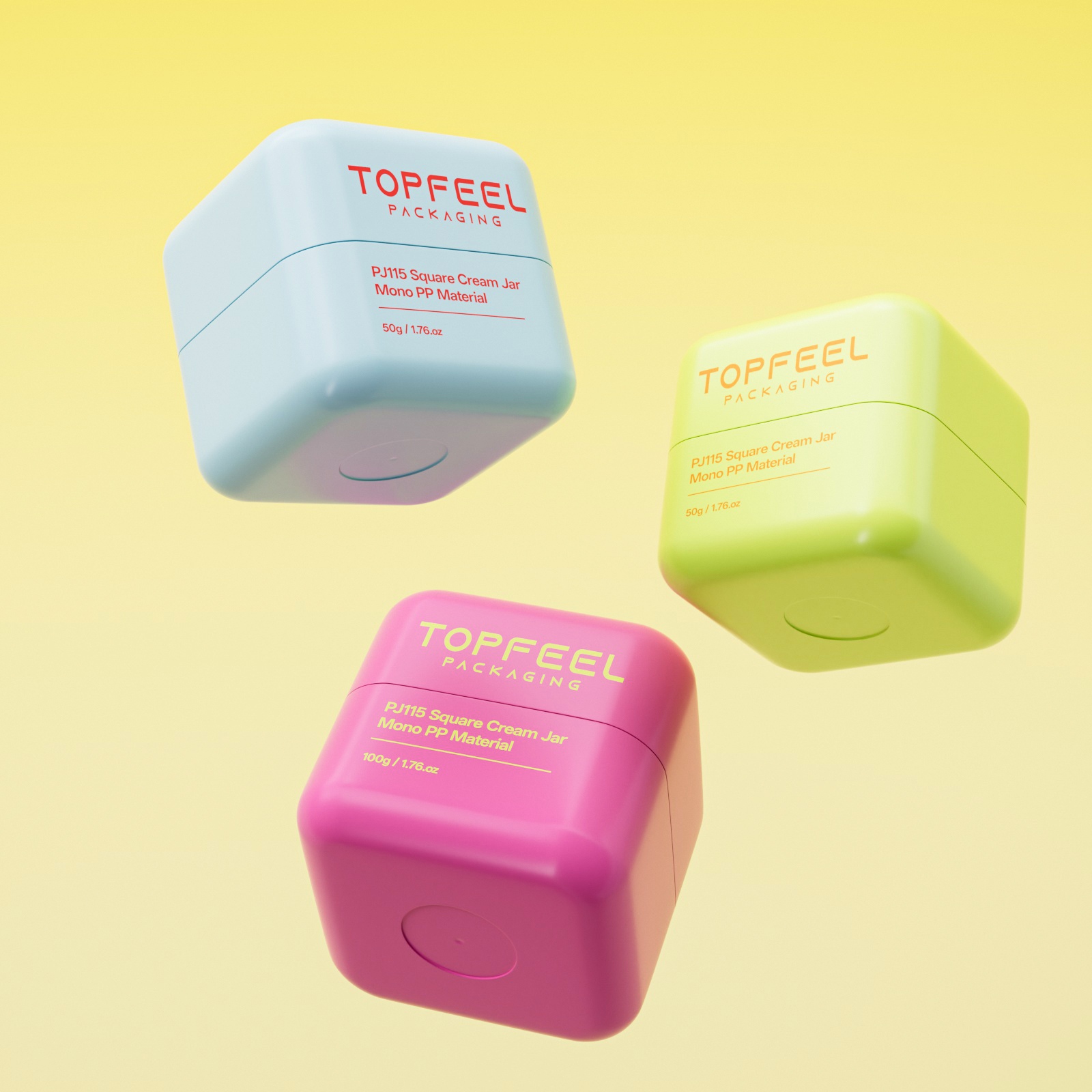
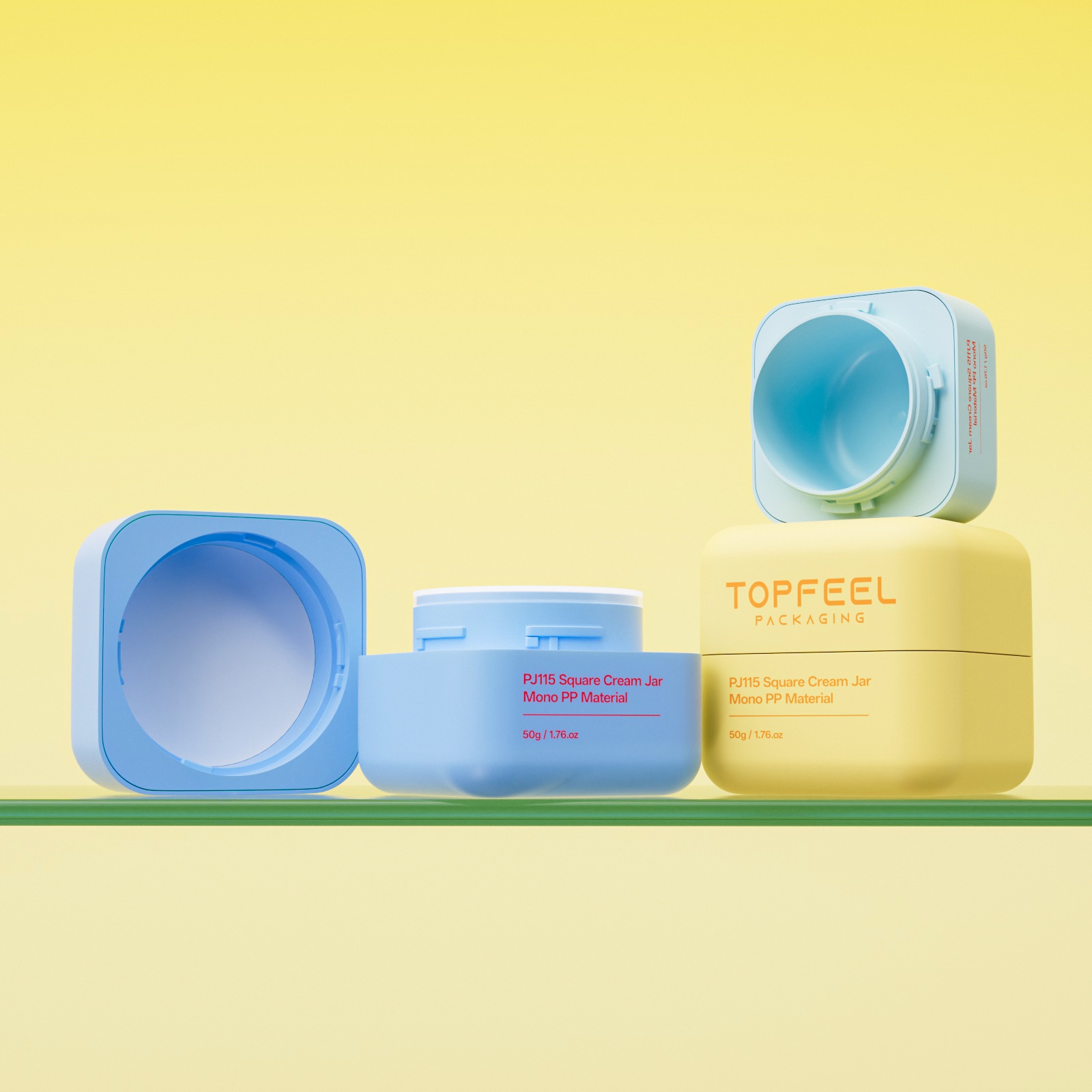
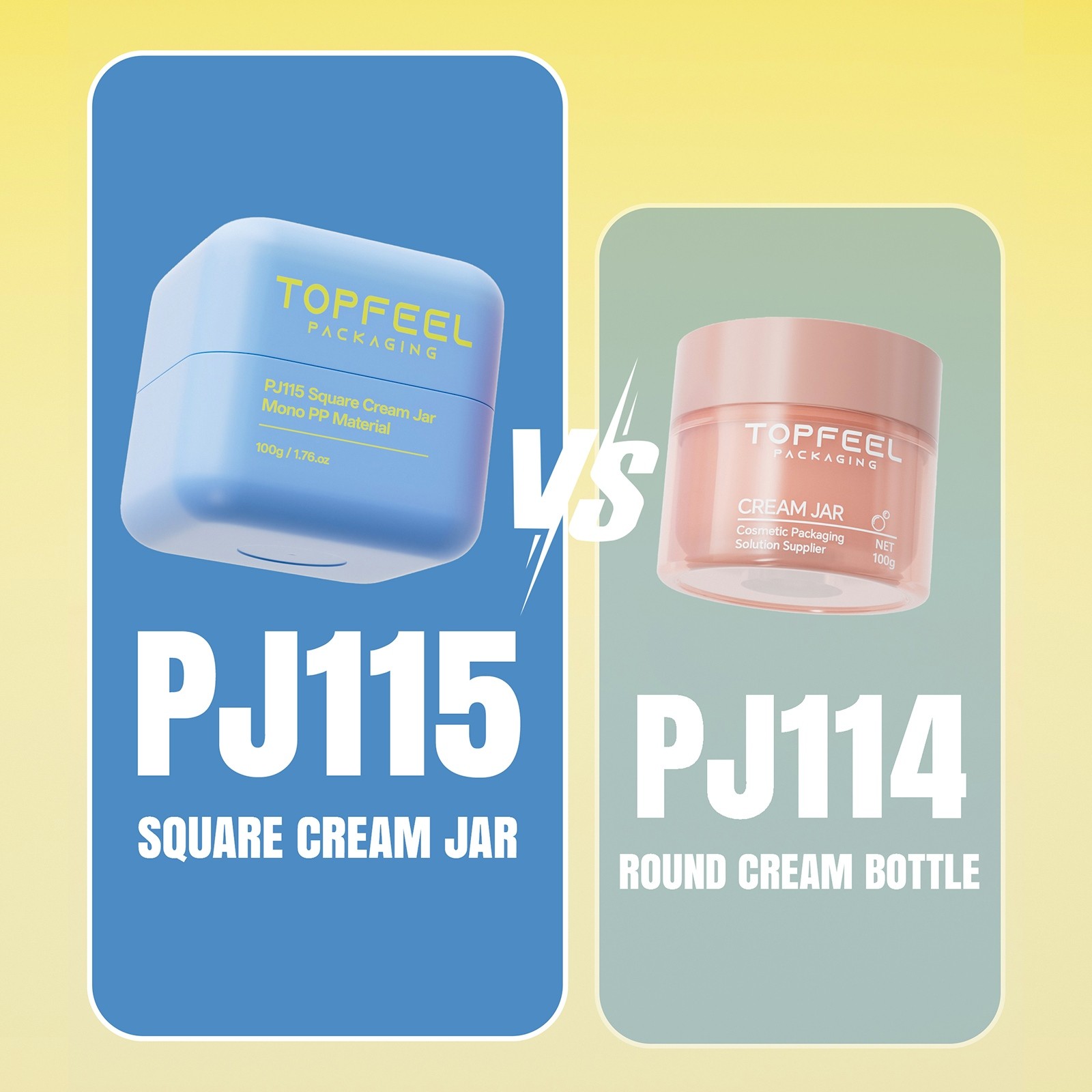
Square form with rounded corners. The PJ115's geometry gives it a contemporary look without sharp edges that create tooling complexity or handling issues during filling. It reads as structured and modern without being difficult to use.
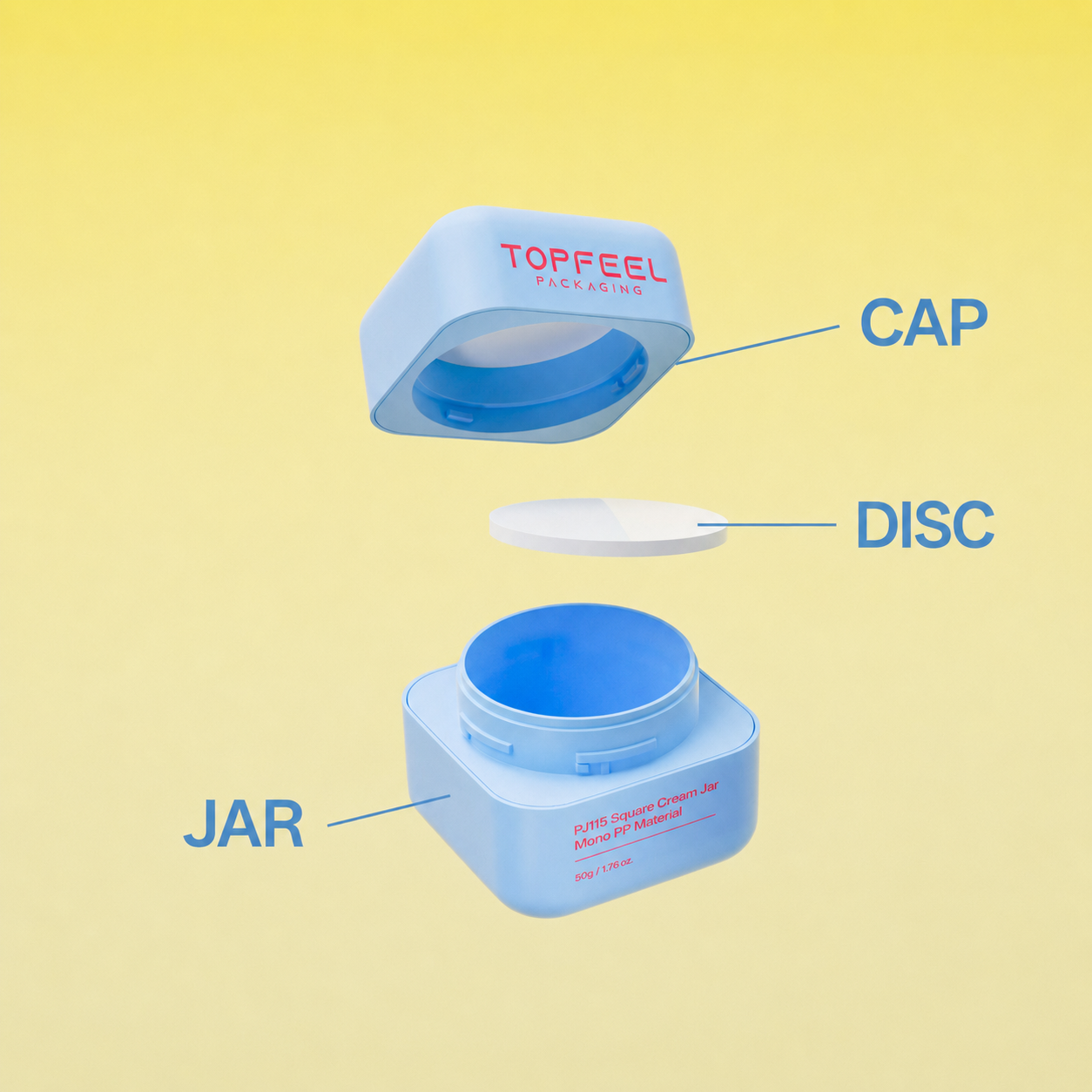
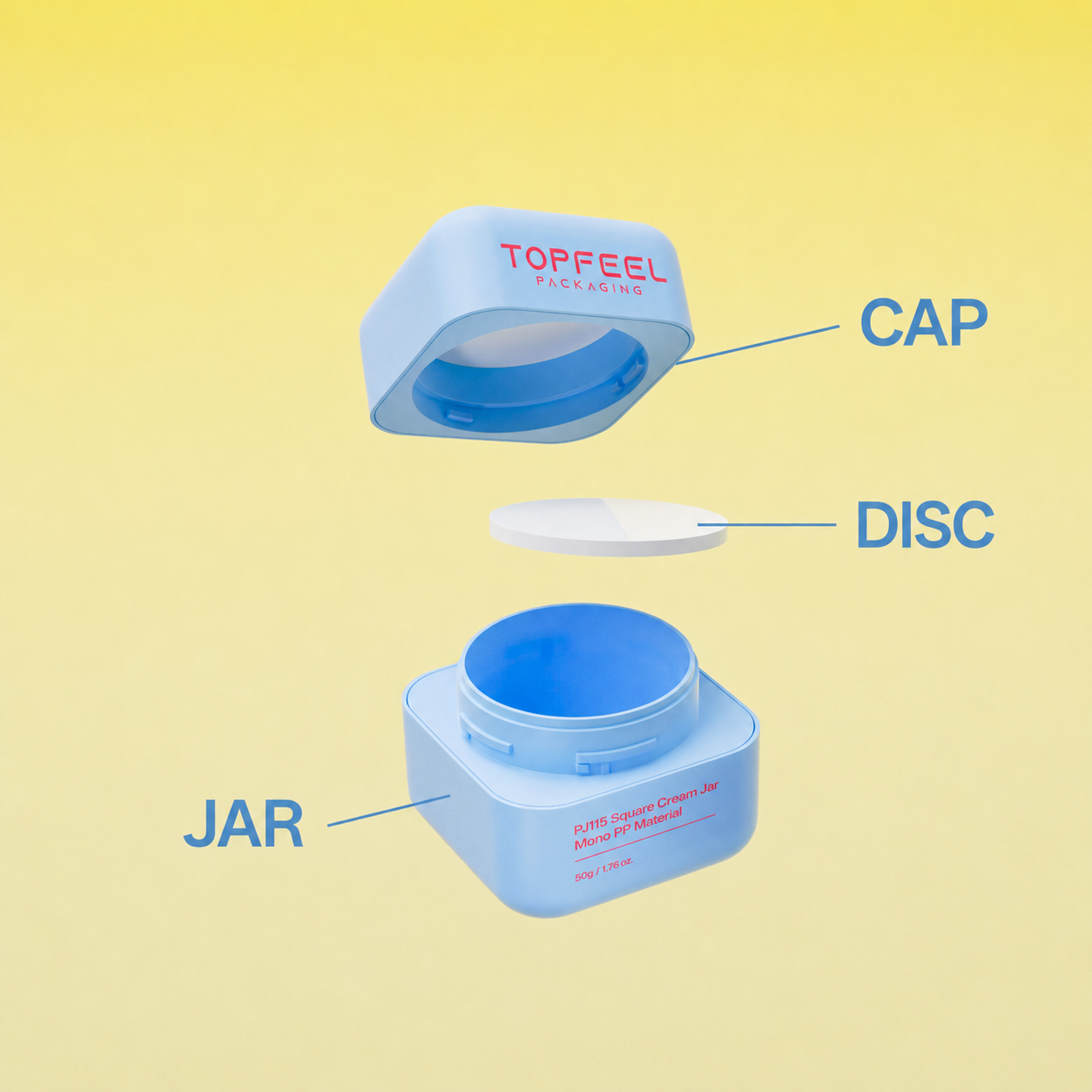
Mono PP construction. Using a single resin type throughout — cap, disc, and body — simplifies downstream recycling and reduces compatibility concerns. PP is well-established in cosmetic packaging for its low reactivity with oil-based and water-based formulations alike.
Three-piece assembly with inner disc. The inclusion of a sealing disc is not standard across all cream jars at this price tier. It adds a secondary barrier between the product and the cap interior, reducing contamination risk and preserving formula integrity — something end consumers notice and repeat buyers appreciate.
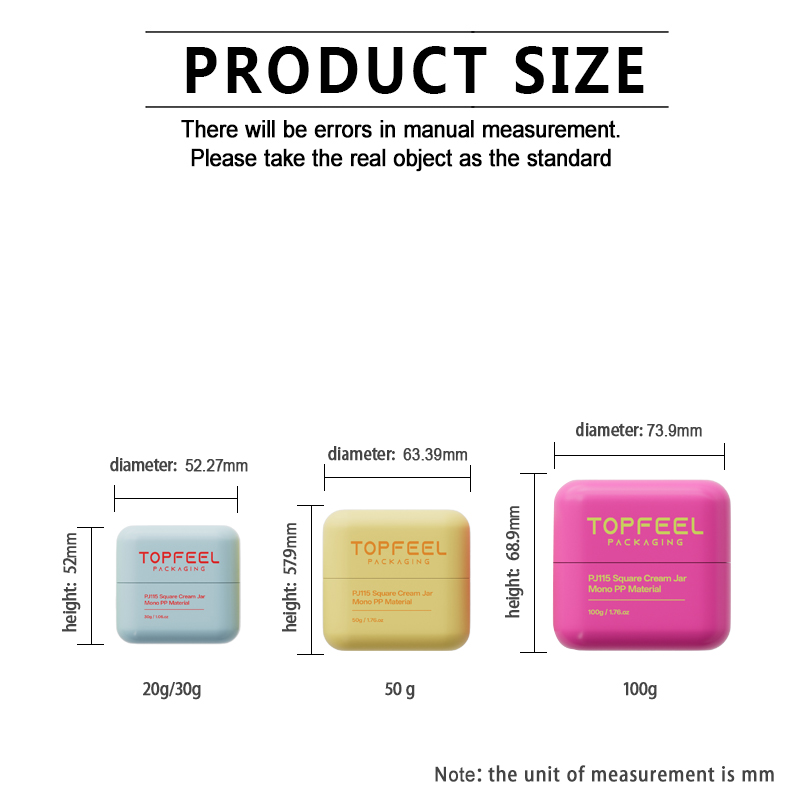
Four available capacities. 20ml, 30ml, 50ml, and 100ml cover the range from travel-size and sample units through to full-size retail SKUs. Brands running multi-SKU launches can source the same form factor across sizes, maintaining visual consistency across the line.
Application Scenarios
The PJ115 is most commonly used for face cream and moisturizer SKUs, but its material and structural compatibility extends across several product types:
- Face cream and moisturizers — the most common use case. PP is compatible with emulsified formulations across a wide pH range.
- Eye cream — the 20ml and 30ml sizes suit this application well, and the square format differentiates the product on a crowded shelf.
- Overnight masks and sleeping packs — thick, leave-on formulations benefit from the wide-mouth opening and inner disc seal.
- Body butter and hand balm — the 100ml size is appropriate for body-use products where consumers expect a more generous fill.
- Travel retail and sample packaging — the 20ml fits standard travel retail display formats and makes an effective sample or travel-size SKU.
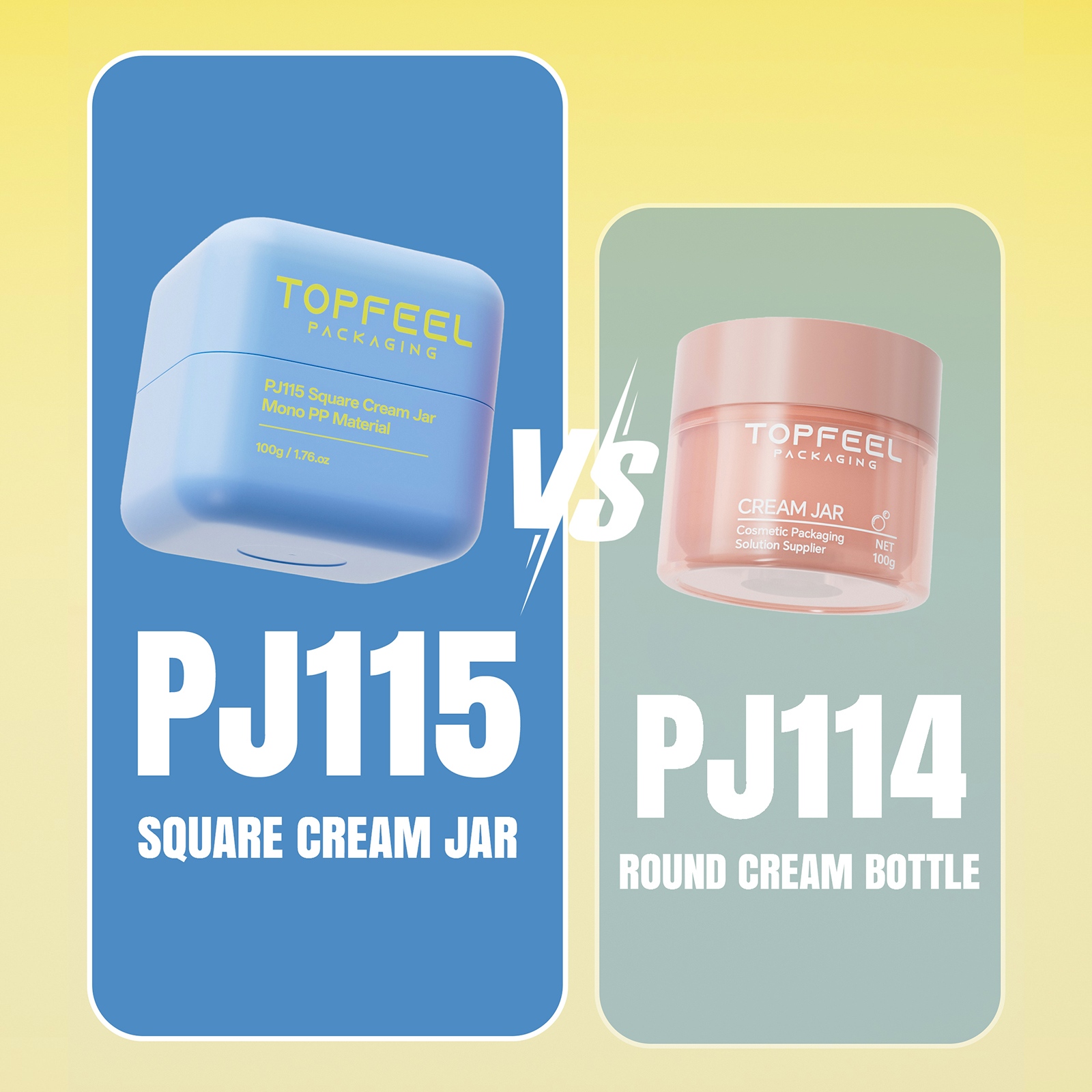
| Square cream jar | |
|
PJ115 · Mono PP · Topfeelpack |
Standard form · PP/PETG/glass |
| Advantage
Distinctive silhouette on shelf. Square footprint reads as structured and intentional — differentiates the brand without extra decoration. |
Standard
Familiar, proven form. Less visual differentiation unless premium finishes or oversized formats are applied. |
| Advantage
Square jars tile without gaps. More units per shipping carton, lower freight cost per unit at bulk volumes. |
Standard
Round jars leave corner voids in cartons — typically 20–25% wasted space depending on nesting and carton dimensions. |
| Advantage
Four flat sidewalls offer clean, non-distorted print surfaces. Screen printing and hot stamping register accurately on flat faces. |
Standard
Curved surface requires wrap labels or cylindrical screen printing — both achievable, but artwork distorts slightly at edges. |
| Higher
Square geometries with rounded corners require more precise mold engineering. Tooling cost is typically higher than equivalent round jars. |
Lower
Round forms are simpler to tool and more widely available as stock molds — lower entry cost for new SKUs. |
| Advantage
Stacks flat in retail displays and countertop trays without rolling. Stays where it's placed. |
Standard
Round jars can roll or shift in open-shelf retail environments — minor but relevant for display consistency. |


Product recommendation


-

Whatsapp
- English
- French
- German
- Portuguese
- Spanish
- Russian
- Japanese
- Korean
- Arabic
- Irish
- Greek
- Turkish
- Italian
- Danish
- Romanian
- Indonesian
- Czech
- Afrikaans
- Swedish
- Polish
- Basque
- Catalan
- Esperanto
- Hindi
- Lao
- Albanian
- Amharic
- Armenian
- Azerbaijani
- Belarusian
- Bengali
- Bosnian
- Bulgarian
- Cebuano
- Chichewa
- Corsican
- Croatian
- Dutch
- Estonian
- Filipino
- Finnish
- Frisian
- Galician
- Georgian
- Gujarati
- Haitian
- Hausa
- Hawaiian
- Hebrew
- Hmong
- Hungarian
- Icelandic
- Igbo
- Javanese
- Kannada
- Kazakh
- Khmer
- Kurdish
- Kyrgyz
- Latin
- Latvian
- Lithuanian
- Luxembou..
- Macedonian
- Malagasy
- Malay
- Malayalam
- Maltese
- Maori
- Marathi
- Mongolian
- Burmese
- Nepali
- Norwegian
- Pashto
- Persian
- Punjabi
- Serbian
- Sesotho
- Sinhala
- Slovak
- Slovenian
- Somali
- Samoan
- Scots Gaelic
- Shona
- Sindhi
- Sundanese
- Swahili
- Tajik
- Tamil
- Telugu
- Thai
- Ukrainian
- Urdu
- Uzbek
- Vietnamese
- Welsh
- Xhosa
- Yiddish
- Yoruba
- Zulu