
From TikTok-worthy looks to leak-proof performance, find the empty lotion bottle that turns skincare packaging into your secret sales weapon.
You’d think picking an empty lotion bottle would be the easy part. But nah—it’s more like dating: looks matter, but if it leaks under pressure or flakes on you halfway through production? Big red flag. In today’s skincare scene, packaging is straight-up brand currency—and with TikTok unboxings and eco-conscious shoppers watching closely, that cheap plastic pump from 2012 just won’t cut it anymore.
Some folks chase aesthetics and forget the formula might react to PET or PP like a bad ex. Others pick a slender neck design only to realize their high-viscosity cream needs a wide-mouth warrior with serious dispensing game. “We’ve seen brands lose thousands fixing leakage issues they didn’t plan for,” says Amanda Li, Lead Engineer at Topfeelpack (2024 Packaging Trends Brief).
So here’s your cheat sheet—no fluff, no filler—just what you need to match your product’s personality with bottles built for performance, sustainability creds, and shelf appeal. Because in this business? The right bottle isn’t packaging—it’s strategy in disguise.
4 Factors When Selecting Empty Lotion Bottle Materials
Choosing the right material for an empty lotion bottle isn’t just about looks—it’s about performance, sustainability, and user experience. Let’s break down what really matters.
HDPE Plastic for Durable, Leak-Proof Packaging
- Strong against drops and pressure—HDPE plastic doesn’t crack easily.
- Resists most lotions’ active ingredients without warping or degrading.
- Perfect for brands that want a no-leak promise with long shelf life.
- It’s compatible with blow molding—ideal for consistent, seamless shapes.
- Offers high tensile strength to prevent deformation under stress.
- Maintains stability even in humid environments.
• Easy to recycle and cost-effective at scale.
When it comes to reliability, HDPE plastic is the go-to choice for rugged use and product integrity in any lotion bottle packaging line.
PET vs. Glass: Balancing Clarity and Chemical Resistance
PET shines when you want lightweight clarity—it mimics glass but won’t shatter on impact. Glass, though? That’s your premium pick if you’re after top-tier chemical resistance and a luxe feel.
Short bursts of insight:
– PET plastic offers crystal-clear visibility with better drop protection than glass.
– Glass wins out when formulations are highly reactive or require absolute purity.
– Both materials support recyclability but differ in carbon footprint during production.
“According to Euromonitor’s 2024 packaging trends report, over 60% of skincare consumers associate glass packaging with higher quality.”
If your brand leans toward elegance or transparency in an empty lotion container, weigh these two carefully—each brings its own vibe and function.
PP Plastic’s Lightweight Design and UV Protection
Think light, moldable, and sun-safe—that’s what you get with PP plastic.
Multiple short notes:
• Great for formulas that degrade under UV light thanks to its natural shielding properties.
• Shapes beautifully into pumps or tubes without adding bulk.
• Moisture-resistant surface keeps creams fresh longer.
• It’s heat-tolerant too—won’t warp during filling processes.
For brands using light-sensitive actives like retinol or vitamin C in their skincare lines, this material keeps the formula safe while keeping shipping costs low due to its featherweight nature.
Embracing PCR Materials for Sustainable Packaging
Step-by-step breakdown of why brands are switching gears toward PCR materials:
Sourcing: Post-consumer resin is collected from recycled plastics like water bottles or food containers.
Processing: It’s cleaned, ground down, then reformed into usable pellets.
Manufacturing: These pellets are molded into new bottles without compromising durability or structure.
Grouped benefits:
– Reduces landfill waste while supporting a circular economy model.
– Cuts down on virgin plastic use by up to 70%.
– Meets rising consumer demand for eco-conscious packaging solutions.
– Compatible with most decoration techniques like silk screening or hot stamping.
Topfeelpack integrates high-grade PCR materials into their modern bottle lines—giving your next empty lotion bottle both style and sustainability without compromise.
3 Key Sizing Metrics For Empty Lotion Bottle Capacity
Choosing the right empty lotion bottle isn’t just about aesthetics—it’s a fine-tuned balance between function, feel, and flow.
Matching Volume Capacity to Product Viscosity
Matching volume capacity with product viscosity isn’t guesswork—it’s all about understanding how your formula behaves. Let’s break it down:
A. Know Your Formula Type
- Thick creams like body butters need wider mouths and stronger walls.
- Lightweight serums or milks can go in slimmer bottles with narrow necks.
B. Consider Flow and Dispensing Rate
- High-viscosity products = slower dispensing rate, so larger pumps or squeeze tubes work better.
- Low-viscosity lotions = faster flow, meaning smaller openings prevent messes.
C. Optimize Bottle Size for User Experience
- Small bottle + thick lotion = frustration.
- Large bottle + thin lotion = wasteful and hard to control.
D. Real World Tip: Always test how the product exits under pressure—simulated use can reveal hidden issues in fluid dynamics that CAD models miss.
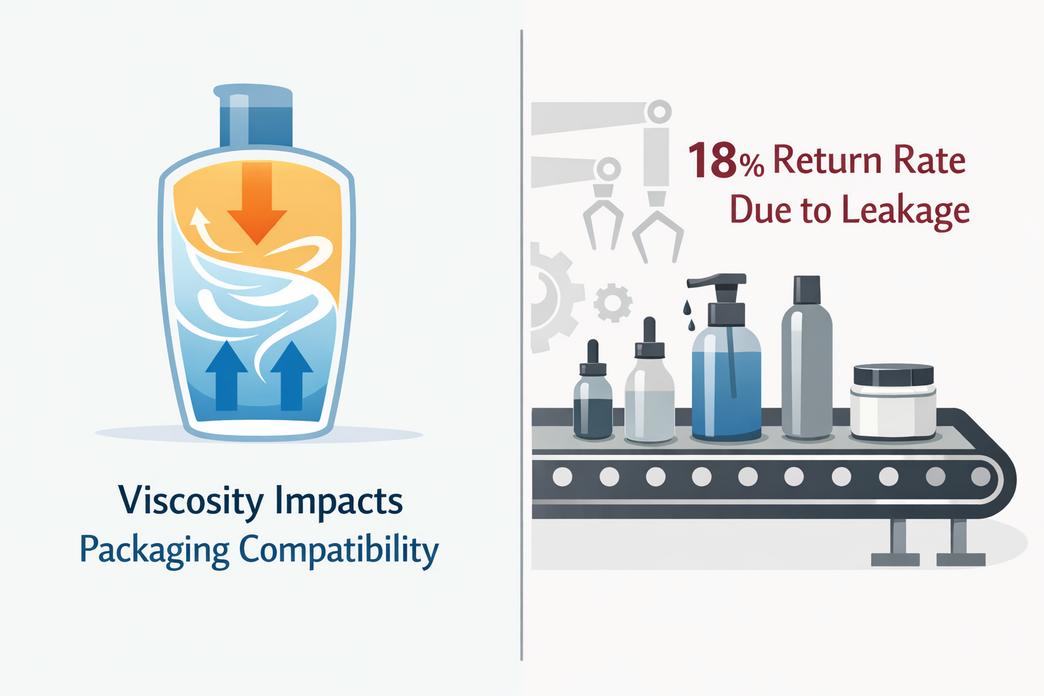
“Viscosity directly impacts packaging compatibility,” notes Mintel’s Global Packaging Trends Report (2024). “Ignoring this leads to leakage complaints and return rates over 18%.”
Choosing the Right Neck Finish for Accurate Dispensing
The neck finish might seem minor, but it’s a deal-breaker when it comes to usability:
• Threads matter: A mismatched thread count means leaks or loose caps.
• Orifice size should match product thickness—too small clogs thick lotions; too wide wastes thin ones.
• Seal integrity is crucial for shelf life—especially for natural formulations.
- Match pump types with neck dimensions:
- Standard pump? Needs a common GPI thread like 24/410.
- Airless pump? Often requires custom finishes or snap-on closures.
- Evaluate closure compatibility across batches—consistency avoids headaches during mass production.
- Choose based on end-user habits:
- Twist tops are great for gym bags.
- Flip caps suit one-handed use at home.
Short answer? The wrong finish ruins even the best formula’s debut from your favorite lotion container.
How Bottle Shape Affects Filling Efficiency
The shape of an empty lotion bottle doesn’t just affect looks—it controls how fast you can fill them without spills or backups on the line.
A. Production Line Compatibility
- Cylindrical bottles glide smoothly through most conveyors.
- Odd-shaped containers may jam automatic fillers unless customized guides are used.Tall + narrow = risk of tipping during high-speed filling
Short + wide = stable but may need more floor space
B. Ergonomics vs Automation
- Tapered bodies look sleek—but take longer to align during capping stages.
- Square bases stack well—but corners trap air bubbles if not vented properly during fill cycles.→ Want speed? Stick with symmetrical shapes that align easily under nozzles.
→ Want uniqueness? Be prepared for slower throughput and higher tooling costs.
In short, your packaging process needs harmony between design flair and factory practicality—because even the prettiest lotion bottle container is useless if it slows production by half!
Types Of Lotion Bottle Closures Explained
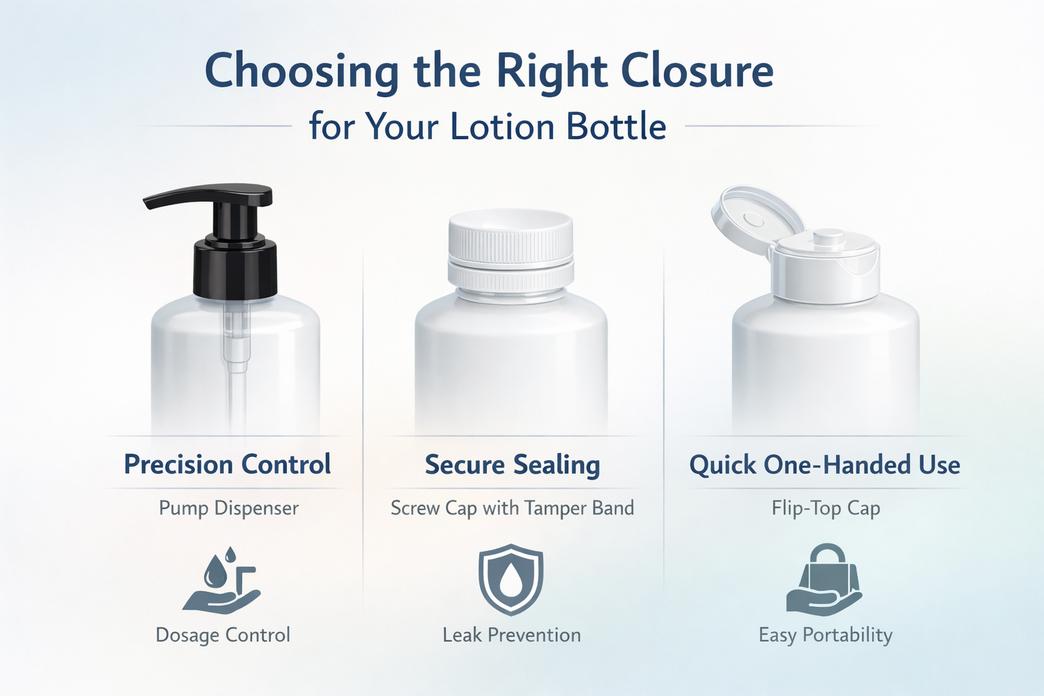
Choosing the right closure for your empty lotion bottle makes all the difference in usage, shelf appeal, and consumer trust.
Pump Dispenser: Precision Control for Every Drop
- Offers dosage control that’s clean and consistent.
- Great for thicker products with higher viscosity levels.
- Minimizes waste by delivering just the right amount.
- The lotion pump is ideal when paired with a long enough dip tube to reach the bottom of your container.
- A well-designed actuator ensures smooth product delivery without clogging.
• Works best with upright bottles; not suitable for upside-down storage.
If you’re bottling hand creams or serums, this setup gives users full control over every drop—no mess, no fuss. Brands like Topfeelpack offer customizable options to match different bottle sizes and product textures.
Screw Cap for Secure, Tamper-Evident Sealing
A solid go-to if you’re looking for tight sealing and safety features on your empty lotion bottle.
– Includes inner liner options that prevent leaks during shipping.
– Commonly used where FDA-compliant packaging is needed.
– The threaded finish allows easy application by machine or hand.
The addition of a tamper-evident band enhances consumer confidence while keeping your product fresh longer. Whether it’s daily skincare or specialty lotions, screw caps keep everything locked down tight.
Flip-Top Cap Offers Quick, One-Handed Use
Quick? Yep. Handy? Definitely. These are perfect when convenience matters most:
• One-handed access makes it easier to use on-the-go
• Built-in snap closure keeps contents from spilling
• Compact design fits travel-size bottles perfectly
The flip-top’s small but mighty hinge mechanism allows consumers to squeeze out just what they need through its controlled dispensing orifice, making it an everyday favorite for body lotions and sunscreens alike.
Actuator Mechanisms and Dip Tube Compatibility
Let’s break it down by how these parts work together inside an empty lotion bottle, especially when you’re dealing with different formulas:
Step 1: Match the dip tube length to the height of your bottle—too short means wasted product at the bottom.
Step 2: Choose an actuator style (mist sprayer vs pump head) based on how thick your formula is—thicker = stronger spring needed in the engine.
Step 3: Verify that all materials are compatible with what you’re bottling; some oils degrade certain plastics fast!
Step 4: Test how much product gets evacuated per stroke (aka evacuation rate).
This pairing determines whether customers get smooth delivery—or frustration instead!
Overcap Styles to Complement Your Brand Aesthetic
Here’s where form meets function—and fashion too! Overcaps don’t just protect—they sell:
| Overcap Material | Finish Option | Compatible Closure Types | Branding Potential |
|---|---|---|---|
| PETG | Glossy/Satin | Flip-top, Pump | High |
| PP | Matte | Screw cap | Medium |
| Acrylic | Transparent/Color | Pump | Very High |
| Aluminum | Brushed/Polished | All types | Premium Appeal |
These stylish toppers shield sensitive components like pumps while reinforcing brand identity through color matching, embossing, or special finishes—all tailored around your unique lotion packaging goals with Topfeelpack’s customization services in mind.
By mixing practical protection with visual flair, overcaps elevate even a basic empty lotion bottle into something worth reaching for again and again.
Custom Bottle Branding Essentials
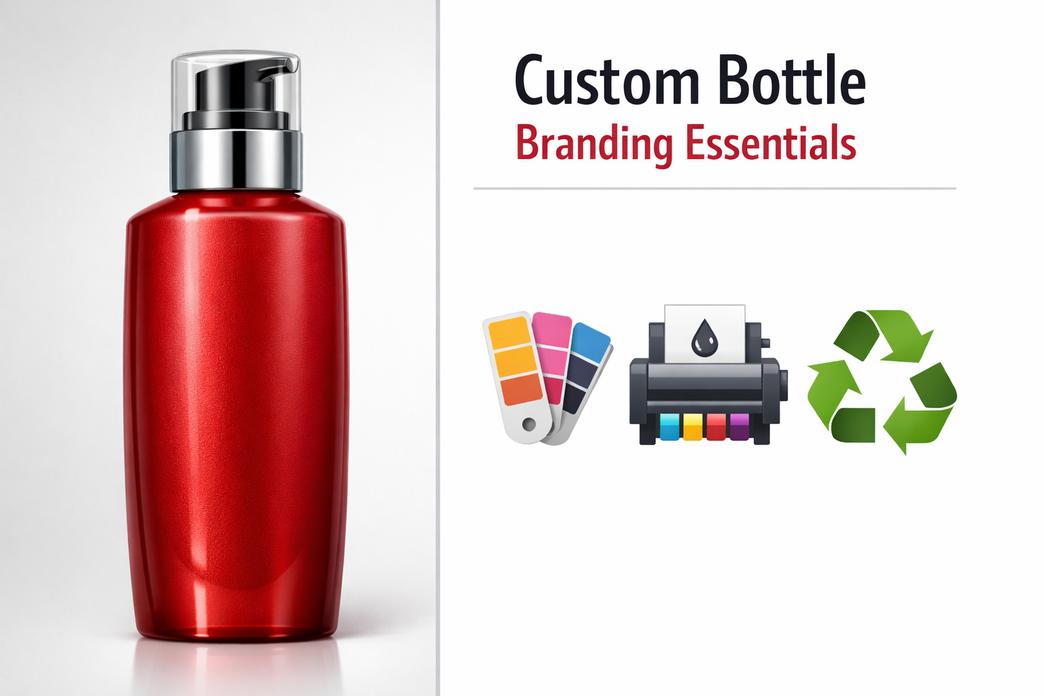
Personalized packaging can make or break your product’s shelf appeal. Let’s talk about how to turn an empty lotion bottle into a brand magnet.
Color Customization and Surface Treatment Options
• Want your product to pop? Go bold with a glossy red or keep it classy with a matte black finish.
• For a clean, natural vibe, try a frosted texture—it gives off that “eco-luxe” feel.
• Add layered appeal by mixing finishes—like pairing transparent glass with an opaque label.
- Choose the right base bottle color—light tones for freshness, dark ones for luxury.
- Match the surface coating to your audience—youngsters love shiny; minimalists prefer muted.
- Consider texture: smooth for elegance, grainy for grip.
→ A soft-touch finish might seem like a tiny detail, but it can change how people perceive your brand completely.
Silk Screen Printing vs. Hot Stamping Applications
Silk screen printing is best when you want bold colors and strong contrast on an empty lotion bottle—great for logos that need to stand out fast.
• Want more shine? Go with hot stamping using metallic foil—it screams premium.
• Silk screen holds up better on curved surfaces; hot stamping works magic on flat areas.
• If durability matters (think showers or travel bags), silk screen wins hands down.
Hot stamping brings that extra sparkle but takes precision and adds cost. Use it where it counts—like limited editions or signature lines.
Offset Printing for Detailed Logos and Fine Lines
When you’re working with small text or intricate artwork, offset printing is the go-to method—it handles those fine lines like a pro.
Multiple short descriptive segments:
- It delivers unmatched resolution, even around curves.
- Great if your logo has gradients or lots of color variation.
- Ensures high color accuracy, especially on smaller containers like travel-size bottles.
- Works well on both plastic and glass versions of the empty lotion bottle, keeping design intact across formats.
Offset printing might not be flashy, but it nails every pixel-perfect detail when precision really matters.
Leveraging Recyclable Materials to Enhance Brand Image
Turning heads doesn’t always mean using glittery foil—a smart move today is going green without losing style points.
- Pick materials like PCR (post-consumer resin) plastic or recycled glass—they reduce environmental strain while still looking sleek.
- Clearly mark containers as made from recyclable materials—customers notice that stuff now more than ever.
- Pair sustainable packaging with minimalist branding to double down on authenticity vibes.
Eco-conscious buyers are scanning labels for keywords like “biodegradable” and “eco-friendly.” Don’t just say you care—show them through every part of your packaging design, starting from the core material of each empty lotion bottle you produce.
FAQs about Empty Lotion Bottle
What material is best for durable empty lotion bottle packaging?
Durability carries a quiet promise—your formula arrives exactly as intended.
- HDPE plastic stands firm during blow molding, shrugging off warehouse knocks.
- PET plastic keeps its crystal look while staying light in the hand.
- Glass offers weight and prestige, whispering “premium” to those who hold it.
Which closure type ensures accurate dosing for viscous lotions?
Precision turns routine into ritual with every pump’s measured gift.
- Pump dispensers work with dip tube lengths tuned to your bottle’s height and product thickness.
- Screw caps guard contents without fuss when portability matters more than performance theatrics.
- Flip-top caps invite quick one-handed use yet seal tightly against unwanted spills—simple but clever companions on a crowded vanity shelf.
Can polypropylene protect UV-sensitive formulas effectively?
It shields like an unseen guardian when sunlight tests the limits of stability:
☼ PP plastic filters harmful rays, aided by color customization in deep tones or opaque finishes through injection molding artistry;
☼ Complements sustainable ambitions via lightweight design that lowers shipping emissions;
☼ Stays true under REACH compliance testing, ensuring beauty endures until the very last drop meets skin.
References
[The Association of Plastic Recyclers - HDPE and PCR Technical Data - plasticsrecycling.org]
[Sustainable Packaging Coalition - Material Comparison and Sustainability - sustainablepackaging.org]
[Euromonitor - Top Global Consumer Trends 2024 - euromonitor.com]
[Mintel - Global Packaging Trends 2024 - mintel.com]
[FDA - Determining the Regulatory Status of Components of Food Packaging - fda.gov]
Would you like me to help you select a specific pump configuration or draft a custom branding plan for your next production run?
Post time: Feb-03-2026
