
Glass cosmetic containers aren’t just jars—they’re silent ambassadors of your brand, whispering luxury from the shelf before anyone even peeks inside. In a world where packaging can make or break a sale, these sleek vessels offer more than good looks—they preserve formulas like tiny time capsules and scream “premium” without saying a word.
I once watched a boutique owner practically swoon over frosted glass pots at a trade show—“It’s like skincare for the eyes,” she said, running her hands over the cold surface. That moment stuck with me. Turns out, customers trust weighty glass; it feels real in their hands, serious about quality.
So if your makeup line's still swimming in plastic tubs that look like they belong in grandma’s medicine cabinet—maybe it’s time to give those products the glow-up they deserve.
Key Points in the Glow: A Quick Guide to Glass Cosmetic Containers
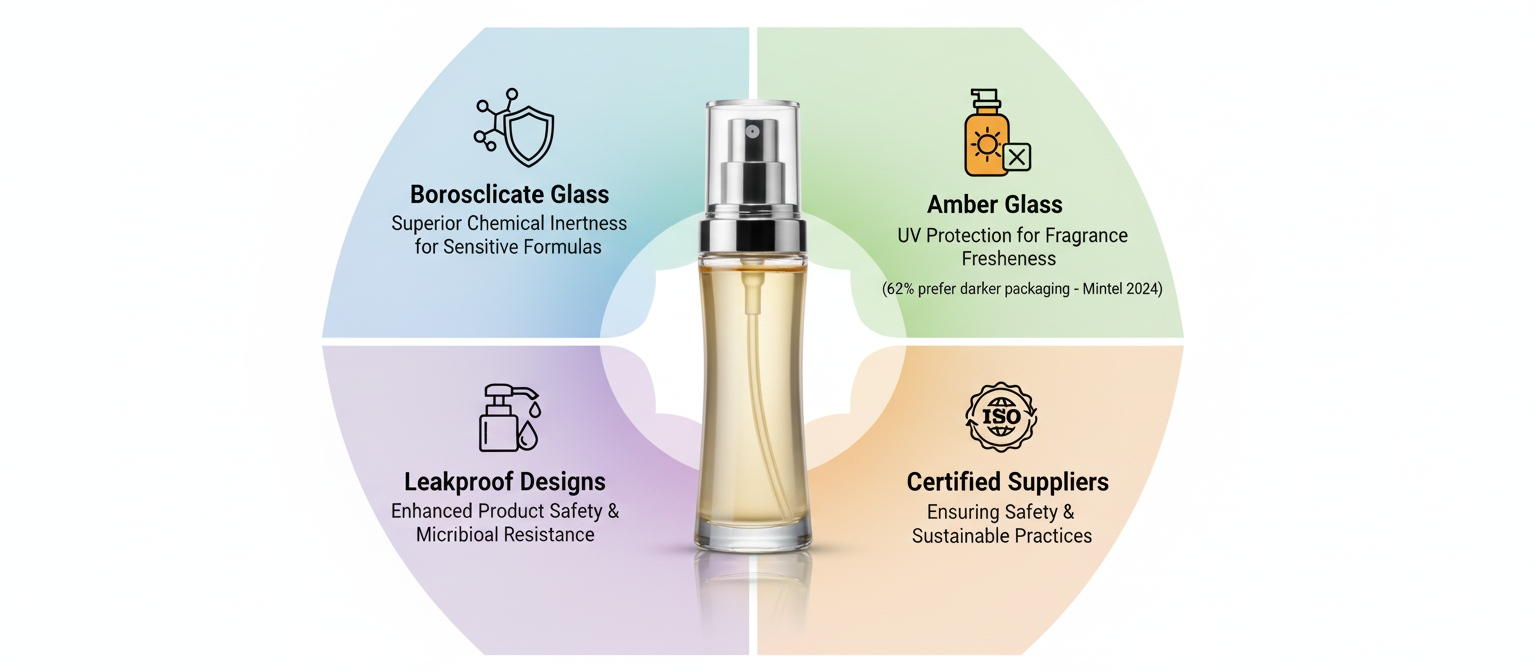
➔ Material Matters: Borosilicate glass offers superior chemical resistance over soda-lime, ideal for preserving sensitive formulas.
➔ Sunlight Shielding: Amber glass is your go-to for UV protection, keeping fragrances fresher for longer.
➔ Form Meets Function: Screw caps and pump dispensers ensure leakproof storage while maintaining hygiene for skincare products.
➔ Size & Style Options: From 50ml dropper vials to 250ml frosted jars, there’s a perfect container type and volume for every cosmetic product.
➔ Luxury Look & Feel: Crystal glass with frosting effects enhances brand prestige—especially in high-end nail or makeup care lines.
➔ Sanitization Essentials: Pre-clean containers thoroughly; then boil or autoclave depending on the glass type before drying and sealing properly.
➔ Supplier Standards: Choose vendors with quality certifications and sustainable practices to ensure safety, performance, and eco-alignment.
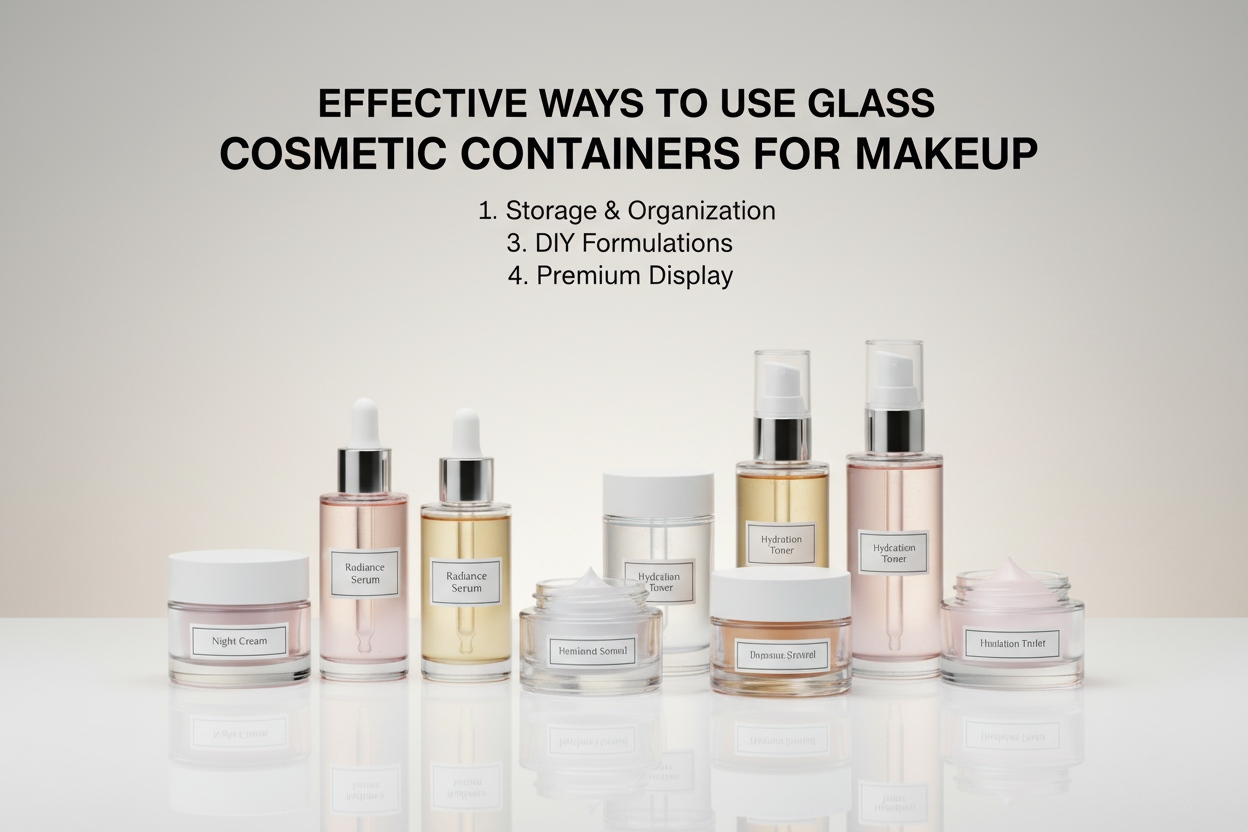
Discover Why Glass Cosmetic Containers Boost Product Lifespan And Safety
Glass jars and bottles aren’t just pretty—they’re powerful protectors of your skincare and fragrance formulas.
Ensuring Product Stability: Chemical Inertness of Soda-lime vs. Borosilicate Glass
- Soda-lime glass is widely used due to its cost-efficiency, but it’s more reactive under extreme pH or heat.
- Borosilicate glass, on the other hand, boasts superior chemical inertness, resisting leaching or interaction with active ingredients.
- For serums, oils, or acidic solutions, borosilicate is often the smarter pick to avoid contamination.
- Both types offer solid barrier properties, but only borosilicate holds up against high temps—think hot-filling processes or autoclaving.
- If you’re bottling something sensitive like retinol or vitamin C, the wrong glass could speed up degradation.
So while soda-lime might win on price tags, borosilicate wins when product integrity is non-negotiable.
Shielding From Sunlight with Amber Glass Bottles for Fragrance Freshness
• Light exposure can wreck a perfume faster than you'd think—UV rays mess with fragrance molecules at a chemical level.
• That’s why amber bottles are a go-to for perfumers; their dark tint provides natural UV protection that helps maintain scent profiles longer.
- Transparent glass? Looks nice but lets in too much light.
- Frosted bottles? Better than clear but still not as effective as amber when it comes to blocking UV radiation.
A recent report from Mintel 2024 shows that over 62% of consumers prefer darker packaging when buying premium scents—because freshness matters more than flashiness.
Amber isn’t just aesthetic—it’s functional armor for your fragrances.
Leakproof Designs with Screw Caps and Pump Dispensers for Skincare
Step 1: Choose closures based on viscosity—creams love pumps; toners do better with screw caps or droppers.
Step 2: Look for airtight sealing systems that prevent air entry and accidental spills during travel or storage.
Step 3: Go for dispensing mechanisms made from compatible materials to avoid reactions that could compromise your formula's stability.
These closures also support microbial resistance by limiting exposure to fingers or external contaminants—a big plus if you're formulating preservative-light products.
Leakage isn't just messy—it ruins shelf life and user trust fast.
Vetting Suppliers for Safety with Certifications and Sustainable Practices
✓ ISO certifications matter—they show the supplier meets global safety benchmarks during production of cosmetic-grade containers.
✓ Ask about sourcing transparency—do they use recycled cullet in their batches? This supports better sustainable packaging outcomes without sacrificing quality.
• Some suppliers even offer carbon-neutral manufacturing options now—a major win if you're building an eco-conscious brand image.
• Look into third-party audits too; they help verify claims around ethical labor practices and green logistics chains.
From a safety standpoint, certifications ensure compliance—but from a branding angle, sustainable practices speak volumes about your values.
One reputable supplier—Topfeelpack—even integrates lifecycle analysis into its design process to reduce waste upstream before you even place an order.
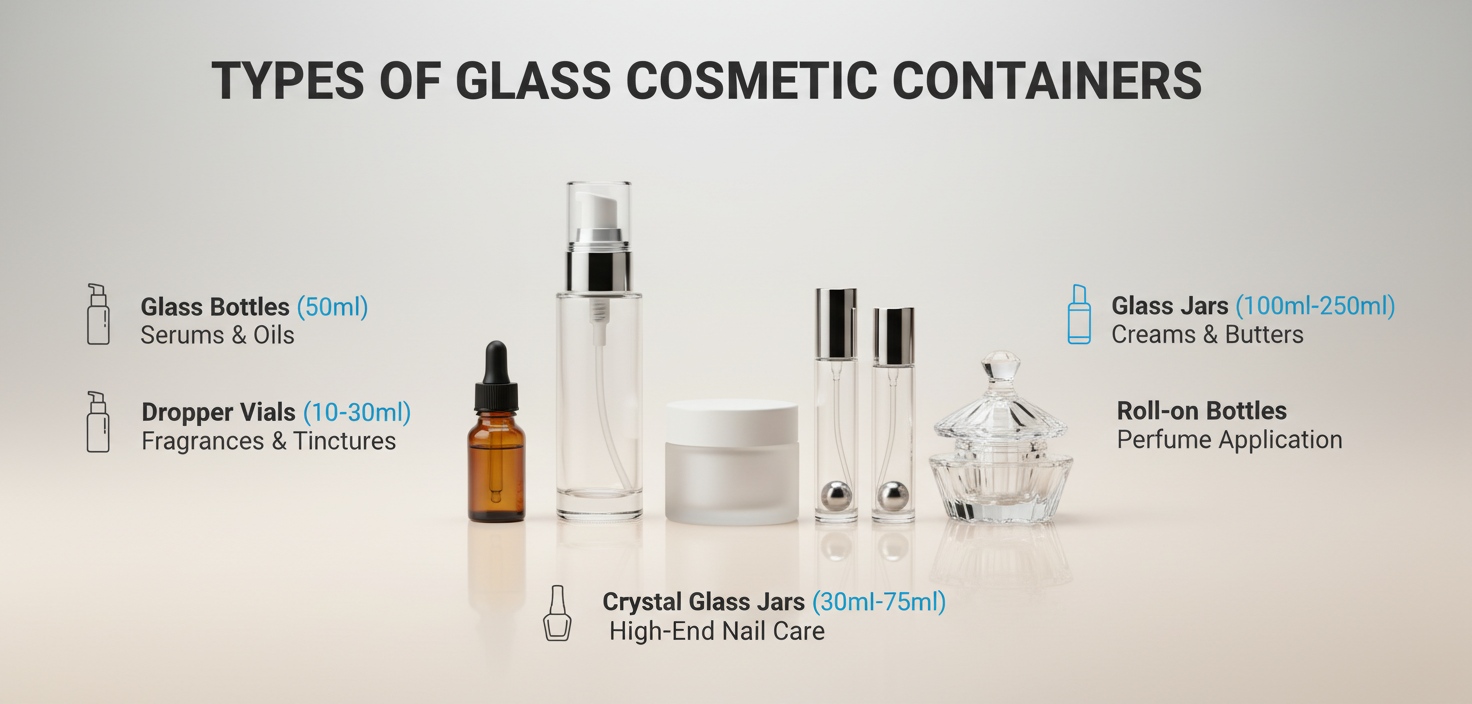
Types Of Glass Cosmetic Containers
A quick guide to the different kinds of glass-based packaging that keep your beauty products fresh, stylish, and easy to use.
Glass Bottles for Skincare Serums and Haircare Oils (50ml Capacity)
• Sleek by design, these 50ml glass bottles are ideal for lightweight serums and oils.
• They’re small enough for travel but hold enough product to last weeks.
• Bonus? They're airtight, so no weird oxidizing smells after a few days.
- Great for vitamin C serums
- Perfect match for argan or castor oil blends
- Often come with pump or dropper tops—your choice
⭑ Many brands choose clear or amber finishes depending on UV sensitivity.
These containers make it easy to keep formulas potent while giving off that polished, apothecary vibe.
Shorter necks, thicker bases, and optional closures make them super customizable—whether you're going clinical or luxury chic.
Glass Jars for Makeup Creams: 100ml to 250ml Options
Grouped by capacity:
100ml Jars
- Ideal for eye creams or travel-size night masks
- Compact but still luxurious in hand-feel
150ml Jars
- A sweet spot for daily moisturizers
- Easy access with wide mouths
250ml Jars
- Best suited for body butters and rich face creams
- Heavy-bottomed designs add weight and elegance
You’ll often find these glass jars frosted or colored to match brand aesthetics—and they’re tough enough to reuse after you’ve scraped out the last bit of product.
Dropper Vials Ensuring Accurate Dosing of Fragrance Products
• If you’ve ever over-applied essential oils, you know why precise dosing matters. These dropper bottles solve that real quick.
• Most hold between 10–30ml—small but mighty when it comes to high-potency liquids like fragrances or tinctures.
- Squeeze-and-release droppers help avoid waste
- Prevents skin overload from too much scent oil at once
⭑ Plus, they look like mini lab tools—clean lines, no mess.
Used right, they deliver consistent results every time without drenching your wrist in perfume.
Roll-on Bottles in Amber and Flint Glass for Perfume Application
Grouped by material & use case:
Amber Glass Roll-ons:
- Block UV rays—great if your perfume has essential oils inside
- Popular with natural fragrance brands
Flint (Clear) Glass Roll-ons:
- Show off colors like rosewater pinks or citrusy yellows
- Better suited indoors where light exposure is limited
These roll-on bottles simplify touch-ups throughout the day without spilling a drop—you just glide them on like lip balm but fancier.
And yeah—they fit in any clutch bag without weighing it down.
Crystal Glass Jars with Frosting Effects for High-End Nail Care
Step into luxury mode with frosted crystal glass jars, often used by premium nail brands who want their packaging as flawless as their polish finishes.
They typically range from 30ml to 75ml sizes—perfectly portioned so your cuticle cream doesn't dry out before you finish the pot.
| Jar Finish | Volume (ml) | Common Use | Reusability |
|---|---|---|---|
| Frosted Crystal | 30 | Cuticle balms | High |
| Clear Crystal | 50 | Nail masks | Medium |
| Tinted Crystal | 75 | Strengtheners | High |
| Matte Frosted | 60 | Gel removers | Low |
These feel heavy-in-hand—in a good way—and serve up some serious spa vibes straight from your vanity drawer.
3 Steps To Sanitize Glass Cosmetic Containers Effectively
Getting those beauty vials squeaky clean takes more than just soap and water. Here's how to prep, sanitize, and seal them the right way.
Pre-cleaning Rituals: Removing Labels and Residue Before Disinfection
• Start by soaking each jar or bottle in warm water mixed with mild dish soap—this loosens sticky gunk without damaging the glass cosmetic containers.
• Use a plastic scraper or old credit card to lift off labels gently; avoid metal tools that might scratch the surface.
• For stubborn adhesives, dab on a mix of baking soda and coconut oil, let it sit for 10 minutes, then scrub with a soft sponge.
• Rinse thoroughly under hot water to remove any oily residue before moving on to sanitization steps.
• Always wear gloves during this stage—residue from skincare products can be surprisingly clingy.
Boiling vs. Autoclaving Methods for Sanitizing Amber and Flint Glass Containers
There’s no one-size-fits-all method when it comes to sterilizing amber versus flint bottles.
- Boiling is accessible—just submerge your clean jars in rapidly boiling water for at least 10 minutes. But beware: uneven heating can crack thinner bottles.
- Autoclaving offers deeper sterilization through pressurized steam, ideal for medical-grade packaging or when reusing sterilization options multiple times.
- Not all glass types respond equally—amber glass handles heat better due to its UV-blocking additives.
According to Euromonitor’s Q1 2024 Packaging Report, “Autoclaved containers showed a 37% higher retention rate of product purity over time compared to boiled alternatives.”
- Never skip drying post-sanitization; lingering moisture invites bacteria right back into your freshly cleaned containers.
- If you're unsure which method fits your gear best, check manufacturer specs—some flint jars aren’t made for high-pressure environments.
Drying and Sealing Techniques for Glass Vials with Spray Nozzles and Flip-top Caps
• Air-dry upside down on a clean microfiber cloth inside a dust-free cabinet; avoid paper towels—they shed fibers that cling inside your glass vials.
• Use filtered compressed air if you’re short on time—it speeds up drying without introducing contaminants.
• Ensure all parts are fully dry before reassembly: even tiny droplets inside spray mechanisms can harbor mold.
• Match each cap type with its sealing partner—flip-tops need firm pressure snaps; spray nozzles require threading until snug but not overtightened.
• Store sealed units in airtight bins lined with parchment paper if they won’t be used immediately—this helps maintain their storage practices integrity longer.
Done right, these steps keep your beauty packaging game tight—and contamination far away from your formula magic.
Glass Vs. Acrylic Makeup Jars
A quick look at how your favorite beauty products are housed—what's better: the charm of glass or the practicality of acrylic?
Glass Makeup Jars
Glass makeup jars bring a touch of class, but there's more to them than just looks. Here's how they stack up:
- Durability & Strength: Despite their delicate appearance, thick-walled glass jars handle everyday bumps surprisingly well.
- Chemical Resistance: Unlike plastic-based options, glass doesn't react with most cosmetic formulas—no weird smells or texture shifts.
- Eco Appeal: Recyclable and reusable, these containers win big with eco-conscious users.
- Long-term storage? Absolutely. The non-porous nature of glass keeps creams and serums stable for longer periods.
- But hey, they're heavier. If you're tossing one into your gym bag every morning… maybe not ideal.
Multi-step breakdown of real-world use:
- A user scoops out face cream daily from a frosted glass jar.
- Over months, the product’s consistency remains unchanged thanks to the jar's non-reactive material.
- After finishing the product, the jar is cleaned and reused to store DIY lip balm.
| Feature | Glass Jar Advantage | Impact on Product | User Benefit |
|---|---|---|---|
| Chemical Resistance | High | Preserves formula | No irritation risks |
| Weight | Heavy | Less portable | Better shelf appeal |
| Sustainability | Fully recyclable | Reduces waste | Eco-friendly choice |
| Aesthetic Appeal | Premium look & feel | Enhances branding | Feels luxe to use |
When you want your vanity to look like it belongs in a spa ad—and keep your skincare fresh—glass containers might be calling your name.
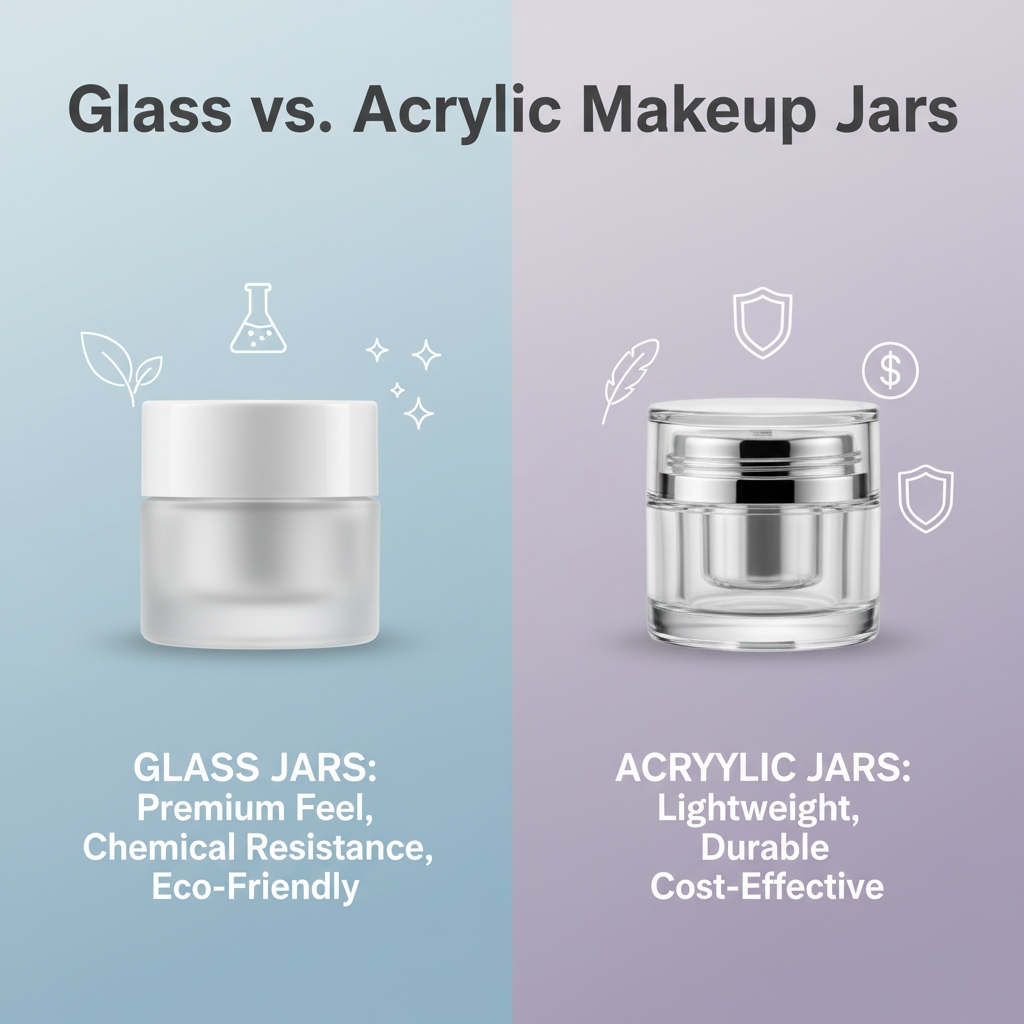
Acrylic Makeup Jars
Now let’s talk about acrylic—lighter, tougher on-the-go, and pretty darn versatile.
• Made from clear thermoplastic that mimics glass without the weight
• Ideal for travel kits due to its shatter-resistant properties
• Often used for color cosmetics like eyeshadow pots or lip scrubs
Grouped benefits by category:
⮞ Practical Use:
– Lightweight = easy carry
– Wide openings = effortless access
⮞ Cost Efficiency:
– Lower production cost than glass
– Great for sample-sized or limited-edition lines
⮞ Visual Presentation:
– Crystal-clear transparency
– Compatible with creative labeling and embossing
Still, not everything's rosy:
• Acrylic may absorb oils over time if uncoated
• Not as heat-resistant—so don’t leave it baking in a hot car!
For those who prioritize portability and affordability without totally sacrificing style, acrylic makeup jars offer a practical solution for storing all kinds of creamy or powdery beauty products in slick little packages.
FAQs about Glass Cosmetic Containers
What makes glass cosmetic containers better than acrylic ones?
Glass doesn’t just look elegant—it protects. Where acrylic may warp or react with active ingredients, glass stands firm. Serums stay potent, fragrances remain true to their original scent, and creams don’t pick up unwanted chemical notes. That’s the quiet strength of glass: it preserves what matters most.
How do I make sure my amber or clear jars are properly sanitized before use?
- Strip off any leftover labels and glue—residue can harbor bacteria.
- Boil smaller containers for 10–15 minutes or run them through an autoclave if you're working at scale.
- Let every part air-dry completely before capping; moisture invites contamination.
Cleanliness isn’t just a step—it’s the barrier between your product and spoilage.
Why is amber glass so often used for perfumes and oils?
Light changes everything—especially when it comes to essential oils and fine fragrances. Amber glass filters out UV rays that would otherwise break down delicate compounds over time. The result? Scents that last longer on shelves…and on skin.
Can dropper bottles really handle face oils without making a mess?Absolutely—and not just functionally, but beautifully too:
- A gentle squeeze draws up exactly what you need.
- No spills, no waste—just clean application every time.Especially with high-end facial elixirs where each drop counts, droppers offer both control and elegance in one small gesture.
Post time: Sep-29-2025
