
You’ve poured your heart (and a not-so-small fortune) into perfecting that dreamy skincare formula—now it deserves packaging that speaks volumes before the cap even pops. Glass lotion bottles with pump aren’t just pretty faces on a shelf; they’re your brand’s handshake, elevator pitch, and red carpet moment all rolled into one.
Thing is, sourcing them in bulk isn’t as simple as scrolling through pretty Pinterest boards. You’ve got suppliers ghosting mid-negotiation, pumps that sputter like broken soda machines, and glass quality so shaky it might crack from side-eye. And don’t get me started on compliance standards—if you’re shipping stateside or overseas? Welcome to acronym bingo: ISO 9001, GMP… fun times.
“Skincare brands today want more than packaging—they want performance,” says Marcia Lin, Senior Product Designer at Topfeel Packaging (2024 Q2 Supplier Trends Report). “That means consistent color matching across lots of 10K units or more and closures tested for viscosity over time.”
So if you’re scaling up and aiming high—or just sick of playing supplier roulette—this guide’s got your back. From materials to customization tricks that’ll make your serum look like Chanel-level luxe… we break down what really matters when you’re buying big.
Sourcing Quality Glass Lotion Bottles: Top Factors To Consider
Choosing the right glass lotion bottles with pump isn’t just about looks—it’s about performance, durability, and how your product feels in the customer’s hand.
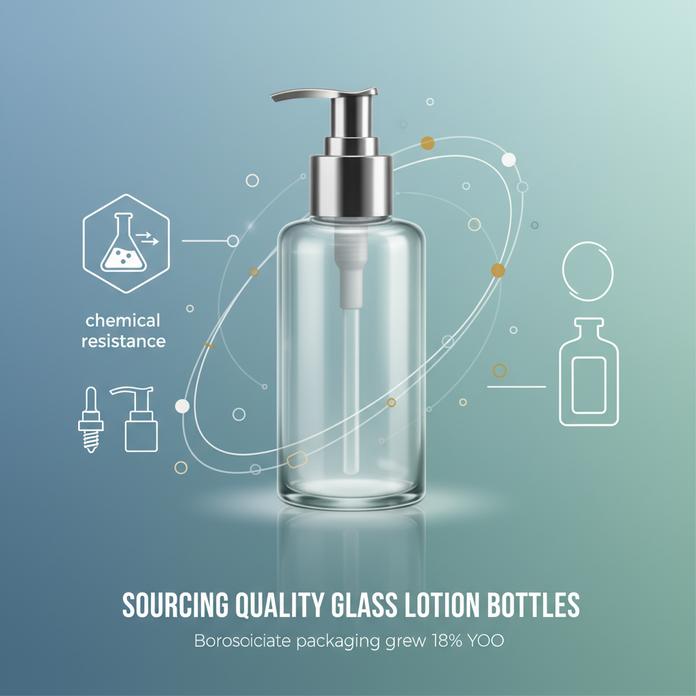
Understanding Material Types: Soda-lime vs. Borosilicate Glass
- Soda-lime glass is cost-effective and widely available—perfect for brands prioritizing affordability without sacrificing clarity.
- Borosilicate glass, on the flip side, handles heat like a champ and resists chemical reactions—ideal for sensitive serums or high-end formulations.
- If your lotion includes essential oils or active ingredients, borosilicate’s superior chemical resistance makes it a safer bet.
- Aesthetic-wise? Both offer that premium weight and transparency customers love—but borosilicate wins on long-term clarity.
According to QYR Research’s Global Cosmetic Packaging Report Q2 2024, “brands shifting toward borosilicate packaging grew by over 18% YoY due to increasing demand for sustainable and durable containers.”
Choosing the Right Closure Type: Lotion Pump Dispensers and More
• Want a mess-free experience? Go for a lotion pump—it gives controlled dispensing with zero waste.
• Thin liquids like toners? A spray bottle works best. For oils or concentrated serums, dropper bottles are better suited.
• Screw caps might seem old-school but they’re perfect when paired with external tools like spatulas or brushes.
Topfeel offers customizable closures that match every formula type—from thick creams to watery solutions—ensuring each pump delivers just the right amount.
Evaluating Bottle Shape: How Circular, Square, and Custom Molded Options Matter
Grouped by branding goals:
Circular bottles:
- Timeless design; fits easily into bags or purses.
- Ergonomic grip; great for one-handed use.
Square bottles:
- Bold shelf presence; stands out instantly.
- Easier stacking during shipping/storage.
Custom molded shapes:
- Total freedom to express your brand identity through shape alone. Think sculptural curves or embossed logos built into the bottle mold.
No matter which you pick, bottle aesthetics, grip comfort (ergonomics) and visual harmony with your label design all play key roles.
Capacity Considerations: 15ml, 30ml, 50ml, and Beyond
Step-by-step logic when choosing volume:
Step 1 – Define usage occasion: Travel kits? Go mini at 15ml or under.
Step 2 – Match product life cycle: Daily-use moisturizers do well at around 50ml, while targeted treatments can stay compact at 30ml.
Step 3 – Retail strategy matters too: Larger volumes create value perception; smaller ones invite trial purchases.
Step 4 – Check compatibility with closure systems—some pumps won’t work well on tiny neck finishes.
Whether you’re going luxe minimalist or practical everyday skincare, matching capacity to consumer behavior is key when sourcing top-tier glass lotion bottles with pump products.
4 Key Suppliers Of Glass Lotion Bottles With Pump
Finding the right supplier for your glass lotion bottles with pump isn’t just about looks—it’s about quality, sustainability, and trust.
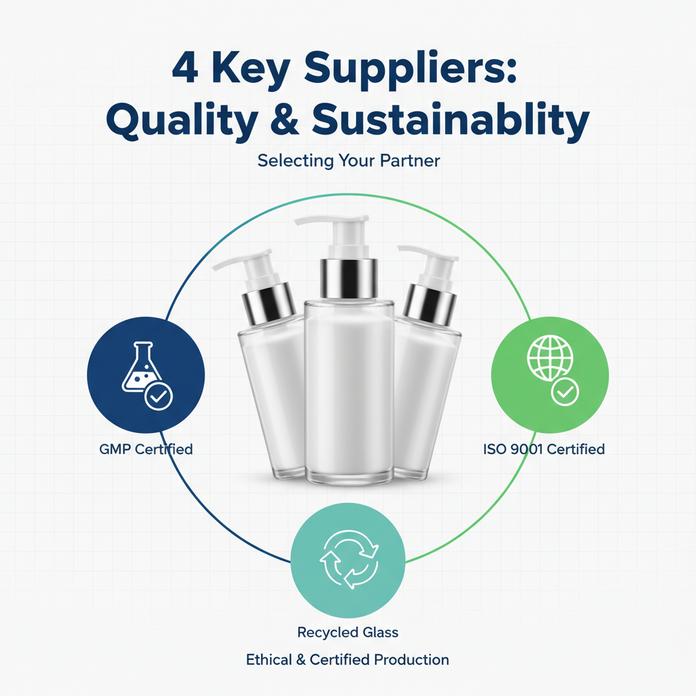
GMP Certified Manufacturers: Why They Matter to Your Brand
• Ensures strict adherence to GMP certification protocols in every production cycle
• Keeps your products safe through rigorous quality control measures
• Enhances your brand’s credibility by aligning with global manufacturing standards
Teaming up with a GMP-certified partner means fewer surprises and more peace of mind when it comes to product consistency and consumer trust in your skincare packaging line.
ISO 9001 Certified Suppliers: Assurance of Quality and Consistency
- They implement structured quality management systems that leave little room for error
- Their operations are based on clear, repeatable processes—hello, consistent bottle dimensions!
- You benefit from faster turnaround times thanks to their streamlined workflows
Want fewer headaches? Choose suppliers who run like clockwork—and ISO 9001 makes sure they do.
Sustainable Packaging Options: Choosing Eco-Friendly Suppliers
★ Support brands using post-consumer recycled glass
★ Look for refillable or reusable bottle options to reduce waste
★ Favor suppliers who prioritize low-carbon logistics and ethical sourcing
Sustainability isn’t just a buzzword anymore—it’s what customers expect from modern skincare packaging solutions.
Table of Supplier Certifications & Sustainability Ratings
| Supplier Name | GMP Certified | ISO 9001 Certified | Uses Recycled Glass |
|---|---|---|---|
| EcoBottle Co. | Yes | Yes | Yes |
| PurePack Industries | No | Yes | No |
| GreenGlass Labs | Yes | No | Yes |
| LuxePump Packaging | Yes | Yes | No |
This quick snapshot helps you compare top players offering high-quality glass bottles with pump dispensers, balancing both compliance and eco-awareness.
What Makes a Supplier Truly Reliable?
A reliable supplier isn’t just someone who delivers on time—they’re the ones who:
• Communicate clearly when issues pop up
• Offer scalable options as your business grows
• Maintain consistent supply even during global hiccups
When you’re sourcing thousands of units of glass lotion containers, those traits matter way more than flashy marketing claims.
How Certifications Impact Your Brand Image
Let’s break it down:
Step 1 – A consumer picks up your product, sees clean design in a sleek glass bottle
Step 2 – They flip it over and spot “Produced in a GMP-certified facility” or “ISO-compliant manufacturing” on the label
Step 3 – Trust is built instantly—because professionalism shows in the details
These certifications don’t just check boxes—they speak volumes about how much you care about safety, quality, and transparency.
Grouping Smart Choices When Selecting Suppliers
Grouped by Focus Area:
For Quality & Compliance:
- Seek out partners with both GMP certification and an established track record in regulatory compliance.
- Ensure they meet international criteria like ISO standards for better reliability.
For Sustainability Goals:
- Choose vendors offering refillable or recyclable options.
- Ask if they use post-industrial or post-consumer recycled materials.
For Product Innovation:
- Look into suppliers experimenting with biodegradable pumps or non-toxic coatings.
- Some even offer custom molds that reduce waste during production runs.
Balancing aesthetics with performance is key when choosing the right manufacturer for your next batch of premium skincare packaging—or any kind of upscale personal care line using durable yet elegant glass lotion bottles with pump mechanisms.
Essential Considerations For Customizing Glass Lotion Bottles
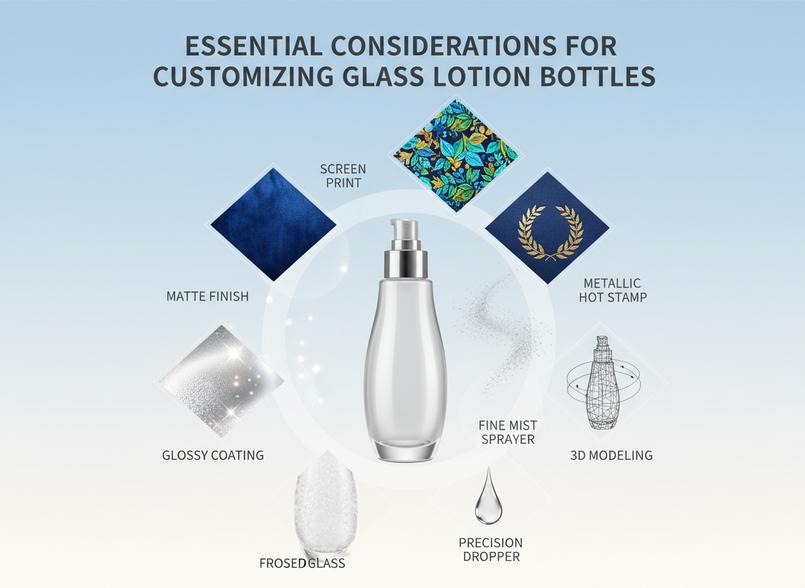
A little bottle says a lot. Here’s how to make your glass lotion bottles with pump stand out in function and flair.
Selecting the Right Surface Finish: Frosting, Coatings, and More
Want your packaging to feel as good as it looks? The finish does all the talking.
• Go for a matte finish if you’re after that soft-touch, velvety vibe.
• A glossy coat screams luxury—perfect for high-end skincare lines.
• Frosting adds a cool, semi-opaque look that feels both clean and premium.
• Try sandblasting or acid etching if you’re leaning into texture without sacrificing clarity.
Whether you need it bold or subtle, surface finishes turn plain glass into branded art.
Specialty Closures: Fine Mist Sprayers vs. Dropper Assemblies
Closures aren’t just about sealing—they shape how people use your product every day.
- Fine mist sprayer: Ideal for toners and facial mists—think light distribution with zero mess.
- Dropper assembly: Precision is key here, especially for serums and oils.
- Want something more tactile? A pump dispenser, like a treatment pump or serum pump, offers control with style.
Pairing the right closure with your formula makes all the difference in user experience—and loyalty.
Custom Design Capabilities in Bottle Manufacturing
Customization is where creativity meets strategy—and Topfeel nails this balance beautifully.
Start with a unique silhouette using custom molds that match your brand’s identity.
Use smart tools like 3D prototyping and CAD design to visualize before mass production.
Add functional tweaks—like wider necks or ergonomic grips—that improve usability while standing out on shelves.
With bespoke packaging tailored from scratch, your glass lotion bottles with pump become unmistakably yours.
Decoration Techniques: Screen Printing, Hot Stamping, and Labeling
Branding isn’t just about logos—it’s how they live on the bottle.
✦ Use bold colors through direct-to-glass screen printing, ideal for long-lasting designs.
✦ Add upscale flair with metallic touches via hot stamping, perfect for gold foil accents.
✦ Need flexibility? Go for sleek labels that wrap around curves effortlessly—great for seasonal drops or limited runs.
These techniques turn basic containers into branded statements without overcomplicating things.
Matching Bottle Attributes to Industry Use: Skincare, Cosmetics, and Beyond
Different industries = different demands from packaging design.
- In skincare: Choose airless bottles to preserve active ingredients in serums and creams.
- For cosmetics: Opt for transparent glass when color visibility matters—lip tints or foundations shine here.
- Essential oils? Go opaque to protect volatile compounds from light degradation while using precise droppers for application control.
Matching bottle traits like material durability and closure type ensures each product performs at its best across categories—all while keeping those slick-looking glass lotion bottles with pump fully functional and fabulous.
FAQs
1. Which glass material offers the best balance of cost and durability?
— Borosilicate glass resists thermal shock and looks premium for luxury skincare packaging industry products.
— Soda-lime glass is an affordable favorite among personal care industry buyers sourcing everyday lines in bulk.
→ A mix of both keeps costs realistic while ensuring reliable performance across lotions, serums, or light creams.
2. How can I match closure types with product texture?
Quick guide by consistency:
| Product Type | Ideal Closure | Noted Feature |
|---|---|---|
| Light cream or lotion | Lotion pump dispenser / Treatment pump | Smooth, even flow |
| Facial mist or toner | Fine mist sprayer | Gentle diffusion |
| Serum or oil blend | Dropper assembly / Screw cap closure | Controlled dosage & refill ease |
Each combination enhances comfort during daily beauty routines in the cosmetic packaging industry, maintaining both aesthetic appeal and usability.
3. Why does bottle shape affect my brand recognition?
Cylindrical shape bottles create trust – stable design meets easy labeling and flexibility for Screen printing decoration. Square shaped bottles look modern on boutique shelves; round shaped bottles suit minimalist skincare series; custom molded bottles whisper exclusivity when paired with brushed-metal pumps.
A single silhouette change can turn a standard lotion into a signature icon.
4. What capacities are top sellers for wholesale buyers?
Short overview blending routine practicality with storage logic:
• 15ml & 30ml glass bottles — ideal travel companions for essential oils within small-batch pharmaceutical packaging, sometimes amber-tinted to protect formulas from light exposure;
• 50ml — balanced daily portion used widely in facial moisturizers under frosted finishes;
• 100ml–200ml — steady lineup for family-size use across premium bath & body goods offered by bulk suppliers featuring ISO 9001 certified systems.
5. Can sustainable practices really add value to bulk orders?
Yes—with visible heartbeats behind every shipment:
✓ Suppliers offering Amber glass, Colored glass, or recycled clear versions support greener production lines using eco-safe coating surface treatment methods;
✓ A GMP certified manufacturer adopting renewable energy attracts sustainability-minded consumers faster than any slogan could;
✓ Global shipping options aligned with recyclable materials keep your brand story truthful—and customers loyal—in the competitive arena of conscious cosmetics.
References
- Borosilicate vs. Soda Lime Glass: A Detailed Comparison – LJ Star
- What is Borosilicate Glass – is it Better than Regular (Soda-Lime) Gla – Wondrwood
- ISO 9001 and GMP – What Are The Differences? – Advisera
- GMP vs ISO: What’s the Difference? – Bachem
- Product certification GMP – cosmetics – LLC ZA South Africa
- Estée Lauder Companies releases glass packaging best practices – Glossy
- Beauty Packaging Trends: Future of Glass & Droppers – Virospack
- Why has the lotion pump become a trend in modern skin care product packaging? – cnyyjb
Post time: Dec-16-2025
