
Lipstick packaging has evolved significantly with the rise of diverse lip products such as lip sticks, lip glosses, and lip glazes. To meet modern cosmetic brand demands, packaging factories have fine-tuned the internal structures and exterior designs of lipstick containers, forming a full range of application solutions.
Whether you are designing a classic bullet lipstick or a new lip care product, understanding the anatomy of a custom lipstick component is crucial for ensuring a premium customer experience.
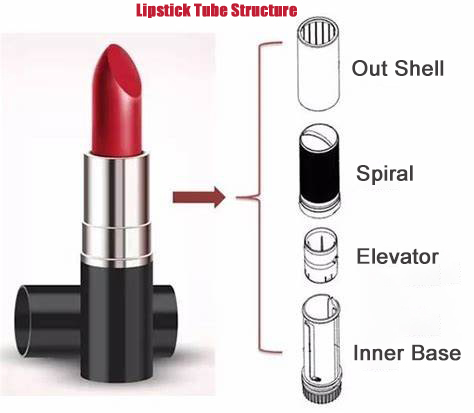
The Core Anatomy of Lipstick Containers
The structure of standard and custom cosmetic packaging for lipsticks can be divided into several essential parts: the cover, the base, and the internal cartridge.
1. The Cover (Cap)
The lipstick tube cover is typically made of aluminum, acrylic, or ABS plastic. The cover not only protects the product but also serves as the primary visual touchpoint for your brand. Advanced custom lipstick components often feature localized printing, hot stamping, or specific color matching on the cover.
2. The Base
The base of the lipstick tube is usually crafted from acrylic, ABS plastic, or aluminum. To enhance the premium feel in the user's hand, some suppliers add an iron weight inside the base. However, if the glue holding the heavy iron fails due to vibration during transportation, it can cause the weight to detach. This degrades the customer experience, making strict quality control essential when sourcing these parts.
3. The Cartridge (The Heart of the Packaging)
The cartridge is the most critical part of lipstick packaging. It acts as the "heart" of the product. The basic function and the overall customer experience rely entirely on the cartridge's torque, smoothness, blocking force, insurance force, and bead bearing capacity.
The Bead, Fork, and Screw Mechanism
The core mechanics of the cartridge consist of the bead (cup), fork, screw (spiral), and lubricating oil.
-
The Bead (Cup): This is the part that directly holds the lipstick mass. The inner diameter typically ranges across standard sizes: 8.5mm, 8.6mm, 9mm, 9.8mm, 10mm, 11mm, 11.8mm, and 12mm.
-
The Movement: The bead moves along a straight track on the fork and a spiral track on the screw. When the user twists the base, this synchronized mechanism pushes the lipstick upward smoothly.
-
Design Precision: Often referred to as a "fast snail" due to its double-helix structure and long pitch, this mechanism is complex. Standardized drawings and precise injection molding are mandatory. If the material compatibility verification fails, or if the dimensions are slightly off, the final assembly will not function properly.
(Note: While some manufacturers claim to offer lubrication-free designs, they are not yet widely adopted due to stability concerns.)
Topfeelpack lipstick packaging overview. If interested, please contact: info@topfeelpack.com.

Product Classifications and Filling Methods
Beyond the internal mechanics, lipstick containers can be classified by their external structure and filling requirements:
-
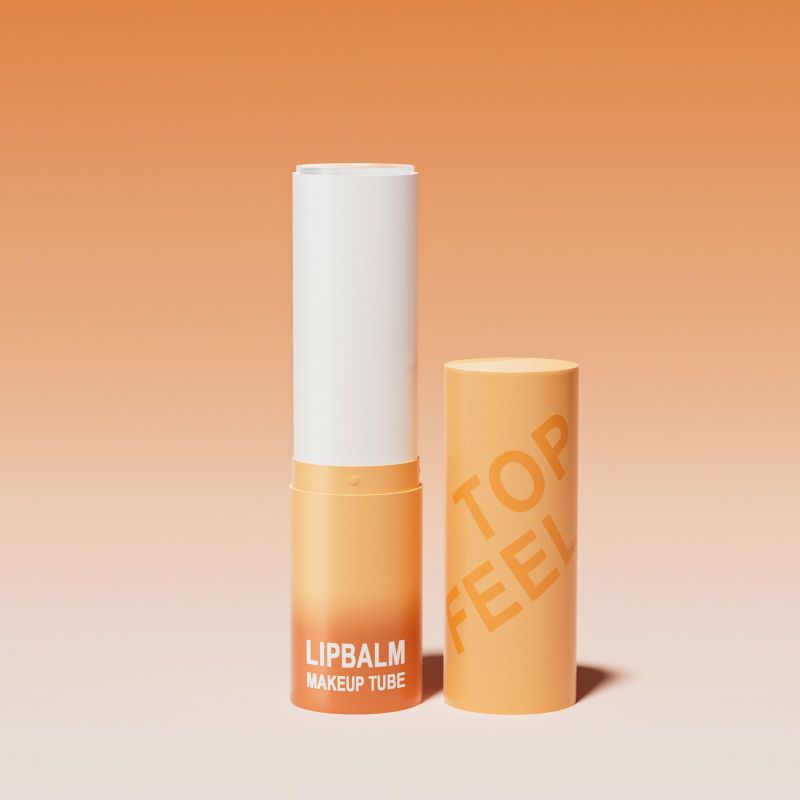
By Product Type: Traditional thin and long lipstick boxes, lip gloss tubes, lip care balm containers, and squeeze-type applicators (which require users to apply the formula with their hands).
-
By Filling Method: Base-up filling (bottom filling) and top-down filling (top filling).
Cosmetic manufacturers generally provide technical drawings or general requirements, and the packaging manufacturer produces the complete set.
Core Question: How to Choose the Right Custom Lipstick Component for Your Brand?
When sourcing lipstick packaging for a B2B project, functionality and brand aesthetics must align. Here is what you should consider:
-
Material Compatibility: Ensure the injection molding materials of the internal cartridge are compatible with your specific lipstick formula to prevent structural degradation.
-
Supplier Expertise: Look for a manufacturer capable of producing precise bead, fork, and screw mechanisms. The torque must feel luxurious—neither too loose nor too stiff.
-
Customization Scope: Consider local printing, customized bottle caps, and specialized surface treatments (like anodized aluminum middle beams) to make your product stand out.
Frequently Asked Questions (FAQ)
Q: What is the typical MOQ for a custom lipstick component? A: For high-quality, fully customized B2B manufacturing, the Minimum Order Quantity (MOQ) typically ranges from 10,000 to 12,000 units. This ensures cost-effectiveness while allowing for bespoke molds, colors, and finishes.
Q: Can I customize the inner diameter of the lipstick cup (bead)? A: Yes. While standard sizes range from 8.5mm to 12mm, a reliable packaging supplier can adjust the cup size based on your specific formulation and mold requirements.
Q: Why do some lipstick bases feel heavier than others? A: Premium lipstick containers often include an iron weight added to the base to improve the tactile experience. It gives the product a luxurious, substantial feel in the hand.
Post time: May-31-2022
