
When your mascara bottle sells before the formula does—see how smart packaging turns beauty brands into irresistible shelf magnets.
Mascara bottle design isn’t just plastic and pigment—it’s the silent sales rep in your customer’s purse. In a market where shelf space costs more than rent in SoHo, that tiny tube better do more than look cute. According to Mintel, 68% of U.S. beauty buyers say packaging influences their purchasing decisions (Mintel GNPD Beauty Packaging Report, 2023). Translation? If your mascara bottle doesn’t scream quality and identity at first glance, you might as well be invisible.
Think of it like dating apps: swipe-right packaging meets swipe-right performance. The right shape, cap feel, brush compatibility—all those little things add up to big brand loyalty. This guide is for private label pros and OEM dreamers ready to turn factory parts into cult-favorite bestsellers.
Key Points for Creating a Standout Mascara Bottle
➔ Sealing Caps: Ensuring product protection with sealing caps is essential. Utilize ultrasonic welding and leakage testing to avoid contamination and spillage during transport.
→ Closure Material Options: Plastic closures, via injection molding, provide cost-efficiency, while aluminum components deliver a premium feel, strength, and resistance to scratches through anodizing or metallization.
➔ Innovative Wiper Inserts: Advanced wiper designs control product dosage, prevent clumping, and enhance brush fiber performance for a smoother application and improved product perception.
→ Bottle Shape Design: The aesthetic impact of the bottle design, along with surface treatments like UV coatings and soft touch finishes, influences customer appeal and brand recognition.
➔ PET Plastic vs. Glass Vials: PET plastic is lightweight and durable for cost-effective solutions, while glass vials give a more luxurious feel but come with higher shipping risks and costs.
→ Customization Opportunities: Custom bottle shapes, hot stamping logos, and spray painting finishes cater to target demographics and align with brand strategies for increased appeal.
➔ Ergonomics in Design: Ergonomic bottle designs improve grip and control, making the application experience more comfortable, which can increase user satisfaction and brand loyalty.
→ Sustainable Packaging: Recycled HDPE plastic and biodegradable materials align with eco-friendly goals, though durability and quality control remain crucial in maintaining product integrity.
➔ Label Design: Color matching, durable label materials, and the choice of printing techniques (silk screening or UV coating) all contribute to a bottle’s marketability and shelf impact.
→ Brush Fibers and Performance: The type and quality of brush fibers are key to user satisfaction, affecting lash separation, volume, and overall product performance.
Understanding Mascara Bottle Closures: Best Options Available
Knowing how your mascara bottle seals and dispenses can make or break the product experience. Let’s break down what really matters.
Sealing Caps: Ensuring Effective Product Protection
• A tight sealing cap is more than just a lid—it’s your formula’s first line of defense against air, bacteria, and leaks.
• According to QY Research’s May 2024 cosmetics packaging report, over 78% of leakage issues during transit were linked to poor cap design or weak welds.
• Ultrasonic welding? Yep, it’s not just sci-fi tech—it fuses the cap and bottle neck without glue, locking down that airtight seal like Fort Knox.
Brands shipping under FOB Shanghai love this method because it cuts down on returns caused by spillage or dried-out product.
The right contamination barrier keeps your formula fresh from factory floor to bathroom drawer—and that’s non-negotiable for any premium mascara line.
Closure Material Options: Plastic vs. Aluminum Components
- Plastic components • Lightweight • Cost-efficient • Easily molded into complex shapes
- Aluminum components • Sleek appearance through anodizing • Superior scratch resistance • Better recyclability for eco-conscious consumer
More beauty companies are shifting toward aluminum closures for their premium lines—not just for looks but also because they hold up better under pressure, literally and figuratively.
Innovative Wiper Inserts: Enhancing User Experience
“Consumers now expect precision with every swipe,” says Mintel’s Global Beauty Packaging Outlook, April 2024 edition—and guess what? That starts with the wiper insert inside your mascara bottle.
- Controls how much formula loads onto the brush
- Prevents clumping by filtering excess product
- Enhances brush performance by shaping fiber spread
Bonus: Some newer designs even self-adjust based on brush diameter—no joke!
Whether you’re working with curved brushes or micro-bristles, a smartly engineered wiper insert is key to smooth application and zero mess drama.
When these three closure elements come together—tight sealing caps, smart material choices, and killer wipers—you’re looking at a mascara container that doesn’t just perform; it impresses every time it’s uncapped.
Choosing the Right Mascara Bottle Shape for Your Brand
Picking the perfect mascara bottle shape isn’t just about looks—it’s about how it feels, functions, and fits your brand’s vibe.
The Aesthetic Impact of Bottle Design
• Clean lines or sculpted curves? Shape sets the tone. A cylindrical bottle design feels classic, while asymmetrical forms scream modern edge.
• Surface finishes like UV coating or soft touch coating add tactile luxury and visual depth—think matte elegance or high-gloss drama.
• Color matters more than you think: muted earth tones suggest sustainability; metallics evoke premium flair. Match your hue with your brand’s emotional palette.
Pro tip: A consistent aesthetic across your packaging design boosts instant shelf recognition and strengthens long-term brand image retention.
PET Plastic vs. Glass Vials: Which is Better for Your Brand?
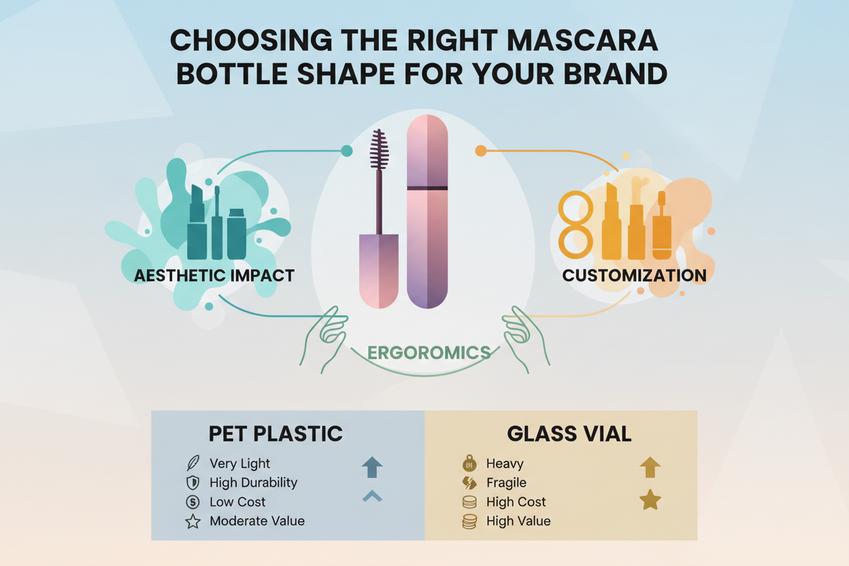
| Material | Weight | Durability | Cost Efficiency | Perceived Value |
|---|---|---|---|---|
| PET Plastic | Very Light | High | Low | Moderate |
| Glass Vial | Heavy | Fragile | High | High |
PET’s lightweight nature makes it ideal for travel-friendly products and mass-market lines, while glass vials elevate perceived value but come with higher shipping risks and costs. If you’re going for a luxe feel without breaking budgets, hybrid designs are worth exploring.
Customization: How to Tailor Bottle Shapes for Your Audience
- Young trendsetters love bold silhouettes—think geometric angles or oversized caps.
- Mature audiences gravitate toward ergonomic elegance with soft edges and understated tones.
- Urban professionals prefer minimalist shapes with subtle branding—clean, sleek, no fuss.
Customize using: • Unique molds that reflect your story • Hot stamping logos for tactile branding impact • Spray-painted finishes tailored by region or demographic
Aligning these elements ensures your mascara bottle becomes a storytelling tool—not just a container.
The Role of Ergonomics in Mascara Bottle Shape Choices
Ergonomics isn’t just science—it’s what makes someone reach for the same wand every morning without thinking twice.
A well-designed grip reduces hand fatigue during application. Tapered necks improve wand control, especially when precision matters near lash roots. Curved bodies sit better in smaller hands; rubberized coatings offer slip resistance during rush-hour routines.
And when it’s easy on the hands? It’s easier on loyalty too—comfort turns into habit, habit into repeat purchase.
Choose functionality that supports form—and vice versa—to make sure users love both how it works and how it feels in their hand.
5 Eco-Friendly Mascara Bottle Options for Sustainable Brands
Eco-conscious brands are rethinking how a mascara bottle should look and feel—starting with what it’s made of.
Recycled HDPE Plastic: A Sustainable Solution
It’s not just about looking good—it’s about doing good too, and Recycled HDPE makes that happen.
- Post-consumer resin gives used plastics a second life, reducing landfill waste.
- Injection molding compatibility means manufacturers don’t need to overhaul production lines.
- Durable enough for daily use but still lighter on the planet than virgin plastic.
You’ll often see this material labeled as PCR plastic, which is basically the MVP of sustainable beauty packaging right now. It’s strong, it holds up well under pressure, and yes—it checks all the eco boxes without compromising on aesthetics or functionality.
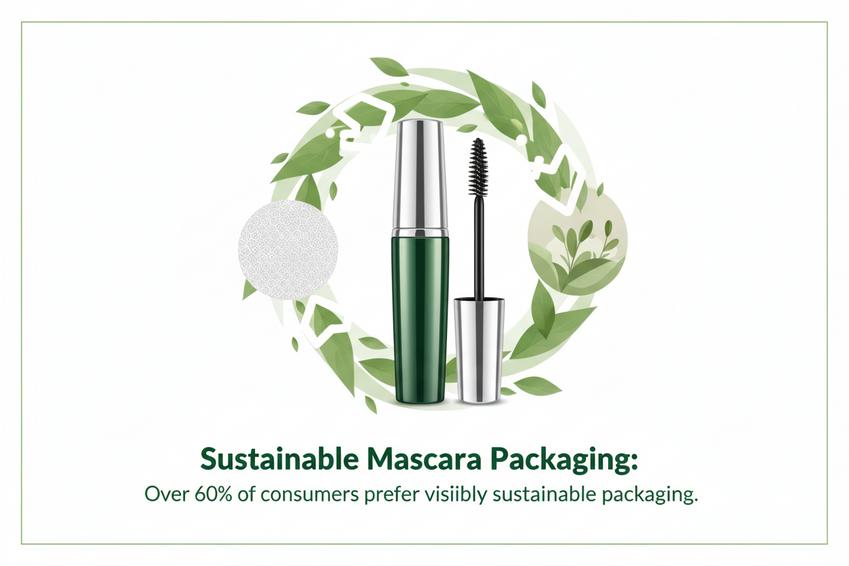
According to Euromonitor International’s Beauty & Personal Care Trends Report 2024, “Over 60% of consumers now prefer products with visibly sustainable packaging.” That stat alone shows why switching your eco-friendly bottles to PCR-based options isn’t just smart—it’s essential.
OEMs and private label manufacturers love this stuff because it offers flexibility across design specs without bloating costs or carbon footprints. Whether you’re scaling up or launching small-batch runs, sustainable mascara packaging made from recycled HDPE keeps things green and clean.
Biodegradable Materials: The Future of Mascara Packaging
When your favorite mascara tube breaks down naturally after use—yeah, that’s the dream we’re chasing here with biodegradable packaging.
- Compostable polymers like PLA offer plant-based alternatives that mimic conventional plastic texture.
- Some emerging materials even include algae blends or mushroom mycelium—talk about wild innovation.
- Acrylic resin substitutes are gaining traction too; they’re clear, sturdy, and far more earth-friendly than traditional petrochemicals.
But let’s keep it real—there are still hurdles when it comes to shelf life and moisture resistance for these materials. That said, brands committed to zero-waste goals are pushing through those challenges like pros.
Short bursts of insight: • Bioplastics reduce dependence on fossil fuels. • Compostability appeals to Gen Z buyers big time. • Shelf stability? Still a work-in-progress but improving fast. • Perfect for limited-edition or seasonal product lines where longevity isn’t critical.
The rise of plant-based plastics fits perfectly into today’s demand for green cosmetics, especially when paired with minimalist branding and refillable designs. As consumers chase cleaner beauty routines, using biodegradable components in your next-gen eco-friendly mascara line could be what sets you apart from legacy competitors—or at least keeps you ahead of the curve while staying kind to Mother Earth.
The Impact of Label Design on Mascara Bottle Sales
The way a label looks and feels can make or break how a mascara bottle performs on the shelf—let’s talk about what really works.
Color Matching Techniques for Maximum Appeal
Creating visual chemistry between your product components isn’t just about looking good—it’s about feeling right. A mismatch between cap, tube, and label color can throw off the whole vibe, making even a premium formula feel generic.
- Color palette alignment is key—matching hues across packaging elements keeps things tight and professional.
- Brands win when they use shade accuracy to echo seasonal trends while staying true to their core identity.
- Want more shelf attention? Go bold with contrast—but only if it fits your brand identity.
Consumers subconsciously judge quality through color harmony. When your label matches the lid and tube just right, that perfect blend boosts trust—and sales. The tiniest tweak in pigment blending can shift perception from drugstore to luxury in seconds.
Understanding Label Materials: Paper vs. Plastic for Cosmetic Use
The label material you choose isn’t just about aesthetics—it determines how your product survives moisture, heat, and handling. And when you’re selling high-volume cosmetics like mascara bottles, durability matters more than ever.
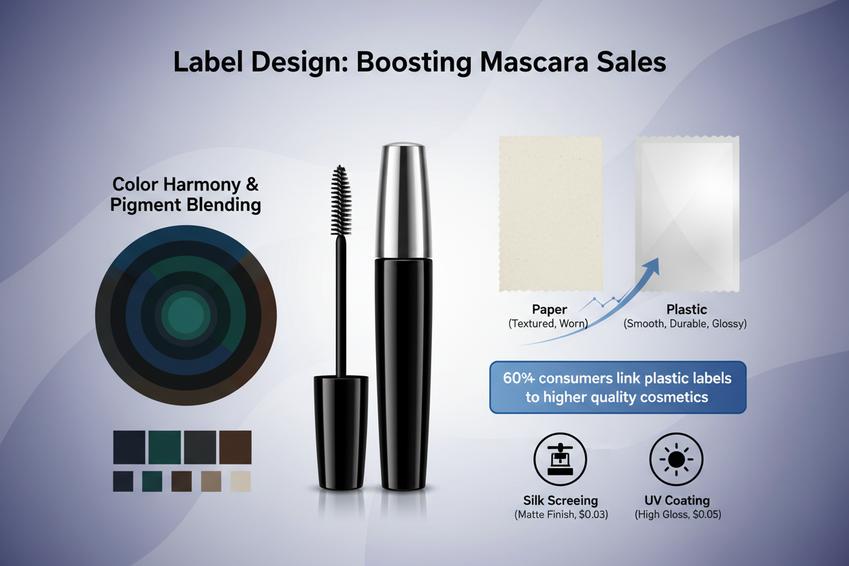
According to Mintel’s 2024 Packaging Trends Report, over 60% of consumers associate plastic labels with higher quality cosmetics due to better finish retention during use.
Grouped Overview:
Material properties
- Paper labels = eco-friendly but prone to tearing
- Plastic labels = sleek look + strong against wear
Durability & Water Resistance
- Plastic wins hands down here—essential for humid bathrooms or travel bags
Cost-effectiveness & Adhesive Types
- Paper often cheaper upfront but may cost more long-term due to reprinting needs
When it comes down to it, plastic labels offer better longevity for fast-moving products like mascaras while keeping that polished aesthetic intact—even after weeks in someone’s makeup bag.
Silk Screening vs. UV Coating: Which Method Works Best?
Label finishing techniques aren’t just decoration—they’re decision drivers at point-of-sale. When people scan a shelf full of nearly identical tubes, it’s the subtle shine or texture that makes them pick one up over another.
• Silk screen printing is great when you need tactile branding without breaking the bank—perfect for indie brands scaling up.
• But if you’re gunning for that prestige feel? Go UV every time—the added gloss enhances perceived value instantly.
• From a production standpoint, UV coating also increases speed and consistency across large batches—ideal when you’re pumping out thousands of units weekly.
Topfeel uses both methods strategically depending on campaign goals—sometimes pairing silk screen fonts with UV-coated logos on their most popular mascara tubes for max impact without overspending.
Understanding Consumer Preferences in Mascara Bottle Designs
What makes users pick up a mascara bottle and actually love it? Let’s unpack what really sways buying decisions—from sleek shapes to brush fibers that just hit different.
Survey Insights: What Do Customers Look for in Packaging?
Leak-proof closures top the list—no one wants to open their bag to find black smudges everywhere.
Packaging aesthetics matter more than most brands think; customers want something that looks good on their vanity.
Sustainable choices like biodegradable plastics or refillable tubes are becoming major purchase drivers.
A recent user survey showed that over 67% of respondents associate unique bottle design with higher product value, especially when paired with recyclable materials.
Topfeel’s latest launch hits all the marks—sleek, secure, and made from post-consumer resin.
The Influence of Brush Fibers on User Satisfaction
Each swipe is a dealmaker—or breaker.
- Brush material like silicone or nylon affects how well lashes separate without clumping.
- Tapered or curved wand designs improve grip and control during application.
- Denser fiber types boost volume, while softer bristles enhance comfort for sensitive eyes.
- User reviews consistently point out that “the brush makes or breaks the experience.”
For many beauty lovers, finding the right wand is like finding the perfect pair of jeans—it just has to fit right.
Design Trends: Minimalism vs. Bold Features
• Minimalist = Sleek matte finishes, muted tones, clean fonts — these scream premium and eco-conscious vibes. • Bold packaging = Neon caps, oversized logos, sculptural shapes — perfect for Gen Z’s shelfie culture.
Brands are now blending both styles—think bold metallics with minimalist contours—to stand out while staying chic.
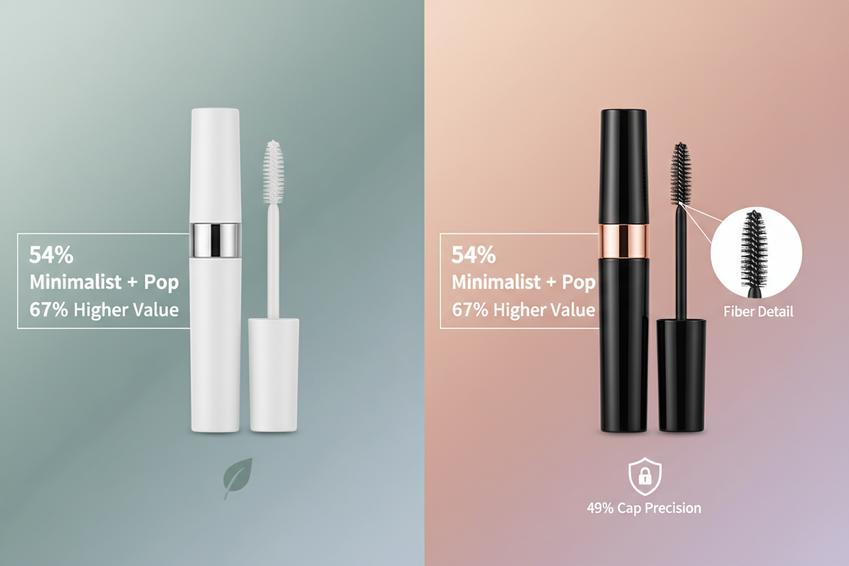
According to Mintel’s 2024 Beauty Report, 54% of consumers aged 18–34 prefer minimalistic packaging but still want a pop of personality through unexpected textures or accents.
Quality Control: How Perceived Quality Affects Consumer Choices
| Quality Factor | Impact Level | Customer Trust Boost (%) | Repeat Purchase Likelihood |
|---|---|---|---|
| Leakage Resistance | High | +42% | Strong |
| Scratch-Free Surface | Medium | +27% | Moderate |
| Dimensional Accuracy | High | +36% | Strong |
| Cap Closure Precision | Critical | +49% | Very Strong |
Buyers equate precision with care—if your cap clicks tight every time and your bottle doesn’t leak mid-flight? That’s instant brownie points for your brand’s product reliability and overall brand reputation.
Summary
The anatomy of a winning mascara bottle isn’t just about looks—it’s about feel, function, fiber precision, and how it shows up on your feed and your lashes.
FAQs about Mascara Bottle
How can sealing caps protect mascara quality during shipping?
A tight seal can be the difference between a happy customer and a messy disappointment.
- Sealing caps lock in freshness, shielding formula from air exposure.
- When paired with ultrasonic welding, closure strength rises while leaks drop dramatically.
- Rigorous leakage testing ensures smooth transit under terms like FOB Shanghai or dependable door-to-door delivery, no matter how far the route winds.
What advantages does PET plastic bring compared to glass vials for mascara bottles?
PET whispers of lightness, speed, and easier handling on production lines—crafted seamlessly through blow molding, lowering freight costs across oceans. Glass tells another story: cool weight in hand, sparkling clarity; yet its beauty travels at risk of cracks and higher bulk rates. Choosing one is part economic sense, part brand poetry.
Which closure material shines brightest for high-volume cosmetic runs: Plastic or aluminum components?
Plastic closures feel approachable—made swiftly by injection molding, lighter on shipping fees and kinder to tight budgets. Aluminum components dressed with an elegant metallization process or sleek anodizing own a more luxurious aura; they stand stout against scratches thanks to inherent scratch resistance. The choice often reflects intended audience mood as much as calculated cost.
Why do wiper inserts transform mascara application experience?
Like unseen stagehands perfecting each scene:
- They control dosage precisely along the wand’s path.
- Prevent clumps clinging stubbornly to delicate brush fibers.
- Improve formula smoothness until every stroke feels instinctive—boosting repeat sales without shouting for attention.
Which eco-friendly materials support sustainable production at scale?
For brands chasing responsibility without losing reliability:
HDPE plastic from recycled streams keeps desirable material strength intact while suiting familiar molds via injection techniques; acrylic resin with biodegradable qualities pairs well with bold identities but demands strict shelf-life monitoring before loading onto protective cartons or custom pallets bound overseas under CIF destination port orders.
| Material Type | Eco Benefit | Quality Note |
|---|---|---|
| Recycled HDPE Plastic | Lower environmental footprint | Maintains durability |
| Biodegradable Acrylic Resin | Compostable branding option | Requires closer expiry oversight |
How do ergonomic designs influence user loyalty in mascara bottles?
An ergonomic silhouette invites comfort into daily rituals—subtle curves guiding fingers toward balance and better wand applicator control.
- More natural grip means steadier strokes.
- Consistent ease fosters quiet trust over time.
When combined with thoughtful finishes like soft touch coating or vibrant UV coating matched skillfully through color matching tests, these shapes become personal companions rather than mere containers—and customers notice that intimacy long after purchase.
References
[The Future of Beauty Packaging: Here’s What Brands Need to Know - mintel.com]
[Cosmetic Packaging Testing Services Global Market Research Report - qyresearch.com]
[Why Ultrasonic Welding Services Are Best for Plastics Manufacturing - ferriot.com]
[Beauty and Personal Care Packaging in the US - euromonitor.com]
[Mintel Global Beauty Packaging Outlook - mintel.com]
[Beauty and Personal Care Packaging in the US - euromonitor.com]
[Mintel Packaging Trends - mintel.com]
[Mintel Beauty and Personal Care Trends - mintel.com]
Post time: Jan-28-2026
