
Have you noticed that those crystal-clear, heavy-walled acrylic (PMMA) jars and bottles—once staples on high-end skincare and makeup counters—are quietly disappearing from the annual launch lists of leading beauty brands?
With the global beauty supply chain pushing hard toward a "circular economy" and total plastic reduction in 2025 ~ 2026, an unprecedented green revolution is reshaping the packaging sector. When beauty brands source high-end packaging today, they are no longer blindly infatuated with the glass-like aesthetics of acrylic. Instead, they are using "Sustainability"as the new, ultimate design yardstick.
So, how did the former "King of Premium Packaging" find itself marginalized in just a few short years? And how can beauty brands seize the upper hand during this green transition? As a premier destination for sustainable cosmetic packaging wholesale, Topfeelpack Co., Ltd. (Topfeel) is here to break down the industry shift.
1. The Recycling Dilemma: Why Acrylic Fails the Circular Economy Test
In traditional material science, acrylic (Polymethyl Methacrylate, PMMA) was long considered the perfect glass substitute due to its superb transparency, excellent hardness, and premium weight. However, under the scrutiny of modern global environmental regulations and carbon footprint audits, its fatal flaws have been exposed:
1.1. Extremely Low Recycling Rates & Complex Processing
Unlike highly circular polymers, acrylic possesses an incredibly stable molecular structure that degrades very slowly in nature. Furthermore, recycling PMMA is technically complex and financially prohibitive. In real-world municipal waste sorting and industrial processing facilities, the vast majority of acrylic cosmetic containers cannot be efficiently separated. Instead of being recycled, they end up in landfills or incinerators, generating massive carbon emissions.
1.2. Strict Global Regulations and Plastic Taxes Enroute
EU Packaging and Packaging Waste Regulation (PPWR):This regulation enforces strict, tiered recyclability mandates on plastic packaging. Non-recyclable or hard-to-recycle plastics face heavy "plastic taxes" or direct market bans.
Beauty Giants' Green Commitments:Conglomerates like L'Oréal, Estée Lauder, and Unilever have pledged to achieve 100% recyclable, reusable, or compostable packaging by 2025 ~ 2030. This mandate forces the underlying supply chain to pivot instantly away from PMMA toward greener options.
2. Hardcore Material Showdown: PMMA vs. Eco-Friendly Alternatives
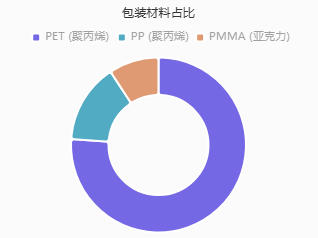
According to the latest market data from the 2025 iPDF (International Future Packaging Exhibition)and the Topfeel R&D Center, the structural ratio of cosmetic base materials is undergoing a drastic shake-up. The utilization of PP and PET is experiencing explosive growth, whereas the use of ABS, PS, and PMMA (Acrylic) is plummeting.
To help brand managers make informed procurement decisions, we have conducted a side-by-side comparison of acrylic against today’s mainstream green materials:
| Evaluation Dimension | Acrylic (PMMA) | Polypropylene (PP) | Polyethylene Terephthalate (PET) | Post-Consumer Recycled (PCR) |
|---|---|---|---|---|
| Chemical Compatibility | Poor (Prone to cracking with essential oils) | Excellent(Acid/alkali resistant for formulas) | Excellent (High stability, strong gas barrier) | Excellent (Rigorously tested for purity) |
| Visual Aesthetics | Excellent(High clarity, premium weight) | Matte/Translucent(Can be enhanced by finish) | Excellent (High transparency, glass-like) | Slightly Tinted(Embraced as eco-aesthetic) |
| Recyclability | Extremely Low (Complex/Expensive) | High (Mature recycling stream) | Extremely High(Highest global recycling rate) | Extremely High(Closed - loop circularity) |
| Regulatory Risk | High Risk (Facing potential future bans) | Low Risk(Aligns with circular economy) | No Risk (Globally favored material) | Zero Risk (Highly incentivized by policies) |
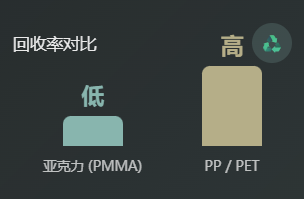
PP (Polypropylene):100% recyclable with exceptional chemical compatibility. Topfeel’s mono-material PP airless bottles solve the industry-wide headache of multi-material pumps that cannot be recycled.
PET / PETG:Flawlessly inherits the light transmission and luxury feel of acrylic while being tougher and shatter-resistant. It stands as the reigning champion to replace heavy-walled acrylic bottles.
3. How Topfeel Helps Brands Navigate the Green Transition
As a seasoned global supplier integrating design and manufacturing, Topfeelpack Co., Ltd. deeply understands the dilemmas brands face when switching to eco-friendly options: nobody wants to compromise on luxury aesthetics, yet everyone must comply with strict overseas compliance laws.
To solve this, we offer a comprehensive suite of sustainable cosmetic packaging wholesale solutions:
3.1. Heavy-Wall PET: Achieving Luxury Without Ecological Guilt
By perfecting Heavy-Wall PET/PETG engineering and high-gloss PP processing, we replicate the high refractive index, crystal clarity, and substantial weight of traditional acrylic. Your packaging remains stunningly premium on the shelf while being 100% compliant with roadside recycling bins.
3.2. GRS-Certified PCR Options & Refillable Systems
Topfeel provides PCR-PP and PCR-PET custom packaging certified by the Global Recycled Standard (GRS). By blending 30% to 100% post-consumer or ocean-bound plastics into production, we slash your product's carbon footprint by over 30%, giving your brand a rock-solid green marketing narrative.
Furthermore, we champion the "Reduce & Reuse" ethos via our advanced Refillable Systems. Our replaceable inner-pod cream jars, detachable lipstick tubes, and reloadable dropper bottles allow consumers to buy the outer shell once and wholesale the inner refills indefinitely, drastically driving down long-term costs and plastic waste.
4.Conclusion: Embracing Visible Sustainability
Today, global consumers have transitioned from merely giving verbal support to eco-causes to actively paying a premium for visible sustainability. A skincare container clearly stamped with "100% Recyclable" or "Made from PCR" wins the hearts and wallets of Gen Z shoppers far quicker than a heavy, non-recyclable acrylic alternative.
The marginalization of acrylic is not the death of beauty aesthetics; it is the birth of an entirely new green design language. Brands must audit their supply chains early and align with forward-looking packaging partners.
If you are mapping out your upcoming skincare or makeup launches and searching for top-tier eco-friendly makeup containers, contact Topfeel's international product experts today. We provide an all-in-one green path spanning compatibility testing, rapid prototyping, and mass production.
5. Frequently Asked Questions (FAQS)
5.1. Q: If I phase out acrylic, how can I ensure my eco-friendly cosmetic containers still look luxurious?
A (Topfeel): It is a common misconception that "eco-friendly" equals "cheap-looking." In reality, Topfeel’s proprietary Heavy-Wall PET technologymatches the light-bending clarity and weighted feel of acrylic perfectly. Paired with sustainable surface treatments like matte frosting, soy-ink printing, and eco-friendly 3D hot stamping, PP or PET containers can achieve an ultra-modern, elite visual identity.
5.2. Q: What certifications should a beauty brand audit when sourcing sustainable cosmetic packaging wholesale?
A (Topfeel): Safety and compliance are paramount. Brands must verify three pillars:
- Material Safety: Ensure materials pass FDA, REACH, and ROHS testing so no harmful chemicals migrate into the formula.
- Recycled Content Traceability: If you use PCR plastic, the supplier must provide a GRS (Global Recycled Standard) transaction certificate to prove the integrity of the supply chain.
- Compatibility Infrastructure: The supplier should have an in-house laboratory to perform Compatibility and Leakage Tests between the green material and your bulk formula. Topfeel conducts these rigorous tests prior to every mass production run.
5.3. Q: Is biodegradable packaging inherently better than recyclable packaging?
A (Topfeel):Not necessarily. It depends heavily on your formulation's shelf life, regional waste infrastructure, and brand claims.
Currently, major global markets lean heavily toward Recyclable (PP/PET) and Circular (PCR) models because the infrastructure for municipal plastic recycling is already highly mature. Biodegradable materials, by contrast, demand strict industrial composting facilities to actually break down; if thrown into standard trash bins, they end up in landfills anyway. Furthermore, highly aqueous formulas might compromise the shelf-life of biodegradable tubes. Therefore, a recyclable mono-material or refillable system remains the most commercially sound and truly eco-friendly choice for most brands today.
Post time: Jun-05-2026
