
Quick answer: Beauty packaging trends for 2027 are splitting into two paths. One is joyful escapism: playful, collectible and even darkly surreal designs. The other is considered restraint: sculptural minimalism, refills, aluminium and built-in tools. Either way, a pack that is only decoration won’t make the cut. It has to bring real delight, real usefulness, or both.
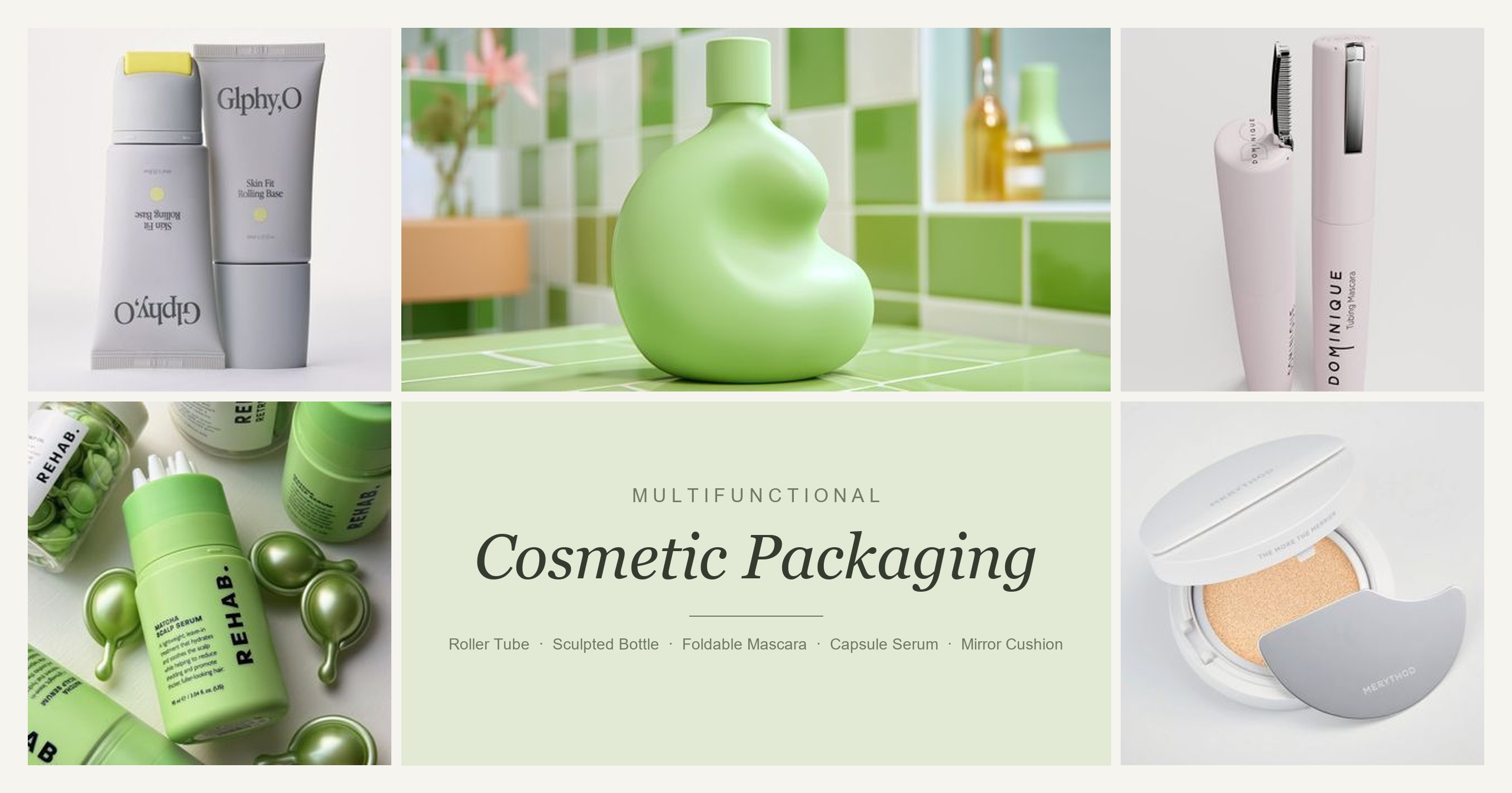
Consumers feel overstimulated and tired, and they are taking a harder look at what deserves space on their shelf and in their budget. For brands, packaging is now one of the strongest ways to justify a purchase and bring customers back. Below are six autumn/winter 2027/28 cosmetic packaging trends, the consumer data behind them, and practical formats you can develop with Topfeelpack.
Why Packaging Has to Work Harder in 2027/28
Three pieces of consumer data explain the shift:
- Touch drives buying. 86% of US Gen Z and Millennial consumers say touching and feeling products is essential to their purchase decisions (The Harris Poll for Quad, 2025).
- Sensory pleasure builds loyalty. In McKinsey’s 2025 global beauty consumer survey, sensory appeal (pleasant texture or scent) ranked as the second-biggest reason people buy a beauty brand, behind only product quality (McKinsey & Company, State of Beauty).
- Recycling awareness lags behind intent. 84% of UK students say sustainability matters when buying beauty, yet 26% don’t know most beauty empties can be recycled (British Beauty Council & UNiDAYS, 2026).
The takeaway: packaging should feel good, be easy to use, and make sustainability obvious.
| Trend | Core idea | Best-fit categories | Strategic move |
|---|---|---|---|
| Playful Whimsy | Collectible, fun-functional packs | Makeup, fragrance, skincare | Test |
| Sculptural Minimalism | Restrained form as decoration | All categories | Keep |
| Built-in Tools | Applicator integrated into pack | Skincare, body, makeup | Invest |
| Aluminium Circularity | Infinitely recyclable metal | Body, hair, personal care | Invest |
| Dark Surreal | Playful gothic, high contrast | Body, fragrance, personal care | Test |
| Sensory Calm | Soft, handcrafted, restorative | Skincare, fragrance, wellness | Expand |
1. Playful Whimsy: Packaging as a Collectible
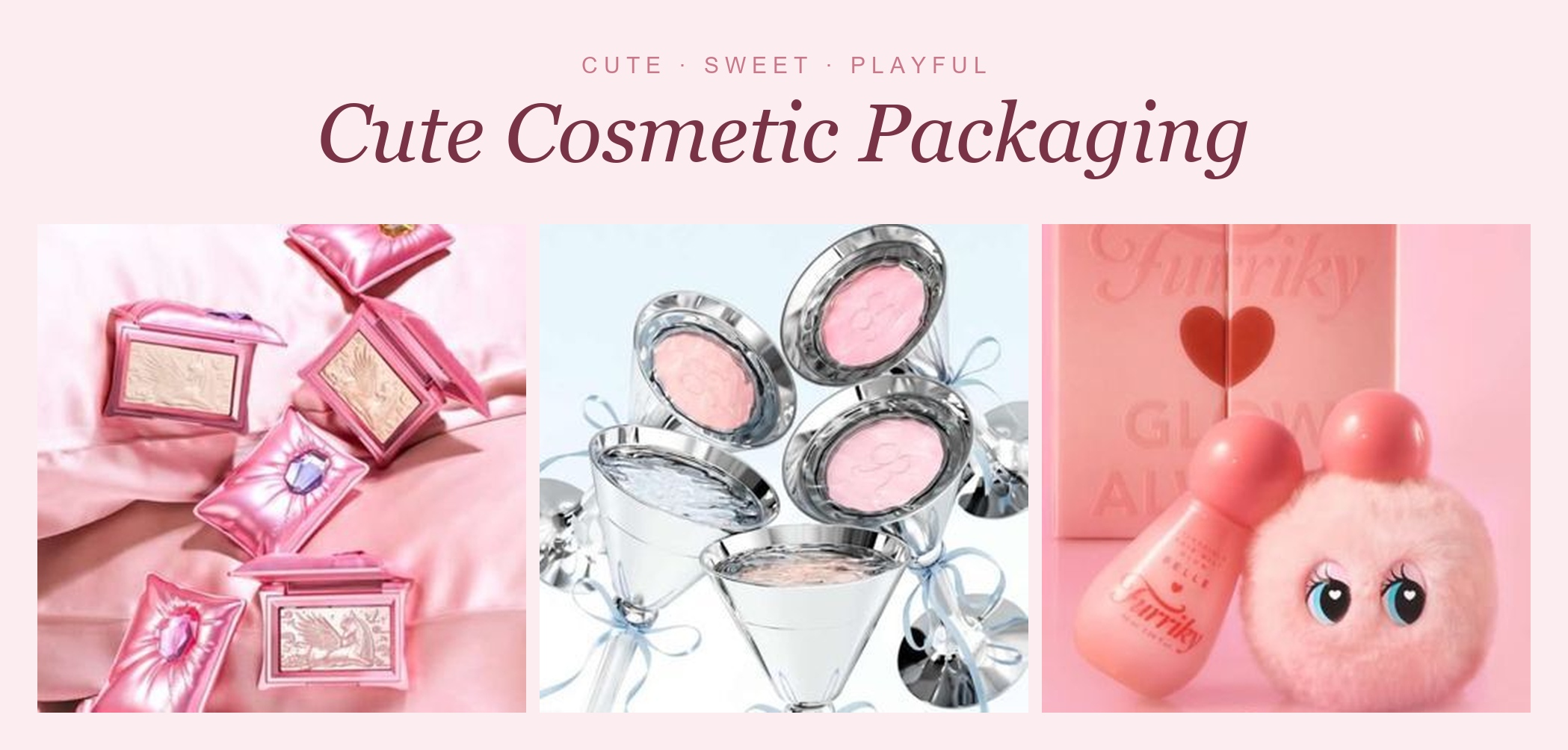
When everyday life feels heavy, small joys feel like a rebellion. Shoppers are reaching for whimsical beauty products as a form of self-expression, so playful beauty packaging starts to act like merchandise.
What it looks like
- Illustrated, world-building graphics in soft palettes such as antique pink, calm aqua blue and metallic silver.
- Tactile surfaces: faux fur, high-shine metallics and embossed plastic textures.
- Collectible mechanics: keychain lip gloss holders, limited-edition pack “outfits” and blind-box drops.
- Surreal shapes that still work, such as a lip-and-cheek tint shaped like a champagne glass with a removable silicone applicator.
How to apply it
- Develop a mini or keychain size of a hero SKU, such as a 20ml portable dropper bottle, as a gift-with-purchase or add-on.
- Use custom colour matching, embossing and special-effect coatings on a standard component to create a limited edition without opening a new mould.
- If the shape is truly ownable, consider a private mould. Topfeelpack aims to deliver drawings within 1 day and a 3D prototype within 3 days, so you can test a concept quickly.
2. Sculptural Minimalism: Restraint as Decoration
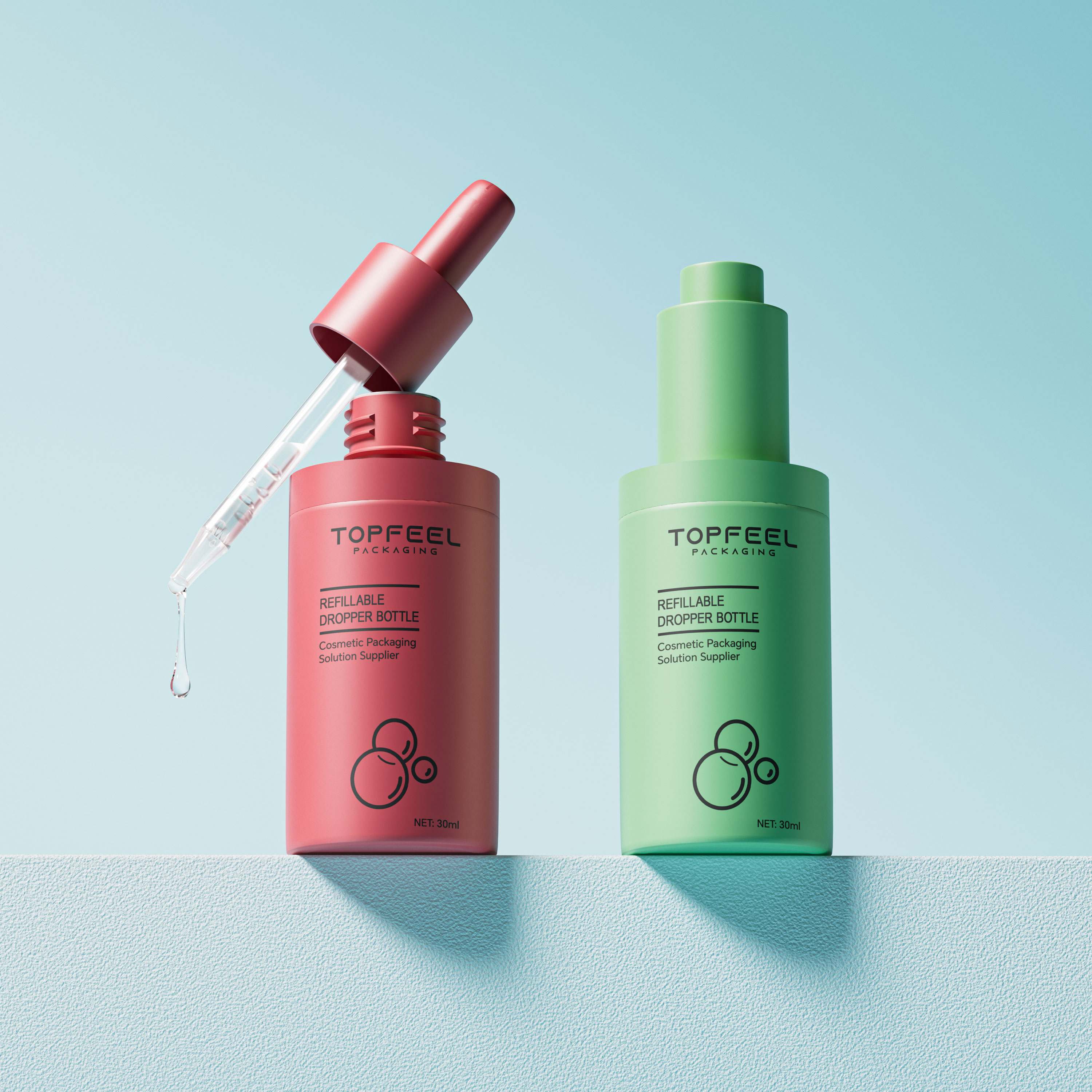
Sensory overload is pushing demand for calm, controlled design. Here the shape itself does the decorating.

What it looks like
- Symmetrical geometric forms with minimal detailing.
- Ergonomic, easy-grip shapes based on universal design principles.
- Sans-serif typography paired with matte or semi-matte surfaces.
- One signature silhouette carried across a range, with each SKU in its own colour.
How to apply it
- Choose a heavy-base bottle with a clean silhouette, such as a rounded-rectangle thick-wall dropper bottle, and let the shape stand on its own.
- Specify matte, soft-touch or frosted finishes with single-colour printing.
- Design for refills from day one. A minimal outer pack is easier to keep and refill, so it becomes a keepsake rather than waste.
3. Built-in Tools: Fewer Steps, Better Rituals
Efficiency-minded consumers like packaging with a built-in applicator. It cuts clutter and makes the daily routine feel more deliberate.
What it looks like
- A mascara wand with a flip-out lash comb.
- A cooling roller that dispenses primer while massaging the face.
- A scalp serum with a direct-to-scalp massaging applicator.
- A cushion compact with a magnetic metal spatula.
How to apply it
- Start from a consumer pain point (clumping, mess, uneven application), then choose the tool that fixes it.
- Look at roller-ball, massage-head, spatula and comb applicators for skincare, scalp care and body care.
- Build a refill system for the formula, not the tool. Customers keep the applicator and buy refills, which raises lifetime value.
4. Aluminium Circularity: The Can Goes Beauty
Food-inspired design meets circular thinking, and aluminium cosmetic packaging becomes a symbol of mindful consumption.
What it looks like
- “Pantry-to-vanity” cues inspired by canned food and cooking oils, such as flip-top oil spouts.
- Raw or brushed metal finishes that signal recyclability.
- Reusable aluminium compacts and premium-styled metal tins.
- Modular refills: a durable outer dispenser paired with aluminium refill cans.
How to apply it
- Best suited to body care, hair care and personal care, where larger formats and frequent use make refills worthwhile.
- Keep the outer hardware separate from the refill so the long-lasting part is used again and again.
- Make recyclability easy to see. Clear on-pack icons and short “how to recycle” copy help close the awareness gap shown in the UK data above.
5. Dark Surreal: Playful Gothic for Everyday Fun
Inspired by curated personalities, this trend adds a mischievous, dark twist to everyday products.
What it looks like
- Playful forms such as minimal ghosts, cauldrons or coffins.
- Bold, high-contrast black-and-white graphics with spooky motifs.
- Bright matte accents (vital red, infinite purple, pale lime) for maximum contrast.
- Humorous characters that make “boring” products like SPF fun to use.
How to apply it
- Works well for limited editions and seasonal drops (Halloween, winter holidays) without changing your core range.
- Get the effect through colour, printing and decoration on standard bottles and tubes, so MOQ and lead time stay under control.
- Test with one SKU first. Watch sell-through and social engagement before rolling it out.
6. Sensory Calm: Packaging That Helps People Rest
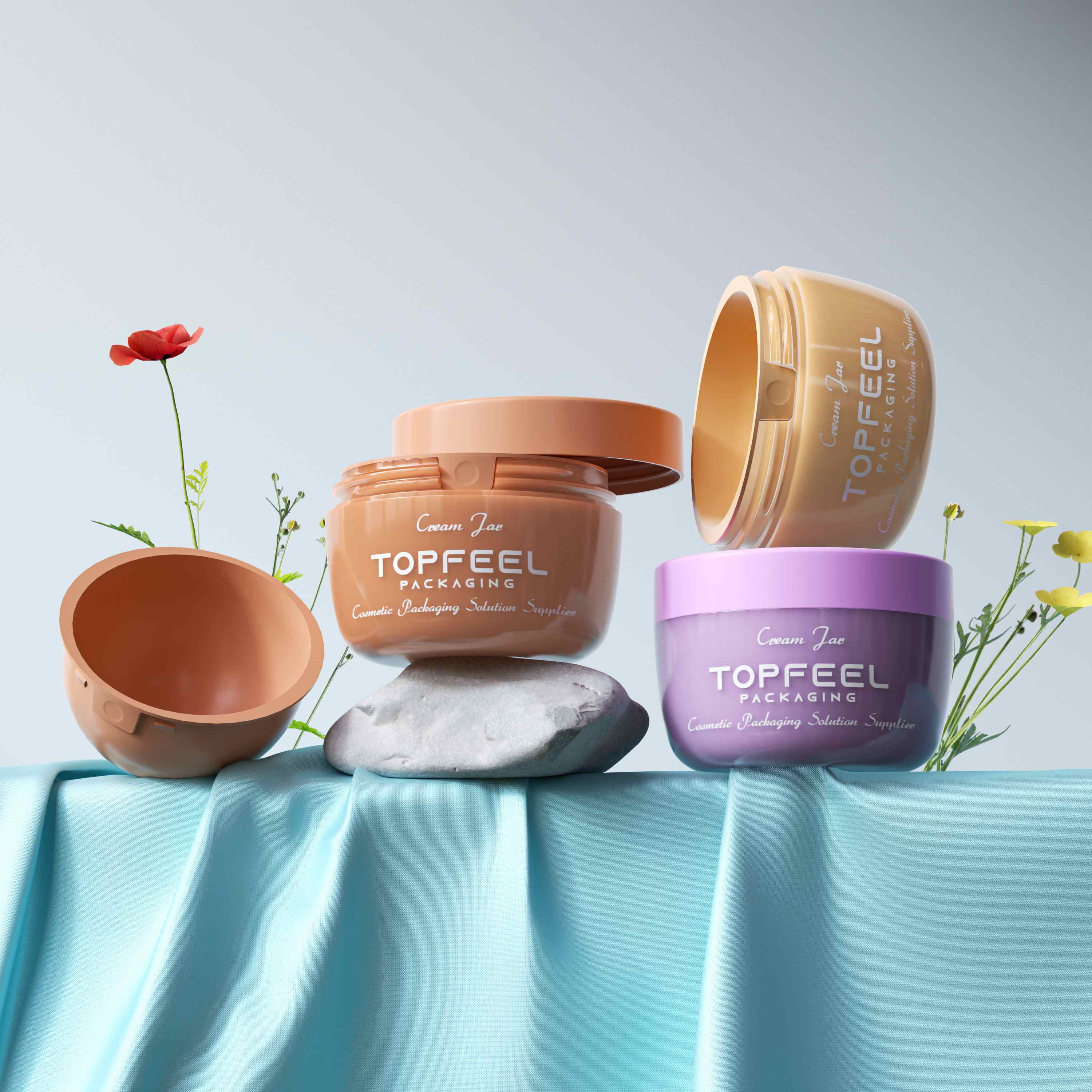
Stress and burnout are pushing shoppers toward products that help them slow down. Packaging can help through texture, form and tone.
What it looks like
- Imperfect, handcrafted-looking forms with gentle, uneven textures.
- Restorative pastels and neutrals: nurturing pink, serene green, warm muted yellow.
- Grounding materials such as stone effects, warm wood caps and ceramic-like finishes.
- Pebble-shaped containers that customers reuse as decor.
How to apply it
- Pair glass bottles or jars with wood-look or real-wood caps for a natural, calming feel.
- Use speckled, stone-effect or soft-touch coatings to deliver the tactile quality young shoppers value.
- Extend the trend into wellness and fragrance lines: body oils, pillow mists, balms.
The Common Thread: Refillable Packaging Builds Loyalty
Across all six trends, one idea keeps coming back: keep the hardware, replace the formula. Refillable cosmetic packaging extends product life, cuts material use and builds a repeat-purchase habit. That is exactly what brands need when shoppers are buying more carefully.
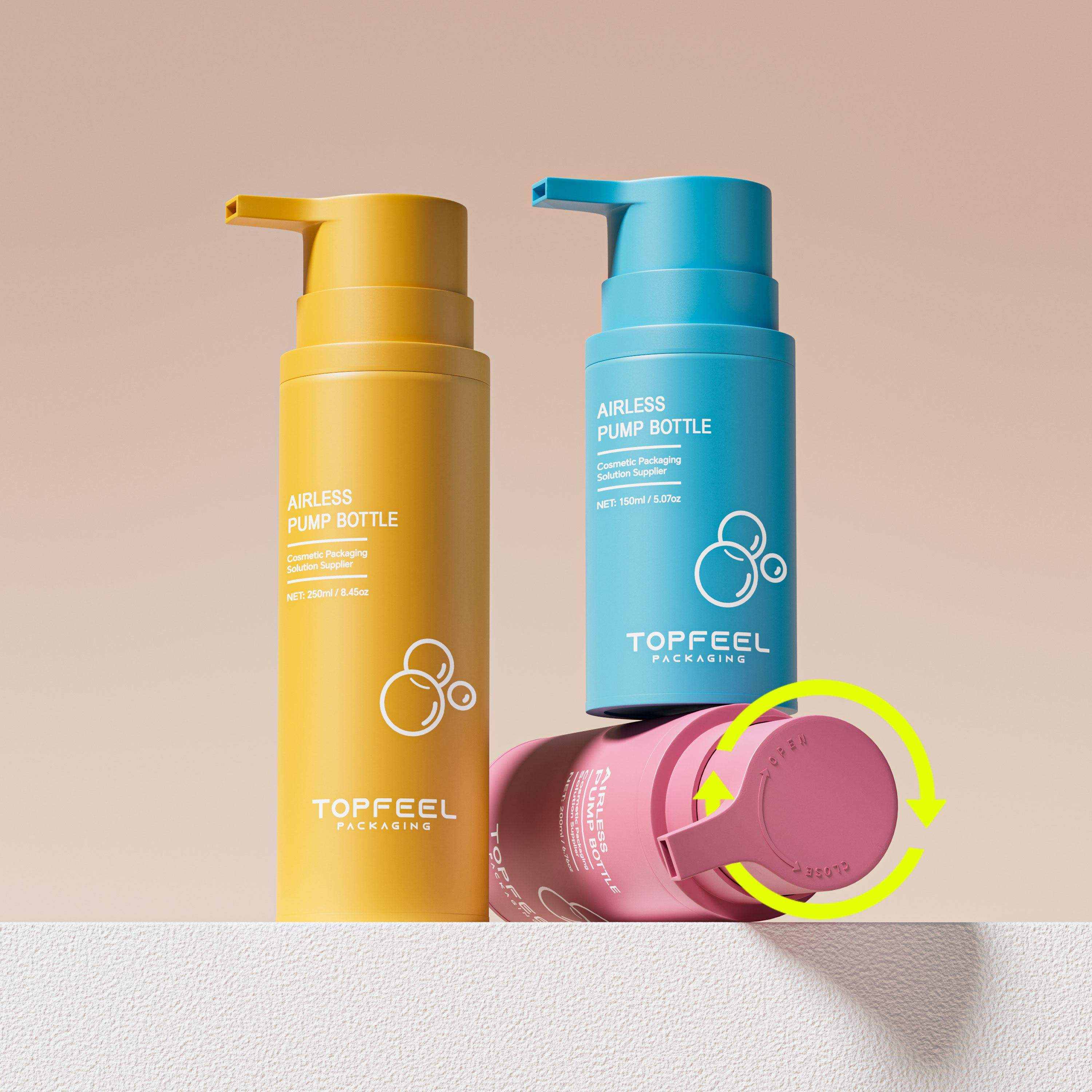

Practical refill and recyclable formats to consider:
- Airless bottles for serums and creams. They protect oxygen-sensitive formulas such as vitamin C and retinol. The large-capacity airless bottle with lock pump suits home-size formats.
- Refillable cream jars with pop-in inner cups, such as the 50g refillable cosmetic jar, or a rotary airless cream jar for hygienic dispensing.
- Refillable dropper bottles for facial oils and serums.
- Mono PP airless packaging, where body, piston and cap are all polypropylene, so the pack is simpler to recycle at end of life.
For a deeper look at material choices, see our guides to choosing recyclable cosmetic packaging and sustainable packaging for clean skincare.
How to Turn These Trends into a Launch Plan
- Pick one “joy” trend and one “restraint” trend. For example, run a playful limited edition alongside a minimal refillable core line.
- Match the trend to the category. Aluminium suits body care; built-in tools suit skincare and scalp care.
- Check formula compatibility early. Airless suits oxygen-sensitive actives; glass suits oils and fragrance.
- Use decoration before new tooling. Colour, finish and print can create a trend-led look on stock components quickly.
- Prototype and sample. Test feel, dispensing and leak resistance before bulk production.
- Plan your timeline. Custom production typically takes 40 to 50 days, so lock packaging for AW 2027/28 launches well in advance.
FAQ
What are the main beauty packaging trends for 2027?
For autumn/winter 2027/28, the main directions are playful whimsy, sculptural minimalism, built-in tools, aluminium circularity, dark surreal and sensory calm. Refillability runs through all of them.
Is refillable cosmetic packaging worth it for small brands?
Yes, if your product is repurchased regularly. Start with one hero SKU in a refillable bottle or jar, and price refills lower to encourage repeat orders.
Which materials are most sustainable for cosmetic packaging?
It depends on the formula and the local recycling system. Aluminium, glass, PCR plastics and mono-material PP are common choices. Simpler structures with fewer mixed materials are generally easier to recycle.
How can packaging improve the sensory experience?
Use tactile finishes (soft-touch, embossing, frosted glass), weighted or thick-wall bottles, natural-feel caps and smooth, controlled dispensing systems.
How long does custom cosmetic packaging take to produce?
At Topfeelpack, production typically takes 40 to 50 days depending on customization. Samples are available before bulk orders, and MOQ for most items starts at 10,000 pieces.
Conclusion
AW 2027/28 beauty packaging is about earning attention: bold joy on one side, quiet and useful restraint on the other, with refills, recyclable materials and tactile details holding it together. Brands that plan early and design packaging around real emotional and practical value will be best placed to win repeat customers.
Ready to bring a 2027/28 trend to life?
Get samples, custom finishes or a private-mould concept for your next launch.
Post time: Oct-13-2026
