Sustainability is no longer optional in the beauty industry. Consumers are reading labels, regulators are tightening rules, and brands that ignore eco-friendly packaging risk losing relevance fast.
At the center of this shift is one material: PCR.
Post-Consumer Recycled (PCR) material has become the go-to solution for cosmetic brands looking to reduce their plastic footprint without sacrificing quality or design. Whether you're a startup founder choosing your first packaging or a procurement manager sourcing at scale, this guide answers every question you need to make a confident decision.
 |
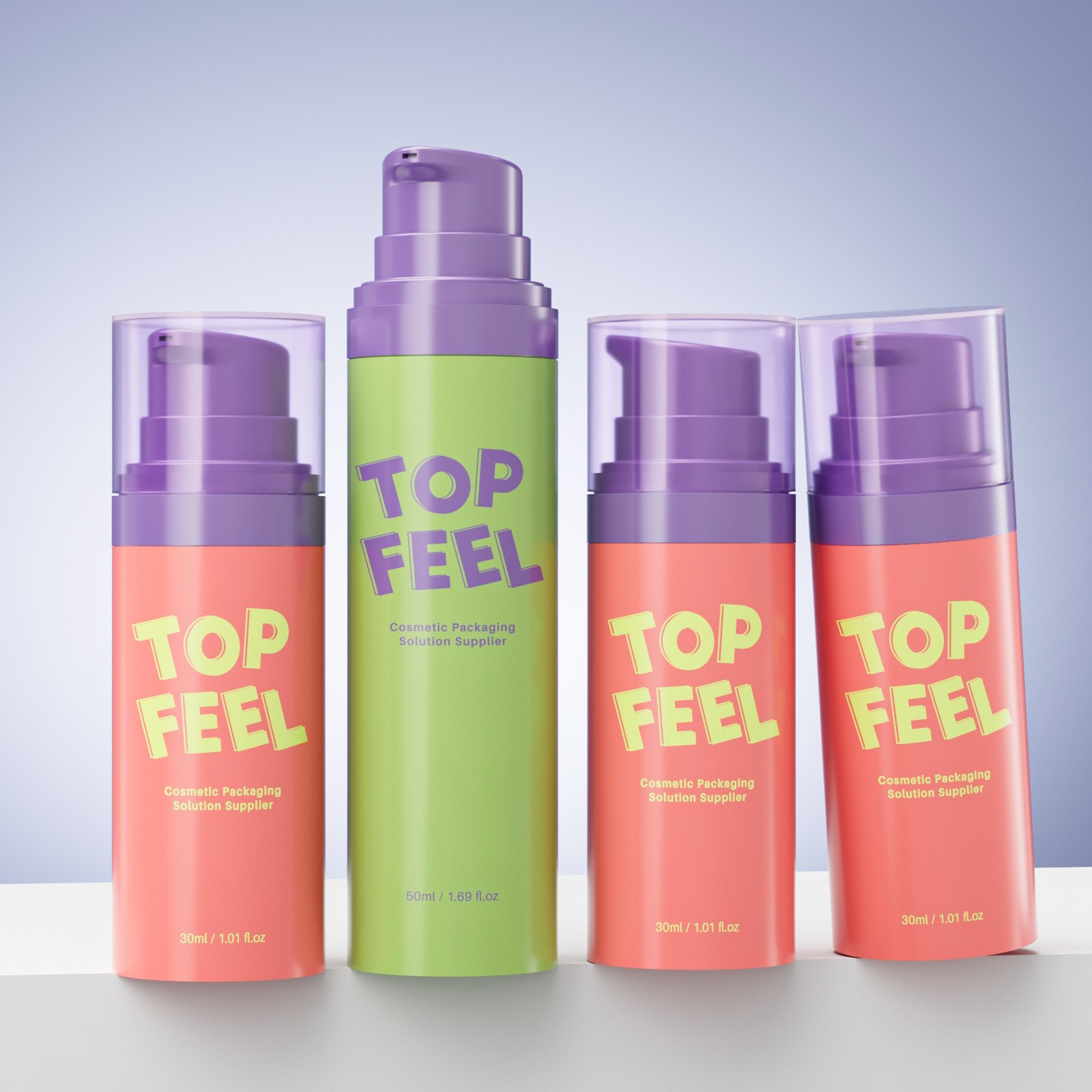 |
| PP-PCR Airless Bottle50/100ml Refillable Bottle Wholesale | 30ml 50ml Eco-friendly Refillable PCR Airless Pump Bottle |
Quick Answer Section
What is PCR material?
PCR stands for Post-Consumer Recycled. It is plastic (or other material) that has already been used by consumers — think shampoo bottles, water jugs, or food containers — then collected, sorted, cleaned, and reprocessed into new packaging material.
In short: old plastic becomes new packaging.
PCR is not the same as "recycled manufacturing waste" (which is called PIR, or Post-Industrial Recycled). PCR specifically comes from the consumer waste stream, making it a direct response to everyday plastic pollution.
How big is the PCR packaging market?
The global PCR plastic packaging market was valued at over $19–21 billion in 2024–2025, depending on the source. It is projected to grow at a healthy CAGR of 6–10% through 2031, driven by regulatory mandates and brand sustainability commitments.
In cosmetics specifically, PCR adoption has accelerated rapidly. The average PCR content in packaging among companies with stated sustainability goals more than doubled between 2019 and 2023 — from 5.3% to 10.7%. That growth is not slowing down.
What is PCR used for in cosmetics?
PCR material is used to make bottles, jars, tubes, caps, pumps, and outer packaging for skincare, haircare, body care, and color cosmetics. It can replace virgin plastic in nearly any rigid or semi-rigid cosmetic container, either partially or completely.
Detailed Explanations
How is PCR material made?
PCR production follows a clear chain:
- Collection — consumers recycle plastic at home or drop-off points
- Sorting — materials are sorted by resin type (PET, HDPE, PP, etc.)
- Cleaning — contaminants are removed through washing and processing
- Reprocessing — plastic is melted and formed into new resin pellets
- Manufacturing — pellets are used to produce new packaging, often blended with virgin resin
There are two main recycling methods:
| Method | Process | Result |
|---|---|---|
| Mechanical recycling | Physical melting and reshaping | Widely available; may slightly reduce clarity or color |
| Chemical recycling | Breaking down to molecular level | Near-virgin quality; less common, higher cost |
Most cosmetic PCR packaging today uses mechanically recycled resin. Chemical recycling is an emerging option for applications requiring maximum purity or clarity.
What PCR content percentage should I choose?
PCR content ranges from 10% to 100% of total material composition. The right level depends on your goals:
| PCR Level | Best For | Trade-offs |
|---|---|---|
| 10–30% | Brands starting out; complex designs; lightweight formats | Lower environmental impact; minimal visual or performance change |
| 30–50% | Most mid-market brands; solid balance of sustainability + cost | Meets most current regulations; minor color variation possible |
| 50–100% | Eco-focused brands; strong sustainability positioning | Maximum impact; slight texture/color variation; higher cost |
30% is the most common entry point — it meets regulatory thresholds in the UK (Plastic Packaging Tax exemption), is close to California's 2025 mandate, and is commercially proven by major brands like Unilever.
Use Cases in Cosmetics
PCR material appears across almost every cosmetic packaging format:
- Skincare bottles and jars — moisturizers, serums, toners (HDPE or PET with 30–50% PCR)
- Soft tubes — face wash, body lotion, hand cream (LDPE or LLDPE with 25–50% PCR)
- Airless pumps — premium serums and treatments requiring airtight packaging
- Shampoo and conditioner bottles — one of the highest-volume PCR applications
- Lip balm and deodorant sticks — solid formats increasingly switching to mono-material PCR
- Mascara wands and makeup packaging — growing adoption in color cosmetics
Real-world example: A major global personal care company committed to integrating at least 25% PCR in its packaging by 2025 — and surpassed that target by 2021, achieving 30% PCR across its entire portfolio. This proves that brand-wide PCR adoption is commercially scalable.
Size Comparisons: PCR Content Levels at a Glance
Not all PCR is created equal. Here is how the numbers compare in practice:
| Scenario | PCR % | What It Means Environmentally |
|---|---|---|
| A 250ml shampoo bottle at 30% PCR | 75g recycled / 175g virgin | Saves ~79g of new plastic per bottle |
| A 50ml face cream jar at 50% PCR | 25g recycled / 25g virgin | Half the virgin plastic eliminated |
| A full-line relaunch at 100% PCR | All recycled | Maximum footprint reduction; sends a clear brand message |
Carbon reduction benchmark: Using one ton of PCR plastic reduces CO₂ equivalent emissions by 79–86% compared to virgin plastic. For a brand ordering 100,000 units per year, that is a meaningful and measurable climate contribution.
Regulatory thresholds to know:
| Region | Requirement | Timeline |
|---|---|---|
| California (USA) | 25% PCR in plastic bottles | 2025 (50% by 2030) |
| United Kingdom | 30% PCR to exempt from Plastic Packaging Tax | Now |
| European Union | 30% PCR for contact packaging (PET) | 2030 |
| New Jersey (USA) | 15% PCR minimum for beverage bottles | 2024 |
If you sell into any of these markets, PCR is not optional — it is a compliance requirement.
Packaging Options
PCR material is compatible with the most common cosmetic packaging resins:
| Resin | Common Use | PCR Availability |
|---|---|---|
| PET | Serum bottles, mist sprays | Widely available; excellent clarity at 30–50% PCR |
| HDPE | Shampoo, lotion, squeeze bottles | Highly recyclable; slight color variation at high PCR |
| PP | Caps, closures, jars | Good chemical resistance; available in mono-material |
| LDPE / LLDPE | Soft tubes, flexible pouches | FDA-approved PCR grades available |
| PCR Aluminum | Premium bottles, deodorant cases | Infinitely recyclable; growing availability |
Design flexibility: PCR packaging can be screen-printed, hot-stamped, labeled, or paired with virgin outer shells for visual refinement. At 30% PCR, most brands report no visible difference from standard packaging. Color options may be more limited at 70–100% PCR due to the grey or beige tint of recycled resin, though opaque and earth-tone palettes work very well.
Buyer Questions
What is the MOQ for PCR cosmetic packaging?
MOQ varies by supplier and format, but typical ranges are:
- Standard in-stock PCR formats: 1,000–3,000 units
- Custom mold or custom color PCR: 5,000–10,000 units minimum
- High-PCR content (70–100%) custom runs: 10,000+ units, due to resin sourcing complexity
If you are testing PCR for the first time, starting with a stock format at 30% PCR content is the fastest and most affordable route.
Can PCR packaging be customized?
Yes. PCR packaging supports most standard cosmetic customization options:
- Color matching (easier at lower PCR %; neutral and dark tones work best at high PCR)
- Embossing and debossing
- Screen printing and pad printing
- Custom mold development (available with higher MOQs)
- Mixed configurations (e.g., PCR body + virgin cap for clarity)
Some brands use a PCR inner body with a virgin resin outer shell to maintain a pristine white or transparent aesthetic — a practical hybrid approach when appearance is non-negotiable.
What materials are used in PCR cosmetic packaging?
PCR cosmetic packaging most commonly uses:
- Post-consumer recycled PET — clearest, most mature supply chain
- Post-consumer recycled HDPE — robust, chemical-resistant
- Post-consumer recycled PP — ideal for closures and pumps
- Post-consumer recycled LDPE — for flexible tubes
Reputable suppliers provide SGS, REACH, and RoHS certification, and for any food-adjacent or sensitive formulations, FDA-compliant PCR grades are available for materials like LLDPE and HDPE.
Expert Tips
1. Start at 30% — it is the regulatory sweet spot.
The UK, EU, and US regulations are converging around 30% as the minimum threshold. Starting here means your packaging is future-proof for most major markets today.
2. Choose your colorway before finalizing PCR content.
High PCR content produces resin with a greyish or off-white hue. Dark packaging colors (black, forest green, deep navy) are ideal for 70–100% PCR. If your brand uses white or transparent packaging, 30–50% PCR with opaque formulation is the safest path.
3. Ask for a material certificate — not just a claim.
Every PCR supplier should provide a third-party certificate (GRS — Global Recycled Standard — or similar) verifying actual recycled content. Marketing language like "eco-friendly" without documentation is not the same as certified PCR.
4. Match resin type to your formula.
Certain formulations — especially high-alcohol serums, essential oil products, or AHA/BHA-based skincare — require chemical resistance testing. Confirm compatibility between your formula and the specific PCR resin before finalizing packaging.
5. Communicate it clearly on-pack.
Consumers value sustainability but can not act on information they don't see. Include the PCR percentage on-pack (e.g., "Made with 50% post-consumer recycled plastic") and on your product page. Transparency builds trust and supports your brand story.
Topfeelpack Solution
At Topfeelpack, we specialize in PCR cosmetic packaging for brands at every stage — from indie founders testing their first SKU to global brands scaling sustainable lines.
Our PCR packaging portfolio includes:
- Bottles, jars, and airless pumps in 30%, 50%, and 100% PCR
- Soft tubes in LDPE and LLDPE with FDA-compliant PCR options
- Custom mold development for brands building a distinctive packaging identity
- GRS-certified PCR materials with full documentation
We help you choose the right PCR percentage for your brand positioning, market, and budget — and we back every order with material testing and certification.
Ready to switch to PCR packaging? Contact the Topfeelpack team for samples, pricing, and a free packaging consultation.
Conclusion
PCR material is the most practical, scalable, and regulatory-compliant path to sustainable cosmetic packaging available today. It reduces virgin plastic use, cuts carbon emissions by up to 86% per ton, and is increasingly required by law in the US, UK, and EU.
The key decisions are straightforward once you know the facts:
- Start at 30% PCR if you're new to sustainable packaging
- Move to 50% or higher as your brand's sustainability commitments grow
- Choose resin type based on your formula and design requirements
- Certify your claims with GRS or equivalent documentation
Sustainable packaging is not a trend. It is the baseline expectation — and PCR is how leading cosmetic brands are meeting it.
Topfeelpack is a cosmetic packaging manufacturer specializing in eco-friendly and sustainable packaging solutions. Our PCR packaging line supports brands worldwide in meeting sustainability goals without compromising design or quality.
Post time: Apr-16-2026
