
To compare monolayer vs multilayer cosmetic tubes, start with the formula’s protection requirements, then examine the actual wall structure, finished-pack performance, recycling pathway, and total project cost. A monolayer tube has one structural layer in its body wall. A multilayer tube combines layers that may perform different functions, including product contact, adhesion, and barrier protection.
More layers do not automatically make a tube better. A multilayer design is worth considering when its measured performance addresses a specific formula risk. A monolayer design may be sufficient when the filled package meets your stability, dispensing, and handling requirements.
The purchasing decision should follow the evidence for your formula and complete package—not a layer count alone.
What Is the Difference Between Monolayer and Multilayer Cosmetic Tubes?
In an extruded monolayer cosmetic tube, the body wall is formed as one layer, commonly using polyethylene (PE). That layer can contain a resin blend, colorants, or other additives; “one layer” does not necessarily mean one pure polymer grade.
A multilayer body contains distinct layers. An illustrative five-layer barrier structure, read from outside to inside, is:
PE / tie layer / EVOH / tie layer / PE
EVOH means ethylene vinyl alcohol copolymer. The tie layers bond materials together. The Association of Plastic Recyclers’ HDPE design guidance identifies EVOH as a barrier material and explains the role of polyethylene-based tie layers in adhesion and recycling compatibility.
However, five-layer tubes do not all have identical compositions or performance. Request the actual layer sequence, material grades, thicknesses, and tolerances. Also establish whether the body is coextruded or made from a laminate: a plastic barrier laminate and an aluminum barrier laminate require different material assessments.
Layer count and material composition answer different questions. A multilayer wall can use predominantly PE, while a monolayer body can still be attached to a shoulder, cap, or pump made from other materials.
Compare Monolayer vs Multilayer Cosmetic Tubes Across Six Criteria
| Comparison point | Monolayer tube | Multilayer tube | Evidence to request |
|---|---|---|---|
| Wall construction | One body-wall layer; blends and additives may still be present | Several layers with defined functions | Cross-section, material specification, and thickness tolerances |
| Barrier performance | Determined by resin, thickness, and complete-pack design | A dedicated barrier layer may improve a targeted property | Comparable oxygen and water vapor transmission results where relevant |
| Formula compatibility | Depends on the contact material and formulation | Still depends on the contact layer and all relevant components | Filled-pack compatibility and stability results |
| Dispensing and handling | Must suit viscosity, squeeze force, and filling conditions | Must also maintain adhesion between layers | Dispensing, seal, leakage, and handling evaluations |
| Recycling assessment | Simpler wall construction may help, but is insufficient by itself | Barrier and tie-layer composition need assessment | Complete material breakdown and destination-market guidance |
| Commercial suitability | Compare the quoted specification and validation needs | Establish whether added complexity solves a demonstrated problem | Like-for-like quotations and qualification costs |
Use this table to identify missing evidence before approving samples or comparing prices.

Start With the Formula’s Actual Failure Risks
Ask the formulation team what would make the product unacceptable during storage and use. Potential concerns include oxidation, fragrance change, water loss, discoloration, viscosity drift, and interactions with packaging components.
Then connect each concern to a relevant evaluation:
- Oxidation: Investigate oxygen exposure and monitor appropriate formula indicators.
- Water loss: Track filled-pack mass and changes in texture or concentration.
- Fragrance change: Evaluate odor retention and possible interaction with contact materials.
- Light sensitivity: Assess light protection separately from oxygen barrier performance.
- Packaging interaction: Look for swelling, softening, cracking, staining, or changes in product quality.
A barrier layer does not establish compatibility with every ingredient. Likewise, a familiar product category such as hand cream does not prove that every formulation in that category can use the same tube.
For example, if a candidate monolayer package shows unacceptable mass loss, investigate the wall, closure, and seals before specifying a different body structure. If oxidation is the concern, assess filling conditions and exposure during use alongside wall transmission. These are diagnostic examples, not validated recommendations for a particular formula.
Compare Barrier Data Under Equivalent Conditions
Ask suppliers which property their “high barrier” claim describes. Oxygen transmission rate (OTR) and water vapor transmission rate (WVTR) describe different transport processes. Neither measurement alone establishes finished-product shelf life.
Before comparing figures, confirm:
- What was tested: A flat film, tube body, or complete package.
- Test method and units: Results must use comparable methods and reporting bases.
- Environmental conditions: Temperature and humidity must be stated.
- Construction: Resin grades, barrier-layer thickness, total wall thickness, and relevant tolerances.
- Package configuration: Shoulder, closure, seal, and dispensing assembly used in the evaluation.
A film result cannot by itself demonstrate the protection provided by a filled tube. Potential exposure pathways also include the closure and dispensing system.
Evaluate light protection independently. An EVOH-containing wall should not be assumed to provide a specified UV barrier simply because it improves oxygen barrier performance. Request evidence for the actual property your formula needs.
Validate the Finished Tube With Your Formula
The Cosmetics Europe/CTFA Guidelines on Stability Testing of Cosmetic Products identify content–container compatibility as part of stability assessment. The guidance also explains why a single standard stability program cannot suit every cosmetic product.
Have your technical team define conditions, duration, sampling intervals, and acceptance criteria appropriate to the formula and expected storage, transport, and use.
Evaluate the intended production combination: body, shoulder, cap or pump, decoration, filling process, and end seal. Depending on the project, the program may include:
- Formula appearance, odor, pH, viscosity, and relevant chemical or microbiological criteria.
- Mass change, leakage, seal integrity, and component deformation.
- Squeeze force, dispensing consistency, and product remaining near the end of use.
- Layer adhesion and signs of delamination in multilayer candidates.
- Decoration durability under anticipated handling and product contact.
Avoid accepting a universal statement such as “three months at elevated temperature proves two years of shelf life.” Any accelerated-to-real-time relationship needs a scientific basis for the specific product and package.
Assess Recyclability Beyond the Number of Layers
Monolayer, mono-material, recycled content, and recyclable are different descriptions.
“Monolayer” describes the body-wall structure. “Mono-material” concerns composition within a defined scope. Post-consumer recycled (PCR) content describes material origin. Recyclability requires assessment of package design together with collection, sorting, and reprocessing conditions.
APR’s HDPE packaging guidance requires consideration of every design feature. Its EVOH guidance considers barrier content and tie-layer characteristics; “contains EVOH” is therefore insufficient to determine a recycling outcome.
For each candidate, request a material breakdown covering the body, shoulder, closure, liner, pump, labels, coatings, and decoration. Establish which recycling guidance applies to that construction and whether the intended market accepts that tube format. An assessment against one recycling stream does not establish acceptance everywhere.
Review Topfeelpack’s sustainable packaging options alongside these requirements, then confirm the evidence for the selected configuration. A general sustainability statement cannot replace a package-specific assessment.
Compare Quotes Against the Same Approved Requirements
Do not compare an undecorated monolayer squeeze tube with a decorated multilayer airless tube and attribute the entire price difference to wall construction.
Align capacity, dimensions, closure, decoration, order quantity, and required performance before evaluating quotations. Ask suppliers to separate tooling, samples, testing, decoration, and production costs where applicable. Confirm MOQ, lead time, filling-line requirements, and the procedure for approving material changes.
The useful commercial question is whether the proposed structure meets the agreed requirements at an acceptable total cost. Paying for additional layers without a defined performance need is difficult to justify; choosing an unvalidated structure can create reformulation, retesting, or launch delays.
Discuss a Tube Structure With Topfeelpack
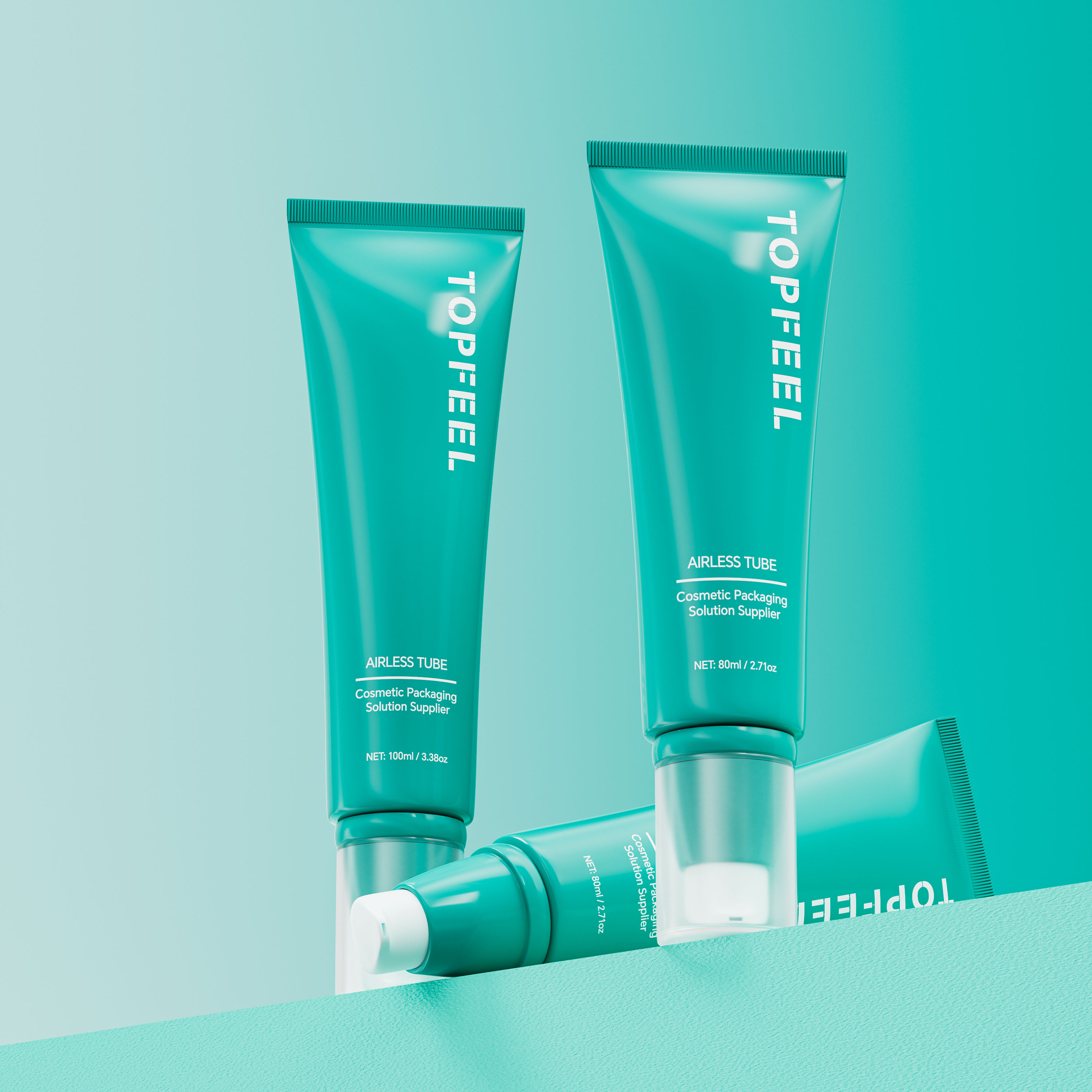
Topfeelpack’s TU02 five-layer airless cosmetic tube is listed with a PE/tie-layer/EVOH/tie-layer/PE body construction. It provides a specific starting point for a multilayer packaging discussion, although its published description does not replace project-specific barrier and compatibility data.
Keep the two design features distinct: the multilayer wall addresses transmission through the body, while the airless dispensing system addresses how product is delivered and air is managed during use. Each needs evaluation in the complete pack.
To compare suitable options, browse the cosmetic tube range and send Topfeelpack your project requirements. Include formula characteristics, fill volume, target shelf life, destination markets, closure preference, decoration, estimated order quantity, and existing test findings. Ask which structures are available and what supporting data or validation work each option requires.
Frequently Asked Questions
Can two tubes with the same layer count perform differently?
Yes. Material grades, individual layer thicknesses, processing, body dimensions, and closure design can differ. Compare the actual specifications and test conditions rather than treating the layer count as a performance rating.
Can PCR content be included in a multilayer tube?
A multilayer design may incorporate PCR in specified layers, depending on the available construction. Ask where it is used, how its percentage is calculated, and what documentation and compatibility evidence apply. PCR content alone establishes neither barrier performance nor recyclability.
What should trigger revalidation after a tube is approved?
Have the technical team assess changes to resin grade, layer thickness, recycled content, supplier, closure, decoration, filling conditions, or formula. Agree on change notification and the required scope of requalification before production begins.
Post time: Oct-27-2026
