
The main difference between PCR PP and virgin PP in packaging is material origin. PCR PP is polypropylene recovered from products after consumer use and processed into material for new applications. Virgin PP is newly produced polypropylene that has not previously been used as a product or recovered as recycled material.
For cosmetic packaging buyers, that difference creates questions about appearance, material consistency, traceability, and validation. Neither description alone establishes whether a bottle, jar, or closure will work with your formula. Compare the exact resin grade, recycled-content percentage, component design, and finished-pack test results.
The practical goal is to select a documented material specification that meets your product requirements and sustainability brief.
PCR PP and Virgin PP Describe Origin, Not a Complete Specification
PP stands for polypropylene. PCR stands for post-consumer recycled. In a typical mechanical recycling route, used plastic is collected, sorted, cleaned, and reprocessed into material that can be manufactured into new products.
PCR differs from pre-consumer recycled material, which originates before a product reaches the consumer. Production scrap should not automatically be counted as PCR. A supplier offering “recycled PP” therefore needs to identify the source category rather than leaving buyers to infer it.
Virgin PP is also a broad category. Resin producers offer different PP families and grades: LyondellBasell’s polymer portfolio distinguishes homopolymer, impact copolymer, random copolymer, and other polypropylene options. A change between grades can matter even when both materials are virgin PP.
Similarly, “PCR PP packaging” does not necessarily mean every component contains recycled material or that the package contains 100% PCR. Confirm which parts contain it and how the percentage is calculated.
PCR PP vs Virgin PP Packaging: Key Purchasing Differences
| Purchasing factor | PCR PP packaging | Virgin PP packaging | What buyers should verify |
|---|---|---|---|
| Material source | Includes PP recovered after consumer use | Uses newly produced PP without recycled content in the specified material | Source declaration, grade, and component scope |
| Appearance | Base color, visible inclusions, and finish require approval for the selected grade and blend | Appearance still depends on grade, colorants, tooling, and processing | Molded samples and agreed visual limits |
| Consistency | Recovered feedstock adds sourcing and quality-control questions | Grade and production controls remain important | Lot specifications and relevant batch results |
| Functional performance | Must be qualified at the proposed PCR content | Must be qualified for the application | Finished-component and assembled-pack testing |
| Formula suitability | Requires contact-material and formula assessment | Also requires formula compatibility assessment | Stability and compatibility evidence |
| Sustainability statement | Can support a substantiated recycled-content claim | Does not support a recycled-content claim for that material | Percentage, calculation boundary, and traceability |
| Cost and availability | Depend on grade, source, specifications, and supply conditions | Depend on grade, specifications, and supply conditions | Comparable quotations and supply commitments |
This comparison is a purchasing framework, not a universal ranking of material quality.
Compare Appearance With Molded Samples
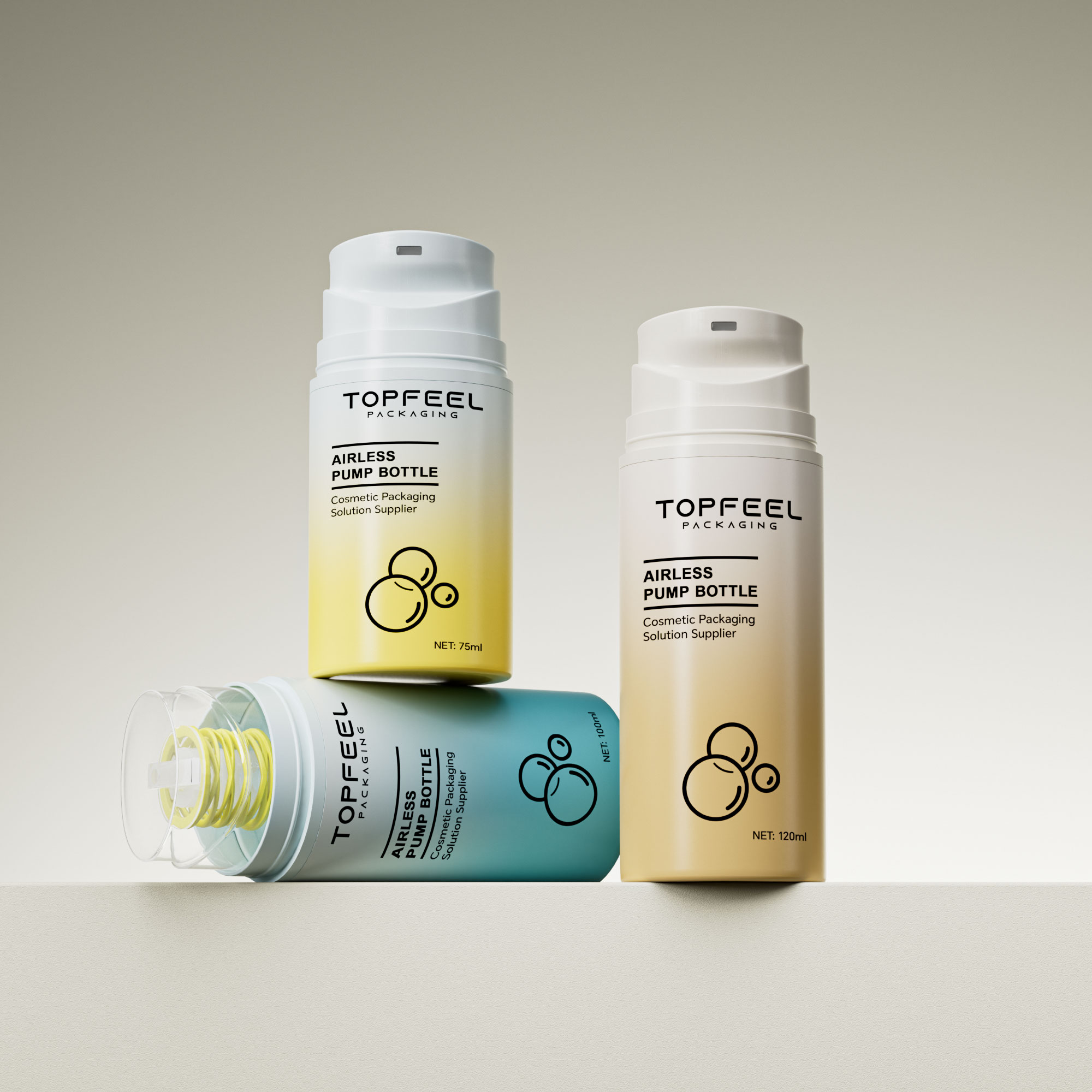
Color matching is a practical issue when introducing PCR PP into an existing cosmetic packaging range. Ask what base color the proposed material has and whether the desired finish is achievable at the selected recycled-content level.
Do not approve a resin pellet sample or a photograph as the final visual standard. Review parts molded in the intended design, with the planned colorant and decoration. For a bottle and cap set, assess the components together under agreed lighting.
Build the visual approval around observable criteria:
- Acceptable color variation against an approved reference.
- Limits for visible specks or inclusions, if present.
- Surface finish, gloss, and decoration quality.
- Consistency between components and production lots.
For example, a brand replacing a pale jar may need a different approval process from a brand launching an opaque, darker package. The right question is whether the proposed material meets the actual design brief. Avoid assuming that every PCR grade looks gray, or that every virgin grade produces the same finish.
Topfeelpack’s sustainable packaging overview specifically includes reviewing color, surface appearance, and visual consistency when discussing PCR options.
Evaluate Batch Consistency Through Specifications
A successful sample does not show how future production lots will behave. Ask the supplier which material properties are controlled and how incoming resin and finished components are released.
Depending on the component, useful review points may include melt flow rate, density, mechanical properties, color, and odor. Melt flow rate helps characterize flow under specified test conditions; it is not a complete measure of packaging performance. Compare results only when the test method, temperature, load, and units match.
For PCR PP, ask how the recovered feedstock is qualified, how variation is managed, and whether the approved material can be supplied consistently. For virgin PP, record the approved producer and grade rather than accepting an unrestricted material substitution.
Request results from more than one representative lot where practical. Agree on change notification for resin source, grade, PCR percentage, additives, and colorants. A specification should define what is acceptable before a borderline batch reaches the filling line.
Test Function and Formula Compatibility Separately
A packaging component can meet dimensional requirements and still be unsuitable for the intended formula. Likewise, a compatible material can fail because a closure, seal, or pump does not function correctly.
Use two connected evaluations:
Packaging performance
Check the properties relevant to the format: dimensions, closure fit, torque, leakage, drop resistance, and dispensing function. For an airless bottle, include pump operation and product delivery through the expected use cycle.
Test the proposed production configuration. An undecorated empty bottle does not represent every aspect of a filled, decorated bottle with its final closure.
Product–package compatibility
Evaluate the actual formula in the intended contact components. Depending on the product, monitor appearance, odor, pH, viscosity, relevant chemical indicators, and changes to the packaging.
The Cosmetics Europe/CTFA stability-testing guidelines include content–container compatibility within cosmetic stability assessment and explain why testing must be adapted to the product.
Do not treat a recycled-content certificate as proof of formula compatibility. Virgin PP also needs appropriate validation; its origin alone does not establish safety, suitability, or compliance for every cosmetic application.
Document the Recycled Content You Are Buying
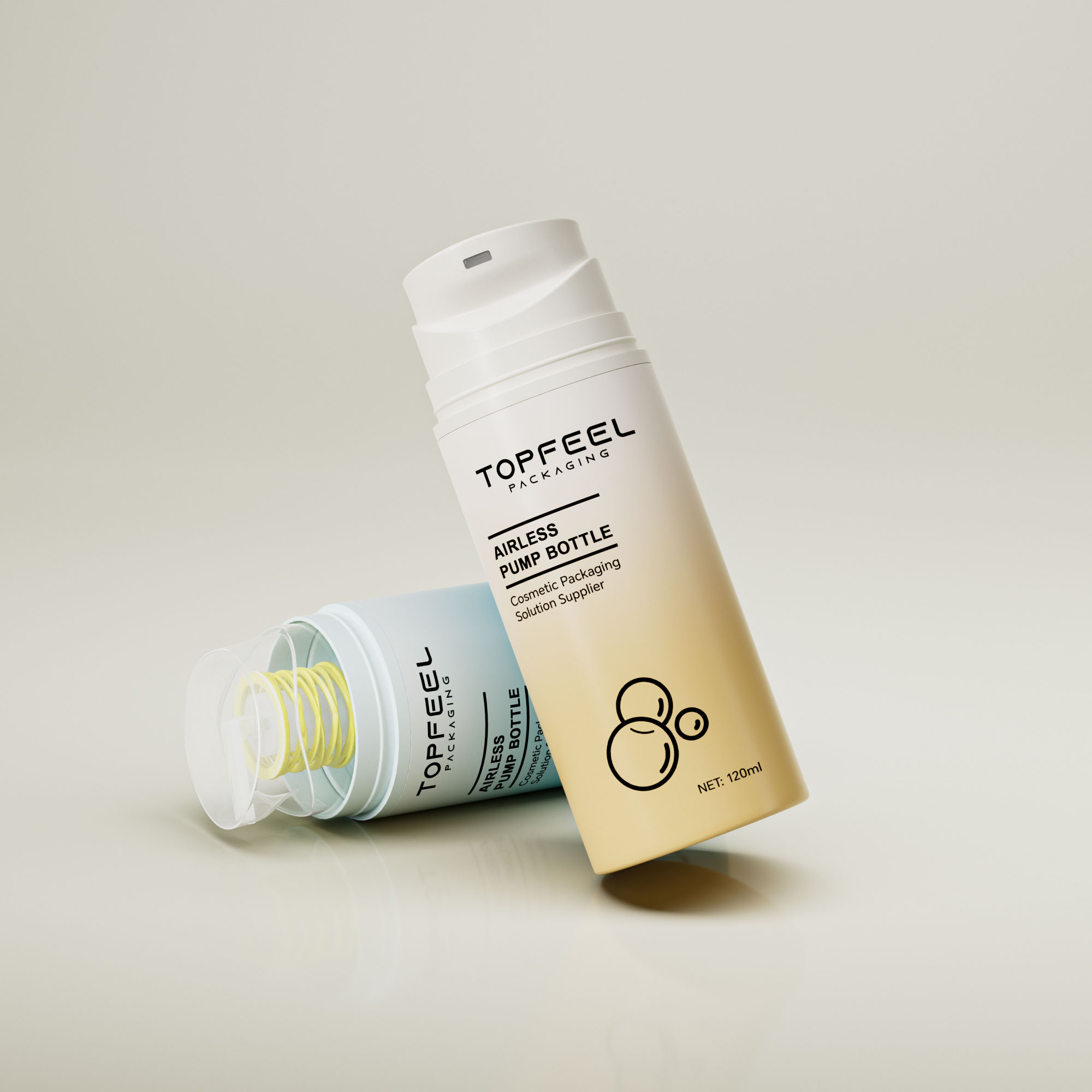
Before approving a PCR PP claim, establish three things: the material’s origin, the amount used, and the components covered.
A bottle-body percentage is different from a complete-package percentage. Consider this illustrative calculation, which is not a Topfeelpack product specification:
- Bottle body: 20 g, containing 50% PCR by weight.
- Other packaging components: 10 g, containing no PCR.
- PCR mass: 20 g × 50% = 10 g.
- Complete-package PCR content: 10 g ÷ 30 g = approximately 33.3% by weight.
Calling this entire package “50% PCR” would obscure the calculation boundary.
For U.S. marketing, the FTC Green Guides’ recycled-content provision addresses substantiation and qualification of recycled-content claims, including the percentage by weight for partially recycled items. Other markets require their own assessment.
Ask for a material declaration, component weights, applicable recycled-content records, and traceability to the supplied lots. Where third-party certification is offered, verify its validity and scope. The APR PCR certification program provides an example of independent chain-of-custody verification; this does not imply that a particular Topfeelpack product holds that certification.
Keep Recycled Content Separate From Recyclability
PCR content describes where material came from. Recyclability concerns what can happen to the finished packaging after use.
A virgin PP component may be compatible with a recycling stream. A PCR PP package may still present recycling challenges because of its other components, decoration, dimensions, or sorting characteristics. Local collection and reprocessing conditions also matter.
The APR design guidance for colored rigid PP packaging evaluates package design features rather than recycled origin alone. Apply the guidance appropriate to the actual packaging and intended recycling system.
Similarly, a PCR percentage does not establish a fixed carbon reduction. Any quantified environmental comparison needs a defined assessment covering the relevant material source, processes, transport, and packaging configuration.
Compare Total Project Cost and Supply Conditions
PCR PP is not automatically cheaper than virgin PP. Obtain quotations against matching capacity, dimensions, component design, color, decoration, quantity, and acceptance requirements.
Include the cost of sampling, validation, tooling changes where needed, and ongoing quality checks. Ask about lead time, minimum order quantity, material availability, and the procedure if the approved resin becomes unavailable.
Choose based on the project’s priorities. A documented PCR PP option may suit a recycled-content target when its appearance and performance are validated. A virgin PP option may remain appropriate where the selected PCR alternative has not yet met an essential requirement. In either case, record the approved specification and the evidence behind the decision.
Discuss PCR PP Packaging Options With Topfeelpack
Topfeelpack lists PCR cosmetic packaging options, including PP-related airless bottle formats. Availability, component composition, and recycled-content levels need confirmation for the selected project.
To request a useful comparison, share your packaging brief with Topfeelpack. Include the formula category, fill volume, dispensing format, destination markets, desired appearance, PCR target and calculation scope, order quantity, and required documents.
Ask for the proposed material specification, representative samples, and a validation plan. This gives your team a practical basis for comparing PCR PP with virgin PP before committing to production.
Frequently Asked Questions
Can PCR PP and virgin PP be blended?
Yes, a packaging specification may use a blend. Confirm the actual PCR percentage, the components containing it, and the evidence supporting the calculation. Validate the proposed blend in the finished component rather than extrapolating from a different formulation.
Does an odor in an empty PCR PP sample prove contamination?
Odor alone does not identify its cause or establish safety. Investigate it against agreed sensory criteria and relevant material or analytical evidence. Do not approve or reject formula suitability solely from an informal smell check.
Can a brand switch an approved virgin PP pack to PCR PP without new tooling?
Possibly, but the same tool does not guarantee identical processing or part behavior. Have the supplier assess the proposed grade and run trials, then confirm dimensions, assembly, function, appearance, and formula compatibility before approving the change.
Post time: Oct-27-2026
