
You ever stood in a drugstore aisle squinting at shelves of sunscreen, trying to pick between a dozen nearly identical bottles—until your eye lands on that bold, bright sunscreen orange bottle? It’s not just eye candy. Brands are banking hard on this zesty hue to scream “sun safety” from across the beach bag. But if you’re sourcing packaging for thousands—or millions—of units, it’s not just about color; it’s about cost cuts, leak locks, and eco creds.
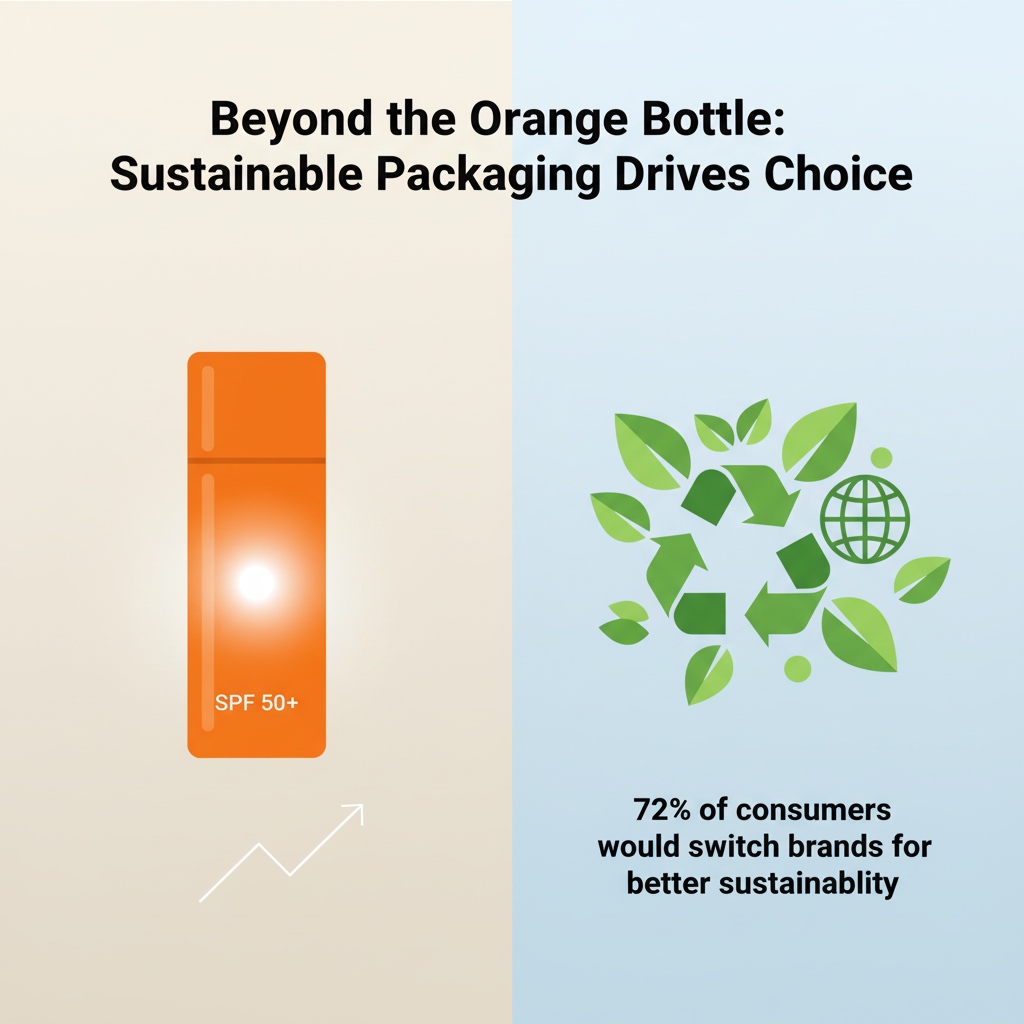
Truth is, according to Mintel’s 2023 Skincare Packaging Report, 72% of consumers say they’d switch brands for better sustainability efforts. That means refillable pumps and recyclable plastics aren’t just trendy—they’re survival gear in today’s market game.
Reading Notes on the Rise of the Sunscreen Orange Bottle
➔ Cost-Friendly Refills: Opt for 500 ml high-density polyethylene bottles with flip-top caps to save on production and support refill culture.
➔ Bulk Packaging Wins: Use 1-liter polypropylene containers with shrink sleeves and pressure-sensitive labels for efficient large-volume storage and shelf appeal.
➔ Leak-Proof Locks: Choose child-resistant closures for aluminum tubes to prevent spills while ensuring product safety around kids.
➔ Tamper Control: Apply tamper-evident seals to opaque white low-density polyethylene bottles to boost trust and reduce contamination risks.
➔ Travel Smart Design: Airless pump dispensers made from recyclable polypropylene are ideal for clean, compact, leak-free portability.
➔ Recyclability Matters: Separate recyclable aluminum from PET plastic bottles at the sorting stage to increase landfill diversion rates.
➔ Eco-Chic Labels: Select offset printing over hot stamping on glossy black glass jars for a sustainable yet premium look.
➔ Reuse & Reduce Waste: Encourage reusing BPA-free 200 ml pump dispensers as part of your eco-conscious packaging strategy.
➔ Label Smarter, Not Harder: Pressure-sensitive labels outperform hot stamping in waste reduction—better for both budget and Earth.
Cost-Saving Tips for Sunscreen Packaging
Smart packaging choices can seriously cut costs without messing with quality. Here’s how to keep your packaging game strong while saving cash.
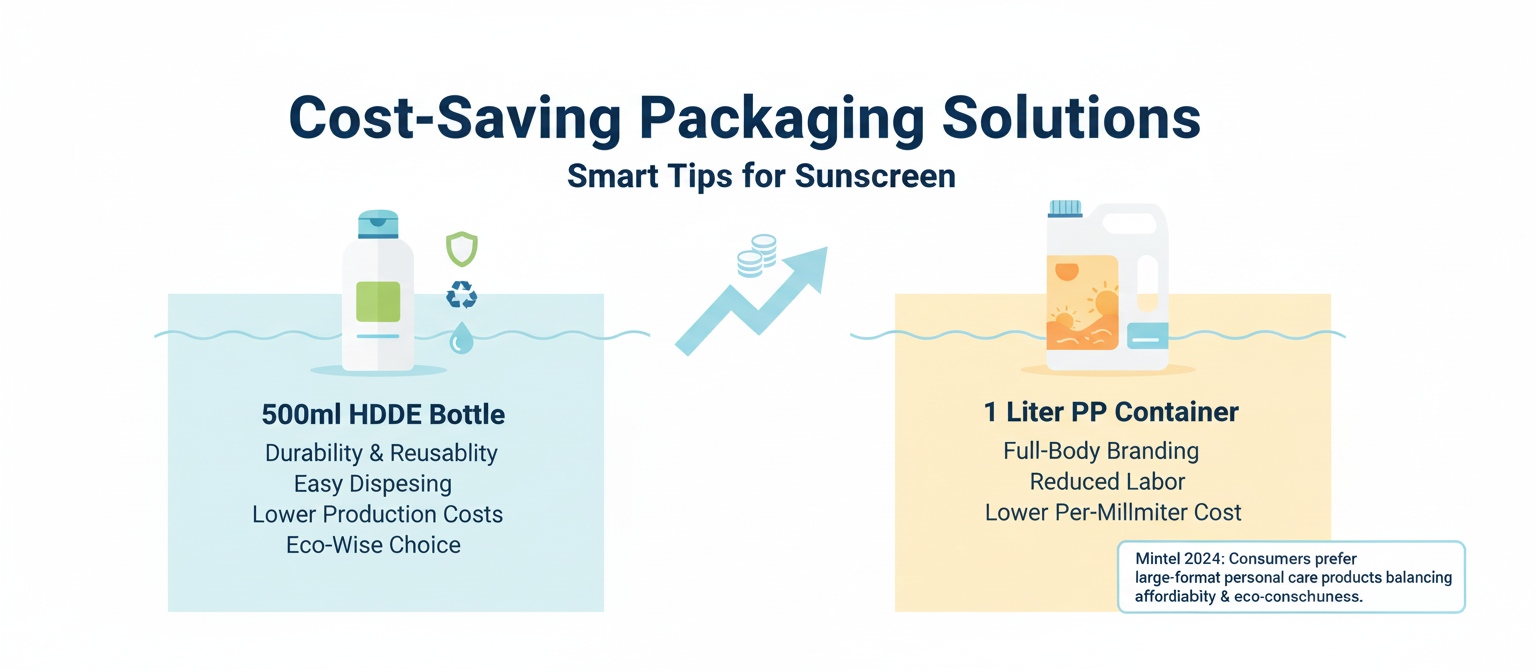
High-density polyethylene plastic bottles with flip-top caps for economical refills
Choosing 500 ml HDPE plastic bottles with flip-top caps isn’t just smart—it’s budget-friendly and eco-wise.
Durability & Reusability: These bottles are tough as nails. They don’t crack easily, making them perfect for multiple uses.
Easy Dispensing: The flip-top design means users waste less product—no more accidental spills or over-pours.
Lower Production Costs: HDPE is widely available and cheaper to mold, which brings down the overall cost per unit.
Consumer Preference: People love the convenience of smaller refillable formats, especially when they’re traveling or heading to the beach.
Brand Trust: Using refillable formats aligns with sustainability trends, increasing trust and loyalty.
And hey, if you’re trying to make your sunscreen stand out on shelves packed with every kind of orange bottle under the sun, this format keeps things simple but effective. Topfeelpack makes these refills easy to integrate into your line—without blowing up your budget.
Polypropylene plastic containers featuring shrink sleeves and pressure-sensitive labels
For brands pushing volume sales, these 1 liter polypropylene containers bring savings and shelf appeal together.
Group Benefits:
Shrink sleeves offer full-body branding space—great for catching attention among rows of similar-looking sunscreen orange packs.
Pressure-sensitive labels reduce labor time during application and stick better on curved surfaces.
The larger size drives down per-milliliter packaging cost—a win for both producers and bulk-buying consumers.
According to Mintel’s Spring 2024 Packaging Insights Report: “Consumers are increasingly drawn to large-format personal care products that balance affordability with eco-conscious messaging.”
This combo also works well when targeting families or outdoor enthusiasts who need more than just a travel-size fix. And since polypropylene resists heat deformation better than some other plastics, it’s ideal for hot climates where sunscreen use spikes.
Tired of Leaks? Try Secure Orange Bottles
Say goodbye to messy bags and wasted product. These smart packaging upgrades keep your sunscreen stash safe, sealed, and ready for anything.
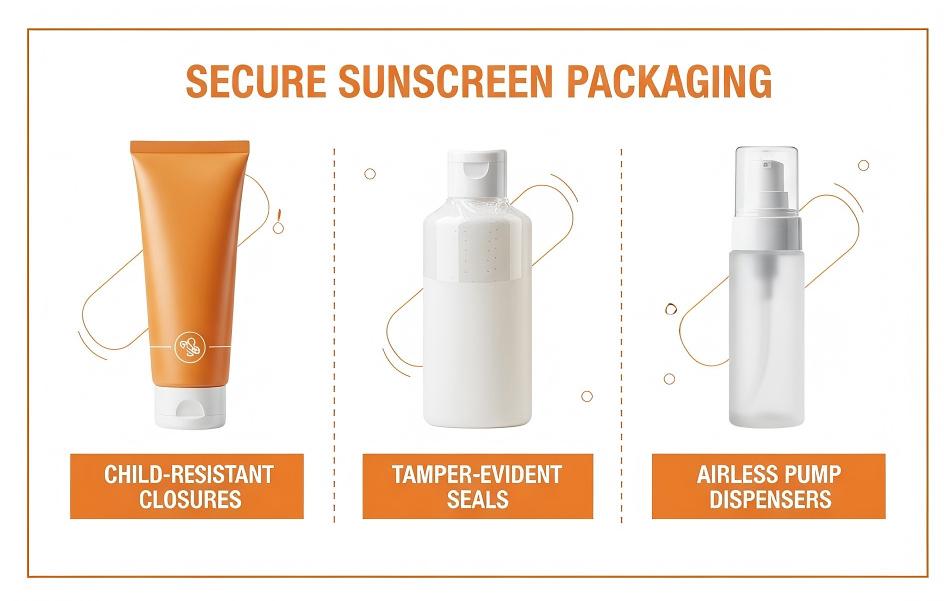
Child-resistant closures: leak-proof security for aluminum tube sunscreens
Keeping curious little hands out while keeping the goo inside? That’s where child-resistant closures shine:
Designed with twist-lock or press-turn mechanics that prevent accidental opening.
Ideal for families on the go—no more explosions of sunscreen in beach totes.
Adds a layer of leak-proof security, especially critical when using squeezable aluminum tubes.
These closures don’t just protect kids—they also protect your stuff from oily disasters. And yes, they help extend the shelf life too by keeping air out.
Tamper-evident seals on opaque white low-density polyethylene bottles
When you see a broken seal, you know something’s up—that’s why adding tamper-evident seals is a no-brainer:
• Offers instant visual confirmation that your product hasn’t been messed with.
• Works beautifully with sturdy, travel-ready opaque white bottles made from low-density polyethylene.
That combo means your sunscreen stays clean, secure, and totally yours until you’re ready to crack it open poolside or trailside.
Airless pump dispensers in recyclable polypropylene plastic for travel-friendly use
Three reasons why airless pumps are changing the game:
— No spills, ever. Not even when tossed upside down in a backpack.
— Keeps oxygen out, which means less chance of formula breakdown over time.
— Made from eco-conscious materials like recyclable polypropylene, making it easier on the planet without sacrificing performance.
These sleek little units are perfect for weekend warriors who want their skincare mess-free and mobile—and still look good doing it.
By combining smarter packaging like these with vibrant orange-themed designs, even a basic sunscreen bottle feels premium without trying too hard.
Packaging Waste? Orange Bottle Recyclability Tips
Smart packaging choices can make your sunscreen routine less wasteful and way more planet-friendly.
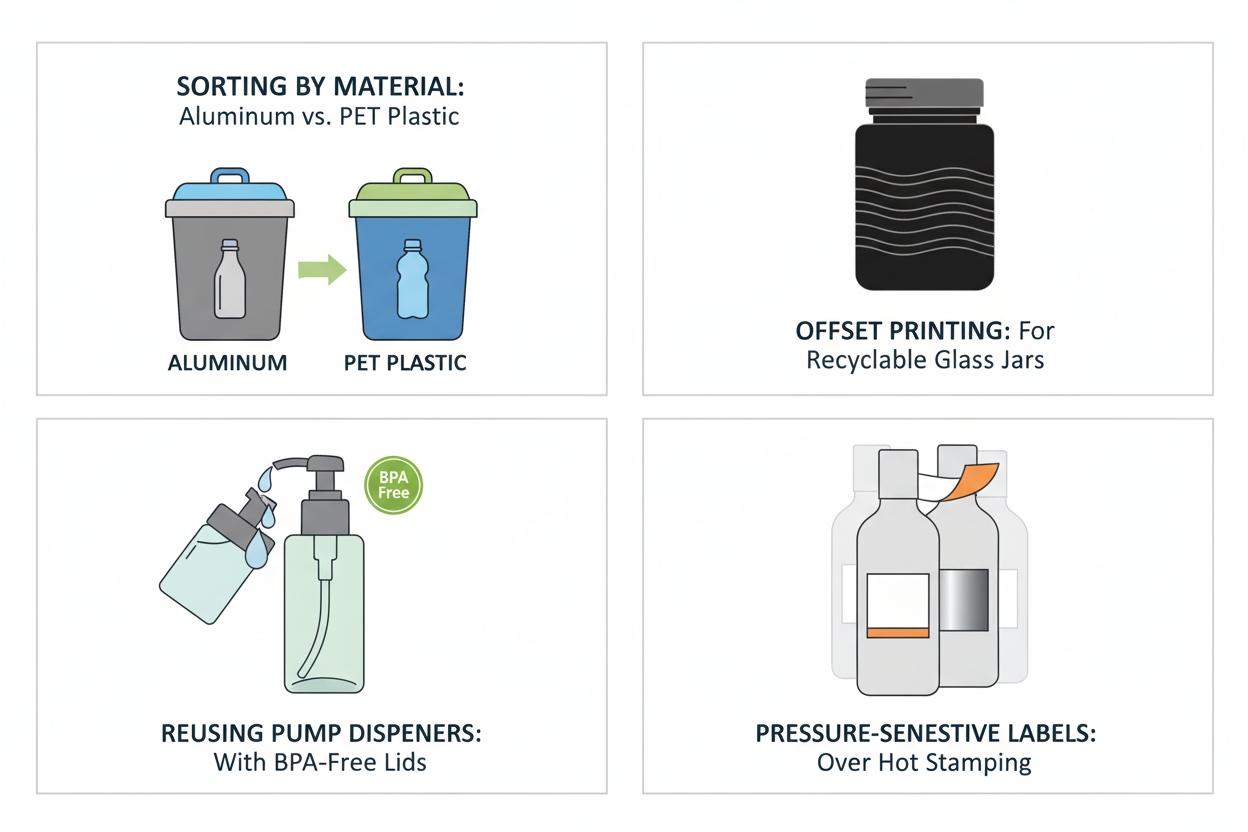
Sorting by material: recyclable aluminum vs PET plastic bottles
Breaking down materials makes a big difference in recycling:
Sorting matters—tossing everything into one bin just doesn’t cut it anymore.
Recyclable items like metal are easier to process when separated.
PET plastic bottles? They’re recyclable too—but only if they’re clean and sorted right.
Keep your aluminum containers apart from plastics; mixed materials often get trashed entirely.
That shiny orange bottle you love? If it’s PET or aluminum, sort it smartly before you toss it.
Offset printing on recyclable packaging for glossy black glass jars
When you’re dealing with premium looks and eco goals, here’s what works:
Go with offset printing—it uses less ink and skips the extra layers that mess up recyclability.
Want sleek without guilt? Pair offset with recyclable packaging, especially those luxe black containers.
Glossy finishes don’t have to mean landfill doom—choose coatings that still allow the glass jars to be reused or recycled.
Skip stickers that peel off weirdly; direct print keeps things tidy.
Topfeelpack nails this combo with their minimalist yet sustainable jar designs.
Reusing 200 ml pump dispensers with BPA-free lids
Here’s how to stretch the life of those pumps:
Step 1: Rinse out any leftover product completely from the 200 ml pump dispensers.
Step 2: Soak in warm soapy water overnight—this helps loosen residue inside narrow tubes.
Step 3: Let dry fully before refilling; moisture invites bacteria you don’t want on your skin!
Step 4: Check if the pump still works smoothly—if not, recycle the parts responsibly if possible.
The key is choosing ones with BPA-free lids, so reuse stays safe and non-toxic.
Choosing pressure-sensitive labels over hot stamping to reduce waste
Labeling choices might seem small—but they pack a punch:
Ditching traditional foil-heavy branding helps cut back on energy use during production.
Swapping in pressure-sensitive labels means fewer adhesives and smoother recycling.
Unlike intense methods like hot stamping, these labels peel away cleaner during sorting.
If your orange sunscreen container has minimal labeling fuss, chances are it’s easier to recycle—and that’s no accident.
Labels should stick well but release easily when needed; that balance = less landfill junk.
Small tweaks like these keep your skincare shelf looking good—and feeling even better for the planet.
FAQs about Sunscreen Orange Bottle
Why is the sunscreen orange bottle with an airless pump perfect for travel kits?
You’re rushing through airport security, juggling bags and boarding passes. The last thing you need is a leaky lotion exploding in your carry-on. That’s where the airless pump shines—it keeps your sunscreen sealed tight, no matter the altitude. Made from lightweight polypropylene plastic, these bottles are tough enough to handle turbulence but small enough to slip into any pouch or pocket.
How can I lower packaging costs when ordering large volumes of sunscreen containers?
Choose polypropylene bottles—they’re sturdy yet affordable.
Shrink sleeves offer bold branding without breaking the bank.
Pressure-sensitive labels cut down on waste and speed up production lines.
Smart choices like these don’t just save money—they make scaling up feel less like a gamble and more like a plan.
Are child-resistant closures compatible with aluminum tubes used for sunscreens?
Yes—and that compatibility matters more than ever when little hands are curious ones. These closures click firmly into place, keeping contents secure while still looking sleek enough for high-end skincare shelves. Safety doesn’t have to mean sacrificing style.
Can I reuse 200 ml pump dispensers to reduce packaging waste?
Absolutely—especially if they come with BPA-free lids designed for multiple refills. Think of it as giving each bottle another life: fewer trips to the trash bin, more peace of mind every time you press that pump again.
What makes flip-top caps better than screw caps on refillable sunscreen orange bottles?Flip-tops win in moments that count—like mid-hike reapplications or sandy beach days when two-handed twisting feels impossible.
Easier one-hand use
Less chance of spills during quick top-offs
Durable HDPE material resists wear over time
It’s not just about convenience; it’s about making sure protection stays within reach whenever skin needs it most.
Post time: Sep-29-2025
