
When consumers stand in a retail aisle scanning rows of skincare products, their eyes are frequently drawn to the bold, vibrant sunscreen orange bottle. While this zesty hue serves as excellent visual merchandising to communicate “sun safety” from across a crowded beach bag, the reality of modern cosmetic manufacturing goes far beyond aesthetics. For brands tasked with sourcing packaging for thousands—or even millions—of units, selecting the perfect sunscreen in orange bottle format is a strategic decision. It requires a delicate balance of optimizing cost structures, ensuring leak-proof functionality, and building vital eco-credentials.
The industry landscape is shifting rapidly toward sustainability. According to Mintel’s 2023 Skincare Packaging Report, 72% of consumers state they would switch brands for better environmental and sustainability efforts. This significant consumer shift means that implementing refillable pumps and utilizing recyclable plastics are no longer just industry trends—they are fundamental survival tools in today’s highly competitive personal care market.
The Strategic Rise of the Sunscreen Orange Bottle
Before diving into specific material choices, it is important to understand the core principles driving today's sunscreen packaging innovations:
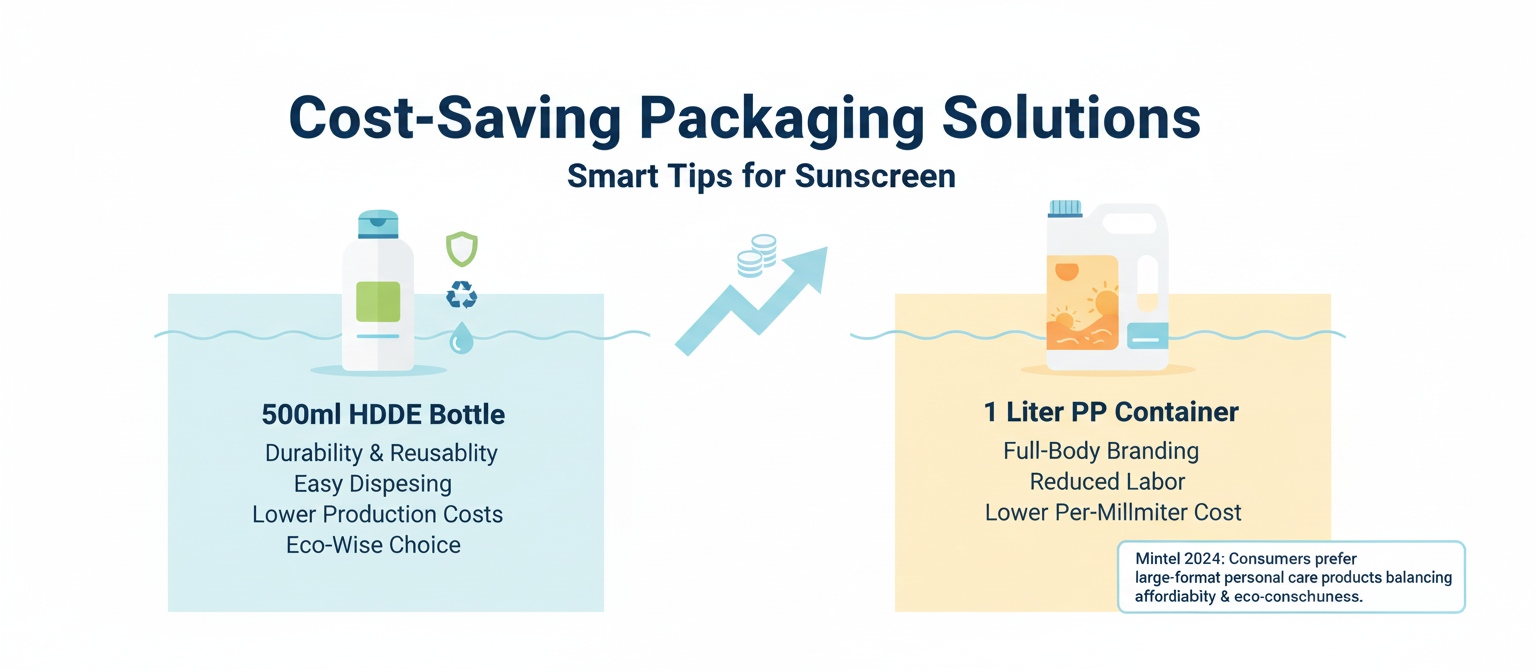
- Cost-Friendly Refills: Opting for 500 ml high-density polyethylene (HDPE) bottles equipped with flip-top caps is an excellent way to save on production costs while actively supporting the growing refill culture.
- Bulk Packaging Wins: Utilizing 1-liter polypropylene containers featuring shrink sleeves and pressure-sensitive labels allows for efficient large-volume storage and creates massive shelf appeal.
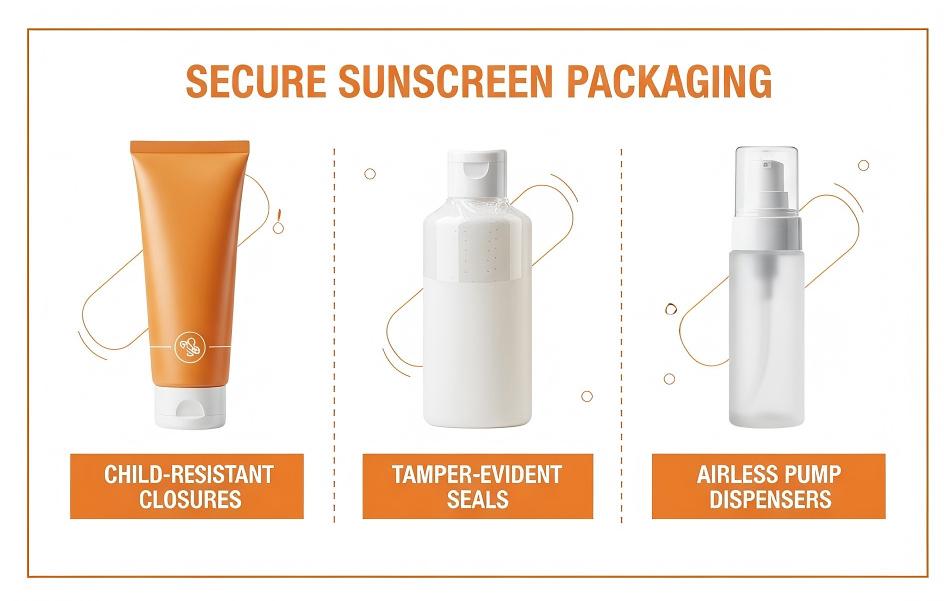
- Leak-Proof Locks: Incorporating child-resistant closures for squeezable aluminum tubes prevents messy spills and ensures rigorous product safety around young children.
- Tamper Control Mechanisms: Applying tamper-evident seals to opaque white low-density polyethylene (LDPE) bottles significantly boosts consumer trust by eliminating contamination risks.
- Travel-Smart Design Engineering: Airless pump dispensers manufactured from recyclable polypropylene offer the ideal solution for clean, compact, and completely leak-free portability.
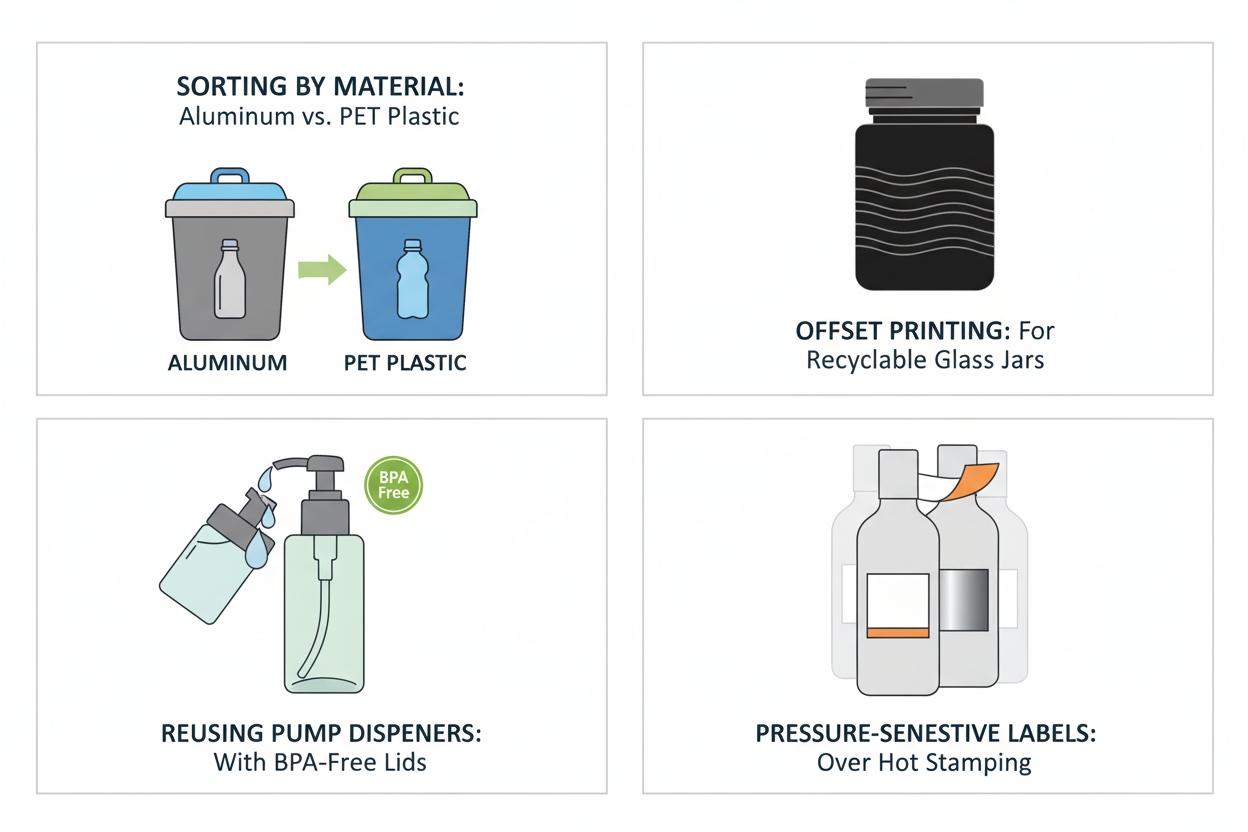
- Recyclability Matters: Designing packaging that allows consumers to easily separate recyclable aluminum components from PET plastic bottles at the sorting stage dramatically increases landfill diversion rates.
- Eco-Chic Labeling Solutions: Selecting offset printing over traditional hot stamping on luxurious glossy black glass jars delivers a premium aesthetic that aligns seamlessly with sustainable practices.
- Reuse & Reduce Waste: Encouraging consumers to reuse BPA-free 200 ml pump dispensers is a powerful addition to any eco-conscious brand strategy.
- Label Smarter, Not Harder: Utilizing pressure-sensitive labels outperforms hot stamping in terms of overall waste reduction, proving better for both operational budgets and the environment.
Cost-Saving Strategies for Sunscreen Packaging Production
Making intelligent packaging choices can significantly reduce production and shipping costs without compromising the quality of the final product. Here is how brands can maintain a strong packaging presence while maximizing their profit margins.
High-Density Polyethylene (HDPE) Bottles with Flip-Top Caps for Economical Refills
Choosing 500 ml HDPE plastic bottles paired with flip-top caps is a highly strategic, budget-friendly, and environmentally wise decision for modern skincare lines.
- Exceptional Durability & Reusability: HDPE bottles are highly durable and impact-resistant. They do not crack or dent easily, making them the perfect candidate for multiple refill lifecycles.
- Optimized Dispensing: The intuitive flip-top design ensures that users waste less product, virtually eliminating accidental spills and frustrating over-pours during application.
- Lower Production Costs: Because HDPE is a widely available raw material and highly economical to mold, brands can substantially bring down the overall manufacturing cost per unit.
- Consumer Preference: Modern shoppers increasingly prefer the convenience of smaller, refillable formats, especially when preparing for travel or outdoor excursions.
- Building Brand Trust: Transitioning to refillable packaging formats aligns perfectly with global sustainability trends, naturally increasing consumer trust and long-term brand loyalty.
If your goal is to make your product stand out on crowded retail shelves packed with every imaginable variation of a sunscreen orange bottle, this specific format keeps the user experience simple yet highly effective. Manufacturers like Topfeelpack excel at integrating these high-quality refills into existing product lines without inflating your budget.
Polypropylene Containers Featuring Shrink Sleeves and Pressure-Sensitive Labels
For skincare brands focused on pushing high-volume sales, 1-liter polypropylene containers effectively combine large-scale cost savings with premium shelf appeal.
- Maximum Branding Visibility: Shrink sleeves offer complete, 360-degree branding space. This is essential for catching the consumer's eye when your product is placed among rows of competing orange packaging.
- Manufacturing Efficiency: Pressure-sensitive labels drastically reduce labor time during the factory application process and provide superior adhesion on curved or uniquely shaped surfaces.
- Economy of Scale: The larger 1-liter size fundamentally drives down the per-milliliter packaging cost, creating a financial win for both the manufacturer and the bulk-buying consumer.
According to recent packaging insights, consumers are increasingly drawn to large-format personal care products that successfully balance affordability with clear eco-conscious messaging. This combination is particularly effective when targeting families or outdoor enthusiasts who require far more volume than a standard travel-size fix can provide. Furthermore, because polypropylene resists heat deformation better than many alternative plastics, it remains the ideal material choice for hot climates where sunscreen application spikes.
Advanced Leak-Proof Solutions for Sunscreen Formulations
Say goodbye to messy beach bags and wasted product formulations. Implementing these smart packaging upgrades ensures that every sunscreen in orange bottle remains securely sealed, maintaining product integrity from the factory floor to the consumer's hands.
Child-Resistant Closures: Security for Aluminum Tube Sunscreens
Keeping curious little hands out while simultaneously keeping the active formulation safely inside is where child-resistant closures truly demonstrate their value:
- These caps are meticulously designed with twist-lock or press-turn mechanics that actively prevent accidental opening by toddlers and young children.
- They are the ideal solution for active families on the go, completely eliminating the risk of sunscreen explosions inside travel totes.
- They add a critical layer of leak-proof security, which is especially important when utilizing squeezable aluminum tubes that may experience pressure changes during transit.
Beyond protecting children, these closures protect the consumer's personal belongings from oily, difficult-to-clean disasters while extending the product's shelf life by effectively blocking oxygen exposure.
Tamper-Evident Seals on Opaque White LDPE Bottles
When a consumer sees a broken seal, trust is immediately lost. Adding tamper-evident seals is an essential, non-negotiable step for modern quality assurance:
- These seals offer instant, undeniable visual confirmation that the product formulation has not been altered, opened, or contaminated prior to purchase.
- They pair beautifully with sturdy, travel-ready opaque white bottles manufactured from low-density polyethylene (LDPE), ensuring the chemical stability of UV filters.
This combination guarantees that the sunscreen remains pristine, secure, and ready for safe application whether the user is lounging poolside or hiking a rugged trail.
Airless Pump Dispensers in Recyclable Polypropylene for Travel
Airless pump technology is revolutionizing how premium skincare and SPF products are packaged and delivered. Here are three reasons why they are essential:
- Zero Spills: The vacuum-based mechanism ensures no spills occur, even if the bottle is tossed upside down in a backpack or subjected to cabin pressure changes during flights.
- Formula Protection: By keeping oxygen out of the chamber, airless pumps significantly reduce the chance of the sunscreen formula breaking down, separating, or oxidizing over time.
- Sustainable Materials: When manufactured from eco-conscious materials like recyclable polypropylene, these dispensers reduce environmental impact without sacrificing high-end performance.
These sleek units are perfect for weekend warriors who demand mess-free, highly mobile skincare. By combining smarter functional packaging with vibrant orange-themed branding, even a relatively basic sunscreen bottle can feel luxurious and premium.
Minimizing Packaging Waste: Recyclability and Sustainability Tips
Making intelligent material choices at the design phase makes the consumer's daily sunscreen routine significantly less wasteful and much more environmentally friendly.
Optimizing Material Sorting: Recyclable Aluminum vs. PET Plastic
Understanding how materials break down at the facility level makes a massive difference in actual recycling success rates:
- Sorting is critical. Tossing mixed materials into a single bin frequently results in the entire batch being rejected by recycling centers.
- Highly recyclable materials like aluminum are incredibly easy to process, but only when correctly separated from plastics.
- While PET plastic bottles are highly recyclable, they must be clean and sorted accurately to avoid contaminating other recycling streams.
For that shiny sunscreen orange bottle you love, clearly communicating to consumers how to separate the PET plastic components from any aluminum or metal parts is key to preventing the packaging from ending up in a landfill.
Elevating Premium Aesthetics with Offset Printing
When a brand is trying to achieve a premium look while maintaining strict eco-goals, the printing method matters just as much as the bottle material:
- Opting for offset printing is a sustainable choice because it utilizes less ink and completely skips the extra plasticized layers that frequently complicate or ruin the recyclability of the container.
- Pairing offset printing with recyclable packaging—especially luxurious, dark, or black glass containers—delivers a sleek, guilt-free aesthetic.
- Glossy finishes do not automatically equal landfill doom. Brands must choose specialized coatings that still allow the glass jars to be effectively crushed, melted, and reused.
By skipping heavy stickers that peel off unevenly and leave toxic adhesive residue, direct printing keeps the entire recycling process clean and efficient. Industry leaders like Topfeelpack successfully nail this combination with their minimalist, sustainable jar and bottle designs.
Encouraging the Safe Reuse of 200 ml Pump Dispensers
Stretching the lifecycle of packaging is the ultimate form of sustainability. Brands should educate consumers on how to safely reuse their 200 ml pump dispensers:
- Rinse Thoroughly: Completely wash out any leftover SPF product from the bottle and the inner pump mechanism.
- Soak and Sanitize: Soak the components in warm, soapy water overnight. This crucial step helps loosen and dissolve stubborn, water-resistant sunscreen residue trapped inside the narrow plastic tubes.
- Dry Completely: Allow all parts to air dry fully before refilling. Trapped moisture acts as a breeding ground for harmful bacteria that should never be applied to human skin.
- Evaluate Functionality: Check if the pump spring still operates smoothly. If the mechanism is failing, recycle the individual parts responsibly.
The foundational key to this strategy is ensuring the brand sources dispensers with certified BPA-free lids, guaranteeing that repeated reuse remains safe and entirely non-toxic for the consumer.
Prioritizing Pressure-Sensitive Labels Over Hot Stamping
Labeling choices may seem like a minor detail in the grand scheme of product development, but they have a profound environmental impact:
- Ditching traditional, foil-heavy hot stamping helps significantly cut back on massive energy consumption during the factory production phase.
- Swapping to pressure-sensitive labels means utilizing fewer harsh adhesives, resulting in a much smoother, cleaner recycling process downstream.
- Unlike the intense, heat-bonded methods of hot stamping, pressure-sensitive labels peel away cleanly during the rigorous sorting and washing phases at recycling plants.
If your orange sunscreen container is designed with minimal labeling fuss, it is exponentially easier to recycle. Labels should be engineered to adhere strongly during the product's lifespan but release easily when subjected to industrial recycling washes.
Frequently Asked Questions (FAQs) About Sunscreen Packaging
Why is a sunscreen orange bottle with an airless pump perfect for travel kits?
When rushing through airport security and juggling luggage, the last thing a traveler needs is a leaky lotion exploding inside a carry-on bag. The airless pump is specifically engineered to keep sunscreen sealed tightly, easily withstanding the severe altitude and cabin pressure changes associated with flying. Manufactured from durable, lightweight polypropylene plastic, these bottles handle turbulence with ease while remaining compact enough to slip into any TSA-approved pouch.
How can I strategically lower packaging costs when ordering large volumes of sunscreen containers?
To achieve economies of scale, brands should first select polypropylene bottles, which offer an excellent balance of structural rigidity and raw material affordability. Next, utilize shrink sleeves to achieve bold, full-body branding without the high costs of custom mold coloring. Finally, implement pressure-sensitive labels to cut down on material waste and significantly speed up automated production lines.
Are child-resistant closures truly compatible with the aluminum tubes used for sunscreens?
Yes, and this compatibility is more important than ever for family-oriented skincare lines. Modern child-resistant closures are engineered to click firmly and securely into the threading of aluminum tubes, keeping active chemical contents secure from toddlers while still looking sleek and sophisticated enough to sit on high-end beauty counters.
Can I safely reuse 200 ml pump dispensers to help reduce packaging waste?
Absolutely. This practice is highly encouraged, especially if the brand has purposefully designed the packaging with BPA-free lids intended for multiple refill lifecycles. Reusing these dispensers gives each bottle extended utility, meaning fewer trips to the local landfill and more peace of mind for the eco-conscious consumer.
What makes flip-top caps fundamentally better than standard screw caps on refillable sunscreen bottles?
Flip-top caps provide a superior user experience during the moments that actually count—such as mid-hike reapplications or sandy days at the beach when using two hands to unscrew a slippery cap feels impossible. They offer easy, one-handed operation, significantly lower the chance of dropping the cap in the dirt, and prevent wasteful spills during quick top-offs. Furthermore, when paired with highly durable HDPE materials, the built-in hinge resists mechanical wear and tear over time.
References
- [1] Mintel’s 2023 Skincare Packaging Report - https://www.google.com/search?q=mintel.com/Mintel
- [2] high-density polyethylene - wikipedia.org/Wikipedia
- [3] polypropylene - wikipedia.org/Wikipedia
- [4] child-resistant closures - https://www.google.com/search?q=mjspackaging.com/MJS Packaging
- [5] tamper-evident seals - fda.gov/FDA
- [6] low-density polyethylene - wikipedia.org/Wikipedia
- [7] PET plastic - wikipedia.org/Wikipedia
- [8] offset printing - wikipedia.org/Wikipedia
- [9] hot stamping - wikipedia.org/Wikipedia
- [10] BPA-free - mayoclinic.org/Mayo Clinic
- [11] flip-top caps - https://www.google.com/search?q=thomasnet.com/ThomasNet
- [12] Shrink sleeves - https://www.google.com/search?q=columbinelabel.com/Columbine Label
- [13] Pressure-sensitive labels - wikipedia.org/Wikipedia
- [14] aluminum tubes - https://www.google.com/search?q=junsamtubes.com/Junsam Tubes
- [15] recyclable polypropylene - https://www.google.com/search?q=sps70.com/Shrink Packaging Systems
Post time: Sep-29-2025
