
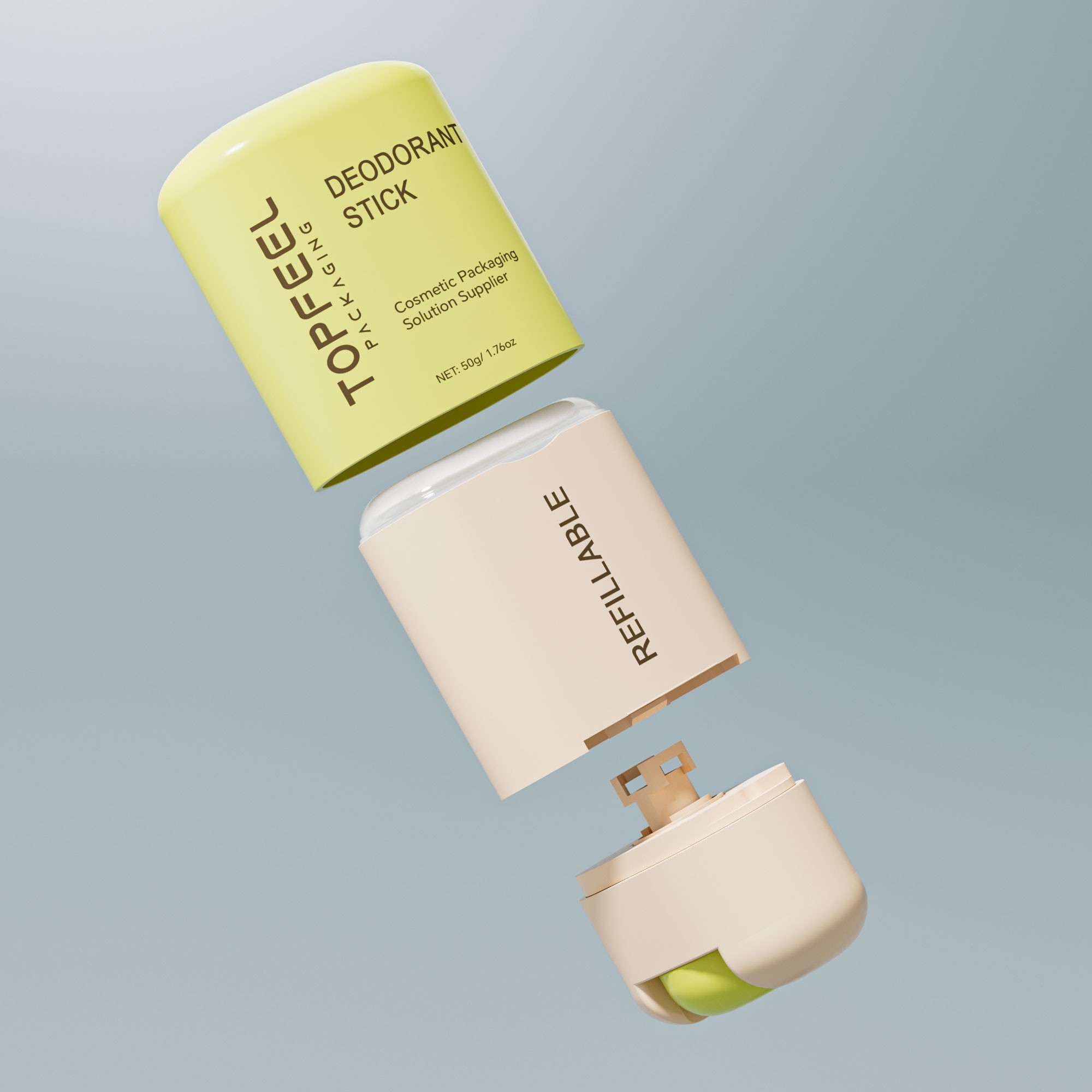
In the wave of sustainable beauty, refillable packaging is no longer just an environmental slogan. It has become a core design strategy for both premium and mass-market brands. From foundation to face cream, from lipstick to cushion compacts, refillable systems are redefining the relationship between luxury and responsibility.
Key Advantages of Refillable Packaging
-
Significant reduction in single-use packaging waste
Consumers purchase the complete package only once; subsequent purchases are just the refill. The outer case can be reused at least 3–5 times.
-
Increased brand loyalty and repurchase opportunities
Unique magnetic, twist‑lock, or snap‑fit refill mechanisms create a satisfying tactile experience and strengthen brand memory.
-
Lower long‑term carbon footprint
Although initial mold development costs are higher, mass production reduces the use of glass, plastic, or aluminum – cutting per‑unit packaging emissions by 30–50%.
-
Compliance with global regulations and ESG goals
The EU’s Packaging and Packaging Waste Regulation (PPWR) and various EPR schemes are encouraging or mandating higher reuse rates for packaging.
-
Enables higher price points
Refillable outer cases often use metal, ceramic, wood, or bio‑based materials, giving the product a “collectible” or “heirloom” emotional value.
Comparison of Refillable Packaging Solutions
| Format / Category | Typical Refill Mechanism | Recommended Structure | Pros & Cons (brief) |
|---|---|---|---|
| Pressed powder / Cushion | Replaceable inner pan or sponge refill | PP/ABS outer case + replaceable aluminum pan | Mature technology, high consumer acceptance; sealing must be tested to prevent drying. |
| Lipstick / Lip balm | Replaceable bullet (click‑in) | Aluminum or magnetic outer + plastic/bio‑based inner tube | Elegant and reduces plastic significantly; mechanical life must withstand ≥50 cycles. |
| Face cream / Eye cream | Replaceable inner cup or sterile pouch | Glass/ceramic outer jar + food‑grade plastic inner cup | Premium feel; residual product can be an issue – requires spatula design. |
| Foundation / Serum | Replaceable bottle or pump core | PETG/PCR outer bottle + vacuum‑pouch refill | Formula stability maintained; vacuum pouch cost is higher, recycling instructions needed. |
| Mascara | Replaceable brush + formula chamber | Metal/plastic outer + screw‑in inner core | Highly innovative, reduces wand waste; sealing against drying is a major challenge. |
Practical Brand Advice
To successfully launch a refillable product, brands cannot rely solely on “eco‑friendly” as a selling point. Three practical issues must be solved:
-
Is the refill priced 20–40% lower than the full pack?
This is the core driver of repeat purchases.
-
Is the refill process " foolproof and satisfying "?
Magnetic alignment, a click sound, no tools needed. If users need a tutorial, the design has failed.
-
Is the outer case worth keeping?
Material, color, touch, decoration (anodizing, hydrographics, micro‑texture) must reach “collectible” level.
-
FAQ About Refillable Cosmetic Packaging
1. Is the outer case of a refillable package also recyclable at end of life?
It depends on the material. Many premium refillable cases use metal, glass, or durable plastics like ABS or PP. These are technically recyclable, but because they often combine multiple materials (e.g., metal + plastic magnets), disassembly can be challenging. Best practice: design for mono‑material outer shells or easy snap‑apart construction.
2. How many times can a refillable package be reused before it wears out?
Quality refillable designs typically last 3–5 refill cycles for closures and locking mechanisms, and 10+ cycles for metal or glass shells. High‑end lipstick or compact cases can be designed for 50+ refill operations. Always check the brand’s stated durability testing.
3. Do refills cost less than buying the full product again?
Usually yes. To encourage repeat purchases, refills are typically priced 20–40% lower than the full pack (outer case + refill). This price gap covers the saved material, manufacturing, and transport costs of the outer case. If the price difference is too small, consumers may not adopt the habit.
4. Can I use a refill from one brand in another brand’s outer case?
In most cases, no. Refill dimensions, locking geometry, and sealing systems are brand‑specific and often proprietary. Industry‑wide standardization does not yet exist, though some circular packaging platforms (e.g., Loop, Miwa) are working on interoperable designs.
5. How do I clean the outer case before inserting a new refill?
For jars and compacts, wipe the interior with a soft cloth and mild soap – avoid soaking. For lipstick or mechanical dispensers, check the brand’s instructions; many only require a dry wipe. Never immerse electronic or magnetic components.
6. Are refillable packages more hygienic than single‑use?
Yes, when properly designed. The refill (inner chamber) is factory‑sealed and untouched by the user. The outer case never contacts the formula directly, so no cross‑contamination occurs. In fact, refillable systems can be more hygienic than bulky jars where fingers repeatedly dip into the product.
7. Why aren’t all cosmetics brands using refillable packaging yet?
Main barriers include: higher upfront mold costs (2–3× a standard package), need for more complex assembly lines, consumer behavior change required, and limited supply of high‑durability small mechanisms. However, costs are falling rapidly as demand grows.
Conclusion
Refillable packaging is not simply “making the package smaller”. It is a systemic shift from a linear to a circular economy. For cosmetic brands, it is both a hard technical requirement (plastic taxes, anti‑greenwashing scrutiny) and a soft opportunity to build long‑term user relationships. In the next decade of beauty, the brand that turns “one purchase, many moments of companionship” into poetry will define the new standard of luxury.
Post time: Jun-03-2026
