
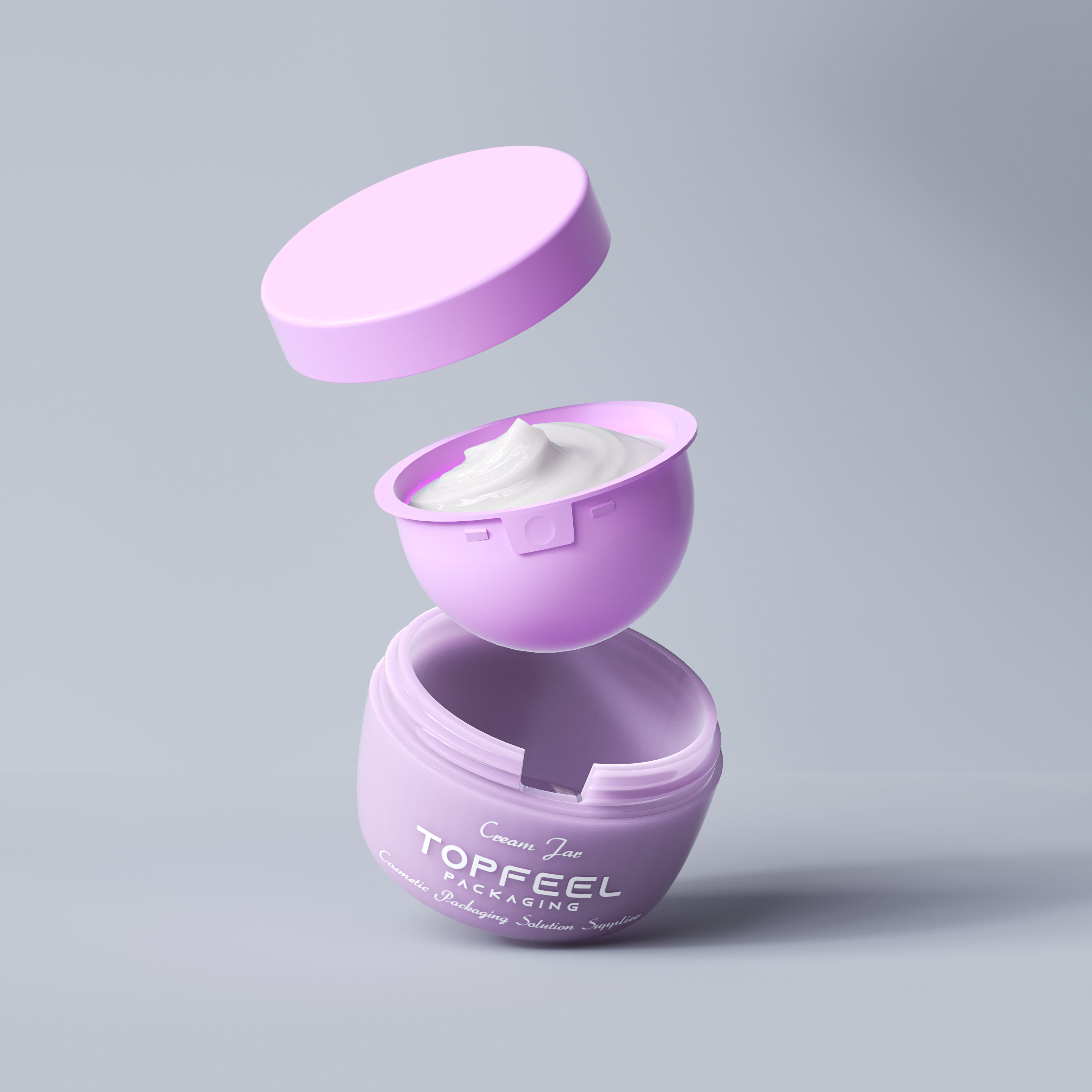
Skincare brands choose double-wall cream jars because the two-part structure, an outer shell around an inner cup, gives a heavier, more premium look and lets the outer finish differ from the product-contact cup. In some designs the inner cup can be swapped for refills. The structure does not, by itself, improve product protection.

Why Brands Choose a Double-Wall Jar
| Reason | What the double wall provides | What to verify |
|---|---|---|
| Premium look | A thicker, heavier visual presence | Weight and feel against the brand brief |
| Decoration freedom | An outer shell that can differ in material, color, and finish from the inner cup | Decoration durability on the shell |
| Refill option | In some models, a replaceable inner cup | Refill fit, and how many cycles the shell and cap survive |
| Contact-material choice | An inner cup chosen for the formula, behind a separately styled shell | Formula compatibility with the cup material |
| Range consistency | A matching shell across jars and bottles in one set | Color and finish match across components |
What a Double Wall Does Not Do
- It does not improve product protection by itself. Barrier and compatibility come from the contact materials and the closure.
- It does not make a jar hygienic. An open jar still exposes the formula to fingers. See How Do You Keep Cream Jars Hygienic During Use?
- It does not guarantee refillability. Refill capability is model-specific.
- It does not remove the need for stability testing with the real formula.
Material and Recycling Checks
A double-wall jar has at least two structural parts, and they may use different materials. Ask the supplier for a material breakdown of the shell, the inner cup, the cap, and any liner or disc. Then check whether the parts separate and which recycling guidance applies in your target market. Parts in one polymer family are simpler to assess than a mix, but that is a starting point, not a finding.
Topfeelpack Double-Wall and Refillable Jar Models
- PJ79 Mono PP Cream Jar: listed as a 30 g and 50 g double-wall refillable jar in mono PP.
- PJ113 100 g Refillable Cream Jar Set: listed with two cap options.
- PJ107 Refillable Cosmetic Jar 50 g: listed as a 50 g refillable jar.
- PJ111 Refillable Cream Jar: listed with a magnetic spoon and flip-top.
Product-page specifications are screening points. Confirm wall construction, material composition, and refill mechanism with Topfeelpack for the selected model.

A Short Decision Guide
| If your brief says | Then consider | Why |
|---|---|---|
| Premium, heavy look | Double-wall jar | The outer shell adds visual weight |
| A refill program | A double-wall jar with a replaceable cup | The cup is the part that is swapped |
| One material family for recycling | A mono-material double wall, checked part by part | Fewer material types to assess |
| Lowest cost and weight | A single-wall jar | Fewer components and less tooling |
| A coordinated range of jars and bottles | A matching double-wall family | Shell finish can be matched across formats |
What to Ask the Supplier
- What is the structure: which part is the shell and which is the inner cup?
- Can the inner cup be replaced, and how many cups can one shell take?
- What are the materials of the shell, cup, cap, and any liner or disc?
- Do the parts separate, and what recycling guidance has been checked?
- Which finishes and decoration methods are available on the shell?
Validate With the Real Formula
Check the formula against the cup material and the closure before approving samples. Cream formulas can differ in how they react to plastics, and the visual weight of a jar says nothing about compatibility. Run stability testing on the filled jar, and confirm that decoration survives handling and contact with the product.
Details to Check With Your Design Team
Two-part jars raise a few practical points that a single-wall jar does not.
- The gap between shell and cup. Check whether residue, dust, or moisture can collect there, and whether the customer can clean it.
- What is visible. Decide whether the cup shows at the rim or through the shell, and whether its color needs to match.
- Where print and finishes sit. Decoration on the shell and decoration on the cup wear differently, so specify each separately.
- How the cap seats. Confirm that the closure seals against the right part, and that it still seals after repeated opening.
- Shipping. More components can mean different carton and protection needs, so test the packed unit, not just the jar.
FAQ
Is a double-wall jar the same as a thick-walled glass jar?
No. Double-wall describes an outer shell around an inner cup. Thick-walled glass is a single body with a heavier wall.
Can the inner cup be replaced?
Only in models designed for it. Confirm the refill mechanism for the specific jar.
Is a double-wall jar more expensive?
It usually has more components and tooling, but cost depends on size, material, decoration, and quantity. Compare like-for-like quotes.
Keep Reading
- Category: Double-wall cream jar range
Request samples · Request a quote:
contact Topfeelpack
Post time: Nov-23-2026
