
To match a cosmetic bottle neck finish with its pump, confirm the attachment type, compare the bottle and pump drawings, identify the sealing contact, and check the pump’s clearance inside the neck. Then test the complete assembly with the intended formula and filling process. Matching a catalog diameter is only the starting point.
Bottle neck finish and pump compatibility means the selected components can attach, seal, dispense, and remain secure under agreed use and distribution conditions. A pump that screws onto a bottle has demonstrated initial engagement; it still needs approval as part of the filled package.
For procurement teams, the most useful question is: what evidence confirms that this exact bottle and pump combination will work consistently?
What Is a Cosmetic Bottle Neck Finish?
The neck finish is the geometry around the bottle opening that interfaces with the closure. It includes the attachment features, opening, and surfaces involved in seating or sealing the pump assembly.
On a threaded bottle, this means checking more than the visible thread diameter. Berlin Packaging’s neck finish guide identifies several dimensions used to describe the interface:
| Drawing dimension | What it describes | What buyers should confirm |
|---|---|---|
| T | Outside diameter across the thread | Fit with the pump closure’s internal thread |
| E | Outside diameter of the neck beneath the thread | Neck geometry and its relationship to thread depth |
| I | Inside diameter of the neck opening | Clearance for inserted parts and fit of any internal sealing feature |
| H | Height of the neck finish, as defined on the drawing | Relationship to the closure’s seating position |
| S | Distance from the top of the finish to the first thread’s upper edge | Thread engagement and closure orientation |
Use the supplier’s dimensioned drawing and tolerances to interpret these features. For proprietary neck designs, request the supplier’s own definitions and mating requirements.
Treat a catalog neck code as a reference for selecting candidate components. Ask which drawing or specification it represents before assuming interchangeability.
1. Identify How the Pump Attaches
Confirm the attachment mechanism before comparing sizes. Ask both suppliers to use the same terminology and show the interface in a section drawing.
Screw-on pumps
A screw-on pump uses a threaded closure to engage the bottle neck. Review thread profile, pitch, number of starts, engagement length, and the final seated position.
The closure must reach its intended sealing position without stripping, cross-threading, or encountering an unintended stop. Ask for an application torque range validated for the proposed assembly and the relevant measurement conditions. Diameter alone does not establish that range.
Snap-on pumps
A snap-on pump engages a retaining feature on the neck. Request the bead or groove geometry, installed position, assembly force requirements, and retention criteria.
An audible click can help an operator recognize engagement, but approval should also confirm complete seating and retention. Establish how the filling line will detect an incompletely seated pump.
Bayonet and other proprietary connections
If the supplier describes a connection as “bayonet,” confirm whether it uses lugs and a partial turn or another attachment structure. Commercial descriptions can be ambiguous.
Request the actual mating drawing, installation method, and removal requirements. Also establish whether disassembly is intended for refilling or would damage the connection. Treat crimped designs as a separate assembly process requiring their own tooling and checks.
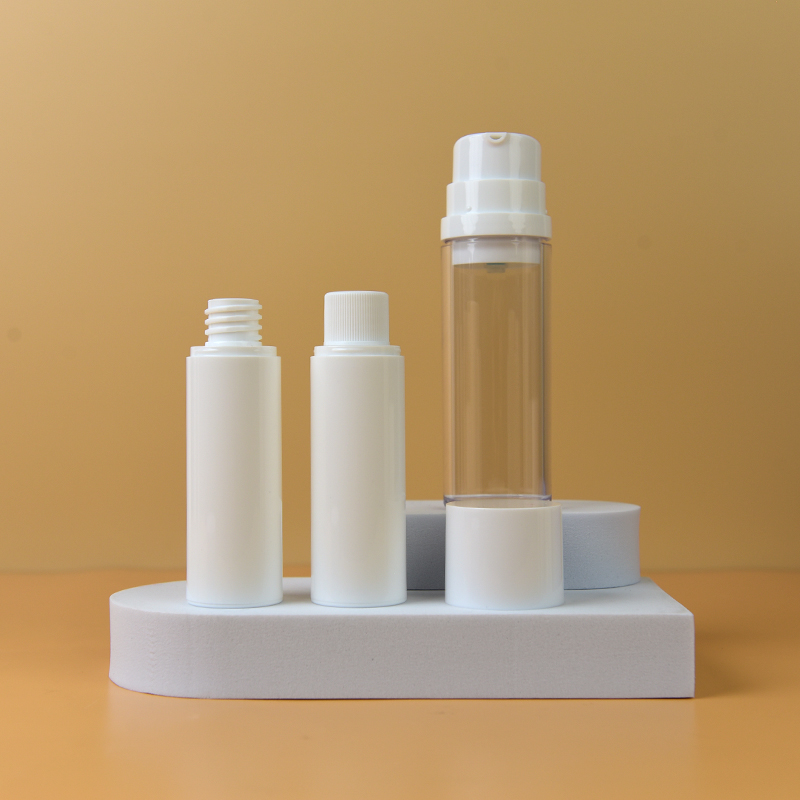
2. Review the Seal Separately from the Attachment
The attachment holds the pump in place. The sealing feature must also make the required contact with the bottle.
Ask the supplier to mark the sealing location on an assembled section drawing. Depending on the design, the interface may use a gasket against the bottle’s top surface, an internal plug, or another engineered contact.
Confirm:
- Which surfaces create the seal and which dimensions control their contact.
- The seal material and component reference.
- The intended compression or interference, where applicable.
- Whether the closure reaches the sealing position before its skirt contacts the shoulder or a decorative part.
For example, a decorative collar could meet the bottle shoulder while the gasket remains insufficiently compressed. That is a condition to investigate through drawings and samples; extra tightening should not become an improvised production fix.
Inspect the bottle’s sealing surface for defects under agreed quality criteria. Have the supplier identify which features matter for the chosen seal rather than applying one generic surface requirement to every design.
3. Check Pump Clearance and Dispensing Architecture
Review the parts that extend below the closure. Confirm that the pump housing can enter the bottle opening, reach its installed position, and operate without unintended interference.
The I dimension is relevant, but also inspect any narrowing below the neck and the pump housing’s full insertion profile. Include tolerances on both components. A nominal clearance on two drawings may become insufficient at the permitted dimensional extremes.
For a conventional dip-tube pump, verify the tube connection and installed pickup position after the closure is fully seated. A change in pump height or seating position can change the tube requirement. Topfeelpack’s guide to specifying a cosmetic pump dip tube covers that separate specification in detail.
For an airless design, request the complete system drawing. Confirm how the pump interfaces with the product reservoir and any piston or pouch. Review the selected Topfeelpack airless bottle assembly as a system before proposing a substitute pump.
Finally, ask how the design manages pressure as product is dispensed. Evaluate the intended venting or airless mechanism during functional testing, especially when changing one component.

4. Confirm Formula Performance with the Selected Pump
Mechanical fit does not establish formula compatibility or acceptable dispensing.
Pump manufacturers specify configuration details separately.
For your project, provide viscosity with its measurement conditions, relevant formula characteristics, fill temperature, and intended storage conditions. Obtain the material details for relevant formula-contact parts, including seals and internal pump components.
Agree on checks for priming, output, refill behavior between presses, leakage, and component or formula changes during storage. Use the finished formula for approval. A water trial can support an early assembly check, but it cannot represent every formula’s flow or interaction with packaging materials.
5. Validate Samples Through Assembly, Storage, and Use
Use the following sequence as a project planning framework. Agree on sample quantities, conditions, duration, and acceptance limits with the supplier, filler, and quality team.
| Stage | What to evaluate | Evidence to retain |
|---|---|---|
| Drawing review | Attachment, seal, insertion clearance, and tolerances | Approved mating drawings and revisions |
| Assembly trial | Seating, cross-threading or incomplete engagement, and damage | Process settings and inspection results |
| Filled-pack evaluation | Leakage, priming, output, and operation | Formula identity, test conditions, and results |
| Storage evaluation | Sealing, retention, function, and relevant material changes | Conditioning details and follow-up measurements |
| Distribution evaluation | Leakage, loosening, damage, and operation afterward | Tested shipping configuration and acceptance results |
Include production-representative samples and the intended assembly equipment. Hand-fitting one pump cannot establish how consistently a capping or pressing line will reproduce the result.
When a sample fails, identify the failure location before changing the specification. Leakage at the neck interface calls for different investigation from leakage through an actuator or vent. Record when the failure occurs: during assembly, after storage, in a particular orientation, or during operation.
If water samples pass but formula-filled packs fail, review formula interaction and dispensing conditions as well as the mechanical interface. Avoid assigning every leak to the thread.
6. Put the Approved Combination in the RFQ
Make the request for quotation specific enough to reproduce the evaluated pack. Include:
- Bottle and pump model numbers, drawings, and revision references.
- Attachment geometry, sealing components, and critical tolerances.
- Pump housing, dip tube, actuator, collar, and overcap configuration.
- Assembly settings and functional acceptance criteria.
- Formula version, validation conditions, and approved sample references.
- Inspection responsibilities and notification requirements for component changes.
If the bottle and pump come from different suppliers, name who owns the interface review and who approves the complete assembly. Agree on how dimensional disagreements will be investigated before issuing purchase orders.
Ask separately about MOQ, sample arrangements, tooling, decoration, lead time, and whether the quotation covers the full approved configuration. Keep performance requirements consistent when comparing prices.
Frequently Asked Questions
Can caliper measurements replace a bottle-neck drawing?
They can help screen an unidentified sample, but they do not establish the complete thread profile, hidden mating features, or manufacturing tolerances. Request a controlled drawing before approving repeat supply.
Does a visible gap below the pump collar indicate a mismatch?
A gap may be intentional. Compare it with the approved assembled drawing and appearance reference. Investigate uneven or unexpected gaps alongside seating and sealing results; closing the gap by extra tightening may introduce another problem.
Must compatibility be reviewed when only the decorative shell changes?
Review the change’s effect on clearances, assembly-tool contact, and operation. Have the supplier identify which dimensions and functions remain equivalent and which checks need repeating before extending the approval.
Discuss Your Bottle and Pump Requirements with Topfeelpack
Explore Topfeelpack’s lotion bottle range when comparing bottle and dispensing assemblies. To discuss a match, contact Topfeelpack with your bottle drawing or selected model, pump requirements, formula characteristics, filling setup, target market, and expected order quantity.
Request confirmation of the proposed attachment, seal, assembly requirements, and sample configuration. Use the agreed drawings and filled-sample results to finalize the purchasing specification.
Post time: Oct-20-2026
