

How a Dropper Bottle Works
A dropper bottle has four parts: the bottle, a collar that screws onto the neck, a bulb made of rubber, silicone or TPE, and a pipette. Squeezing the bulb pushes air out. Releasing it creates a vacuum that draws serum into the pipette. A second squeeze releases the serum drop by drop. Press-button droppers work the same way, but a push button replaces the bulb, so the user gets a more repeatable fill each time.
The material question applies mainly to two parts: the bottle and the pipette. Both touch the formula for its whole shelf life, so they decide chemical compatibility. The bulb is the third contact surface and is often the weakest link, which we cover below.
Glass, PETG and PP Compared
| Factor | Glass | PETG | PP |
|---|---|---|---|
| Chemical inertness | Highest; no absorption or leaching | Good for water and light oils; check with essential oils and solvents | Good chemical resistance; slightly hazy |
| Clarity | Crystal clear or tinted (amber, cobalt) | Glass-like clarity | Translucent to opaque |
| Breakage | Breaks if dropped | Shatter-resistant | Shatter-resistant |
| Weight (approx., 30 ml bottle) | Several times heavier than plastic | Light | Lightest |
| UV protection | Amber glass filters most UV | Needs tint or coating | Needs pigment |
| Feel and perception | Premium, cool, heavy | Clear, modern | Practical, soft-touch possible |
| Recycling | Widely collected in Europe | PETG often not accepted in PET streams | Fits PP stream; mono-PP designs possible |
| Typical use | Facial oils, vitamin C, retinol, essential oils | Hyaluronic serums, hair serums, minis | Refillable systems, travel kits, mono-material ranges |
Why glass stays the default for actives
Glass is chemically inert. It does not absorb fragrance molecules or oils, and it does not let oxygen pass through the wall. For formulas built around essential oils, high levels of ethanol, or actives such as L-ascorbic acid, this removes one variable from stability testing. Amber glass also filters most UV light, which helps light-sensitive actives such as retinol. Glass is also well collected in Europe. The Close the Glass Loop platform reports an EU glass packaging collection-for-recycling rate of around 80%.
Why plastic wins for weight and safety
Plastic dropper bottles are lighter and do not break. That lowers freight cost, cuts breakage claims in e-commerce, and makes the bottle safer in a bathroom or a gym bag. PETG gives glass-like clarity at a fraction of the weight. PP is less clear but has good chemical resistance and is the base material for mono-material designs. If the entire pack, including the pipette and collar, is PP, it is easier to sort and recycle than a pack that mixes glass, ABS and silicone.

How to Choose: A Decision Guide
- If the serum contains more than a few percent essential oils, terpenes or ethanol, then choose glass, or run a full compatibility test before choosing PETG.
- If the active is light-sensitive (retinol, some vitamin C forms), then choose amber or frosted-coated glass, or an opaque PP bottle.
- If most sales go through e-commerce or travel retail, then plastic lowers breakage and shipping weight.
- If the brand promises a premium, apothecary look, then glass delivers the weight and coolness that buyers associate with high-end serums.
- If your sustainability goal is a mono-material or refillable pack, then an all-PP dropper with a replaceable inner bottle is the most direct route.
Common Mistakes to Avoid
Choosing the bottle and forgetting the bulb. The bulb is usually the first part to fail. Natural rubber can swell or crack with oils. Silicone is more resistant but can still absorb some silicone-based ingredients. TPE is a common middle option. Always test the bulb with your formula at 40–50 °C, not only the bottle.
Assuming “plastic” means one material. PETG, PET, PP and AS behave differently with oils and solvents. A serum that is stable in PP may craze PETG. Ask your supplier for the exact resin of each part.
Assuming glass is always the greener choice. Glass is collected well, but it is heavy, so transport emissions are higher. A life-cycle comparison depends on distance, recycled content and how many times a bottle is refilled.
Topfeelpack Dropper Bottles
Our dropper bottle range covers both glass and plastic, so brands can test both with the same formula:
- PD08 20 ml Glass Dropper Bottle: glass bottle with pipette, silicone bulb and ABS collar, for facial oils, essential oils and tinctures. Custom color tinting and printing are available.
- PD19 20 ml Portable Dropper Bottle: PETG body for clarity and impact resistance, PP dropper parts, and a soft TPE bulb for smooth dispensing. It suits minis and travel kits.
- PD11 Refillable Dropper Bottle: mono-PP construction in 15, 30 and 50 ml, with a replaceable inner bottle and a choice of press dropper or standard dropper.
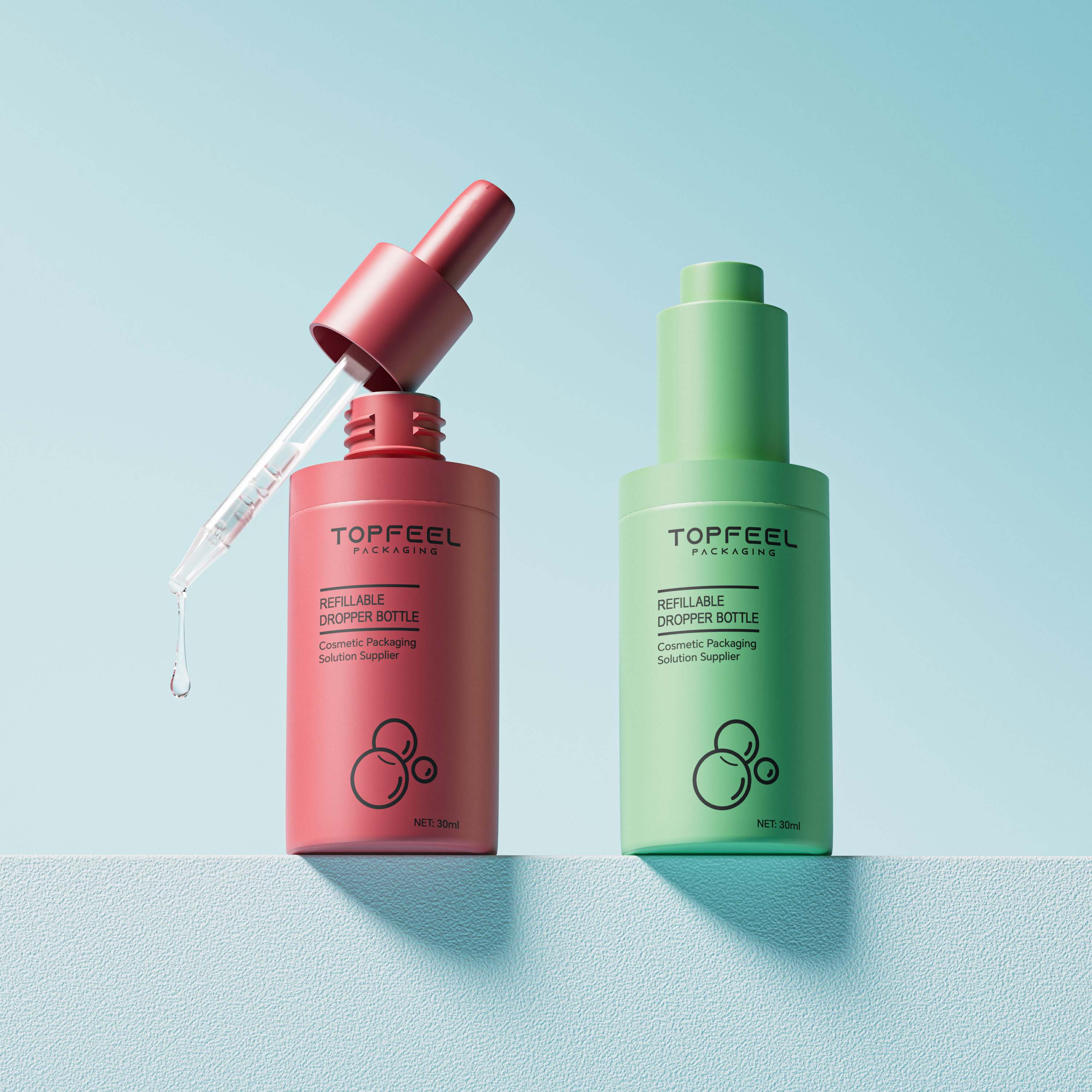
All three start at MOQ 10,000 pieces. Decoration such as silk screen printing, hot stamping and spray coating is done in our own workshops in Shenzhen. Each lot goes through raw material, in-process, packaging and finished-goods inspection, including color checks under a D65 light source and adhesion and abrasion tests on printed areas. Read more about our quality controls on the production capacity page, or see our sustainability options for PCR and mono-material droppers.
If you are also deciding on a pump format, our article on airless tubes explains when a serum is better in an airless pack than a dropper.
FAQ
Is glass better than plastic for vitamin C serum?
Usually yes. Amber or coated glass blocks light and oxygen, which helps L-ascorbic acid stay stable. An opaque airless pack is the other common option.
Can essential oils be stored in plastic dropper bottles?
Low concentrations can work in PP, but high concentrations can attack PETG and some other plastics. Glass is the safer default for pure essential oils.
Are plastic dropper bottles recyclable?
PP droppers fit the PP stream where it is collected. Mixed-material droppers with glass, rubber and ABS parts need to be separated before recycling.
What is the most common dropper bottle size for serums?
30 ml is the most common retail size. 15 ml and 20 ml are used for eye serums, minis and high-concentration actives.
Get Dropper Samples for Your Serum
Send us your formula type and target market, and we will recommend a bottle and bulb combination and ship samples for compatibility testing.
Post time: Nov-25-2026
