
Luxury serums don’t fail in the lab—they fail on the shelf, and airless pump bottles for cosmetics fix that fast.
Topfeelpack’s engineering team notes in its 2025 packaging brief that vacuum isolation reduces oxidation risk and preserves formula stability during long distribution cycles.
Harmonious Highlights: Quick Answers on airless pump bottles for cosmetics
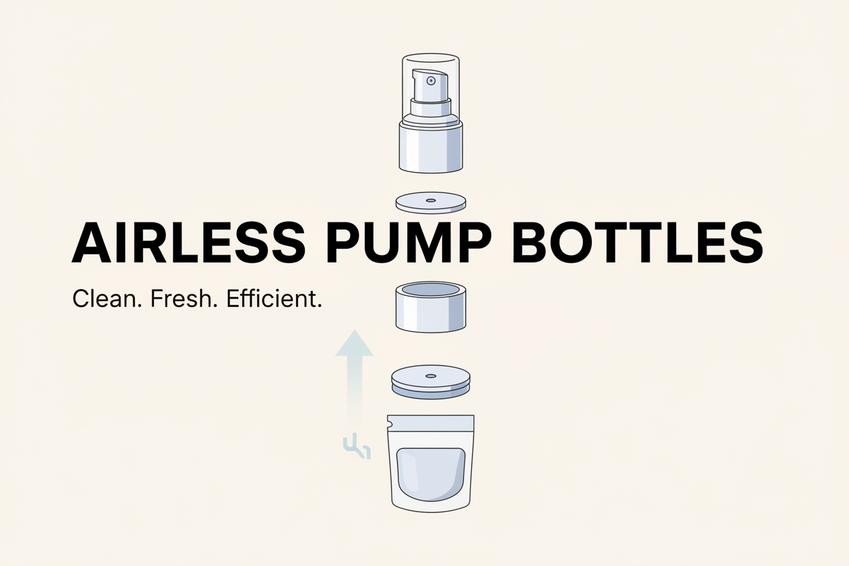
→ Core Components: Pump head, actuator, piston, inner pouch and outer bottle form a sealed, airless system to block contaminants.
→ Material Matters: PP, PET, Acrylic, AS, PCTA and HDPE offer clarity, chemical resistance and PCR sustainability for luxury serums and creams.
→ Preservation Power: Vacuum dispensing lifts the pouch without air backflow, reducing oxidation and maintaining formula efficacy.
→ User Benefits: Precise dosing, extended shelf life, minimal residual waste and enhanced protection keep products fresh and waste-free.
For bulk buyers, that means fewer returns, cleaner dosing, stronger brand perception, and packaging that actually pulls its weight.
What Are Airless Pump Bottles?
Airless pump bottles for cosmetics are kind of the quiet upgrade everyone ends up loving. Instead of letting air mess with your formula, these systems keep things sealed and clean. If you’ve used airless cosmetic bottles or airless pump containers, you’ve already seen the difference—better texture, less waste, longer shelf life. Brands like Topfeelmakeup keep pushing this tech forward. Modern market intelligence highlights a steady consumer transition toward non-contaminating, vacuum-sealed packaging.
Inside the Bottle: Key Components from Pump Head to Inner Pouch
- Core flow of the dispensing system:
- Top layer
- pump head + actuator → controls dosage, smooth press feel
- Mid structure
- collar locks parts
- bottle body protects internal system
- Internal motion system
- piston or inner pouch moves upward
- sealed airless mechanism prevents backflow
- Top layer
- How parts interact in airless pump bottles for cosmetics:
- Press → actuator triggers vacuum
- Product rises via piston
- No air enters the inner pouch
- Clean output every time
Topfeelmakeup designs an airless bottle so each press feels consistent, not messy.
Material Choices: PP, PET, Acrylic and HDPE in Airless Designs
Choosing materials isn’t just technical—it affects how airless pump bottles for cosmetics look, feel, and last. Emerging packaging industry trends favor sustainable resins alongside ultra-clear barrier materials.
- PP: strong, chemical-safe, great for active skincare
- PET: lightweight, clear, common in airless cosmetic bottles
- acrylic: premium vibe, thicker walls
- HDPE: tough, ideal for sensitive formulas
Quick breakdown:
- If formula is reactive → go PP or HDPE
- If visual appeal matters → acrylic or PET
- If sustainability matters → PCR plastics now widely used
Topfeelmakeup often mixes plastic materials smartly, balancing material properties with real-world chemical compatibility.
How Vacuum Dispensing Drives Product Preservation
- Preservation chain inside airless pump bottles for cosmetics:
- Trigger phase
- press creates vacuum dispensing force
- Movement phase
- base rises, limiting air exposure
- Protection phase
- reduces oxidation and contamination
- Outcome
- longer shelf life, stable formula integrity
- Trigger phase
- What this means in daily use:
- Cream stays fresh
- No finger contact
- Less leftover waste
Airless pump bottles for cosmetics aren’t just packaging—they quietly protect what you paid for. Utilizing a diaphragm system effectively locks out environmental humidity and ambient airborne microbes.
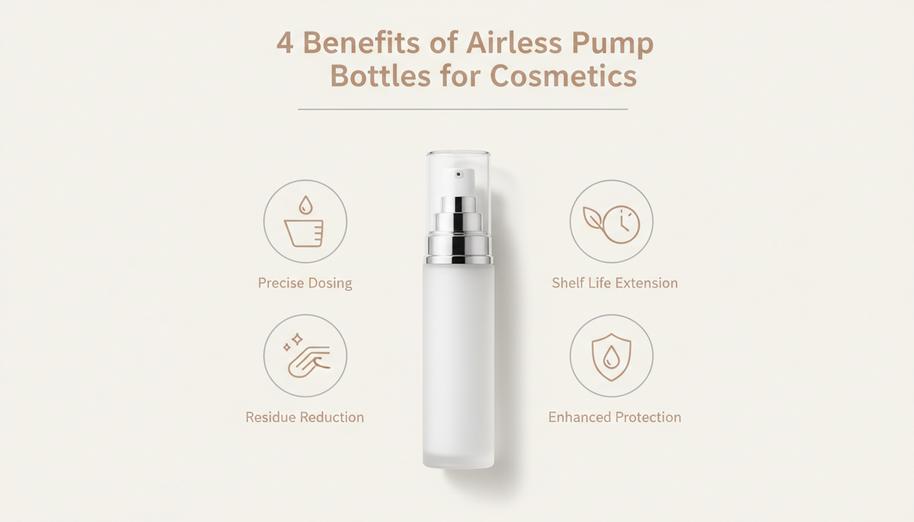
4 Benefits of Airless Pump Bottles for Cosmetics
Airless pump bottles for cosmetics are everywhere now, and not just for looks. Break the phrase down—airless pump, bottles, cosmetics—and you get a system built for clean, efficient skincare. From daily serums to high-end creams, these airless cosmetic bottles quietly improve how products feel, last, and perform.
Precise Dosing for Luxury Serums
- At the core of airless pump bottles for cosmetics lies controlled dispensing, giving a measured amount every press.For brands like Topfeelmakeup, selecting an airless pump bottle for cosmetics and skincare supports a true luxury product experience—no guesswork, no overuse.
- This leads to:
- Accurate dosage for actives
- Better product efficiency in routines
- Noticeable serum preservation over time
- This leads to:
- Short take: clean push, exact drop, zero mess.
Shelf Life Extension through Contamination Prevention
- Airless pump cosmetic packaging blocks air exposure, which helps slow oxidation prevention.
- Inside the system:
- A tight seal limits microbial contamination
- Reduced bacterial growth keeps formulas stable
- Inside the system:
- Resulting benefits:
- Longer product longevity
- Better freshness with every use
- Stronger product integrity for sensitive formulas
A 2025 Mintel beauty packaging brief noted that air-restrictive systems are now tied directly to perceived product safety and extended usability in premium skincare.
Preventing spoilage and contamination allows manufacturers to maintain clinical efficacy while minimizing synthetic preservative additives.
Residual Reduction: Maximizing Every Drop
- With airless pump bottles for cosmetics, complete evacuation isn’t hype—it’s design.
- Internal systems:
- Piston rise or pouch compression
- pushes product upward
- reduces minimal residue
- Internal systems:
- Outcomes:Quick hits: scrape-free, clean finish, solid product recovery.
- Less product waste
- Higher full utilization
- Smarter economic use for consumers
By establishing atmospheric isolation, users enjoy evacuation rates between 95% and 99%, ensuring no active formula is left clinging to the container walls.
Enhanced Protection with Airless Technology
Airless pump bottles for cosmetics rely on a sealed airless system paired with barrier technology. The vacuum seal limits oxygen, while outer layers often add UV protection.
Small details matter:
- Product stability improves daily
- Ingredient efficacy stays consistent
- A reliable protective barrier keeps formulas intact
Choosing a round airless pump bottle or a refillable airless pump bottle offers tailored aesthetic options without compromising safety. Protecting unstable active compounds such as L-ascorbic acid or retinol ensures full potency from the first pump to the last.
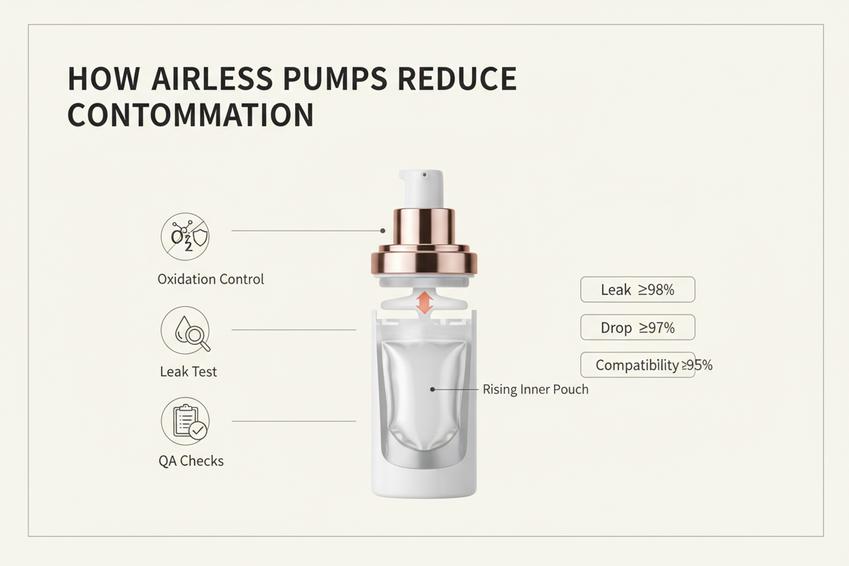
How Do Airless Pumps Reduce Contamination?
Airless pump bottles for cosmetics keep formulas cleaner, longer. By cutting air contact and tightening every pathway from fill to dispense, these systems reduce oxidation and microbes. If you’ve compared cosmetic airless pump bottles with jars, the difference in stability and hygiene is pretty obvious.
Sealed System: Vacuum Barrier vs. Traditional Containers
- Core idea: a sealed system driven by airless technology
- Vacuum path
- Vacuum barrier forms as the actuator lifts product
- No backflow → strong contamination protection
- Oxygen control
- Limits oxidation prevention issues
- Slows product degradation
- Compare with traditional containers
- Open jars: repeated exposure
- Dip tubes: air re-entry each press
- Vacuum path
- Practical takeaway
- airless pump bottles for cosmetics keep actives stable; many brands, including Topfeelmakeup, prefer this route for sensitive formulas.
The rapid rise of dermo-cosmetics has made airtight containment an industry norm. Modern formulations must also adhere strictly to global FDA labeling regulations to verify product safety and shelf stability.
Inner Pouch Design and Residual Reduction
A flexible inner pouch (or piston design) rises as you dispense, pushing nearly all product out.
- Quick wins
- Better product evacuation
- Lower residual product
- Higher dispensing efficiency
- What it means in use
- Smoother dose, less waste, stronger formula preservation
- Waste minimization matters for cost and sustainability
- In short burstsYou’ll see why many airless cosmetic packaging lines highlight pouch systems.
- cleaner → longer shelf feel → consistent texture → fewer returns
Brands seeking diverse delivery methods often combine pouches with a custom cosmetic tube, a protective cream jar, a classic lotion bottle, a precise dropper bottle, or a multi-part dual chamber bottle. Incorporating a refillable bottle system further reduces total plastic expenditure. Market data projects that expanding airless packaging market size will continue to accelerate as brands replace traditional open-mouth containers with an advanced vacuum-sealed system.
Rigorous QA & QC: Leak, Compatibility, and Functionality Testing
- Testing stack under quality assurance and quality control
- Leak testing
- Pressure hold, vacuum decay
- Compatibility testing
- Formula vs. resin, gasket, spring
- Functionality testing
- Dose accuracy, stroke count, clog resistance
- Performance standards & testing protocols (GMP aligned)
- Leak testing
| Test Type | Method | Threshold | Sample Size | Pass Rate |
|---|---|---|---|---|
| Leak | Vacuum decay | ≤1.0 kPa loss | 50 | ≥98% |
| Drop | 1.2 m, 3 faces | No crack/leak | 30 | ≥97% |
| Compatibility | 45°C, 4 wks | No color/odor shift | 20 | ≥95% |
| Function | 300 strokes | Dose ±10% | 40 | ≥98% |
| Transport | Vibration 2 hrs | No failure | 30 | ≥97% |
- Result
- Reliable airless pump bottles for cosmetics; Topfeelmakeup often markets these validated metrics to buyers.
Compliance testing frequently involves rigorous vacuum decay testing under simulated transit conditions, as well as checking seal integrity to prevent leakage during pressure changes.
References
[1] Beauty and Personal Care Industry Insights - Mintel
[2] Packaging Industry and Market Insights - Mintel
[3] How do airless pump bottles work and why choose them? - Stocksmetic Packaging
[4] How do airless cosmetic jars prevent formula oxidation compared to traditional jars? - APackaging Group
[5] How cosmetic airless pump bottles realize the anti-oxidation function - ZJ-Jinsheng Packaging
[6] Airless Packaging in Cosmetics for Dosing and Stability - Packaging World Insights
[7] Airless Packaging Delivers Aesthetics & Functionality - Beauty Packaging Magazine
[8] Airless Packaging Market Size & Growth Report - Straits Research
[9] Global Airless Packaging Market Forecast - Precedence Research
[10] ASTM D6653: Leak Testing Guidelines for Packaging Materials - Testronix Instruments
[11] ASTM D3078 Leak Testing Guide for Flexible Packaging - Saicheng Instrument
Post time: Jul-30-2026
