
Cosmetic packaging is a brand’s quiet dealmaker, directly influencing bulk margins and shelf appeal. Recent insights from McKinsey and Euromonitor indicate that packaging decisions now dictate purchasing perception, sustainability metrics, and supplier selection globally.
Pick wrong, and costs creep while timelines slip; pick smart, and the brand moves faster and cleaner.
Harmonic Key Points for Cosmetic Tube Packaging
→ Material Selection: Choose PE or PP for cost-effective flexibility, PETG for clarity, or PCR/sugarcane bio-plastics to boost eco-friendly cosmetic packaging credentials.
→ Barrier Protection: Opt for co-extruded or multi-layer construction (ABL/PBL) to guard against oxygen, light, and moisture, extending shelf life.
→ Decoration Techniques: Leverage offset printing for vivid graphics, silk-screen or hot stamping for texture, and UV coating or custom labels for durability and finish variety.
→ Sustainability Strategies: Embrace lightweighting, mono-material designs, and closed-loop recyclability; integrate certified bio-based and PCR resins to meet green goals.
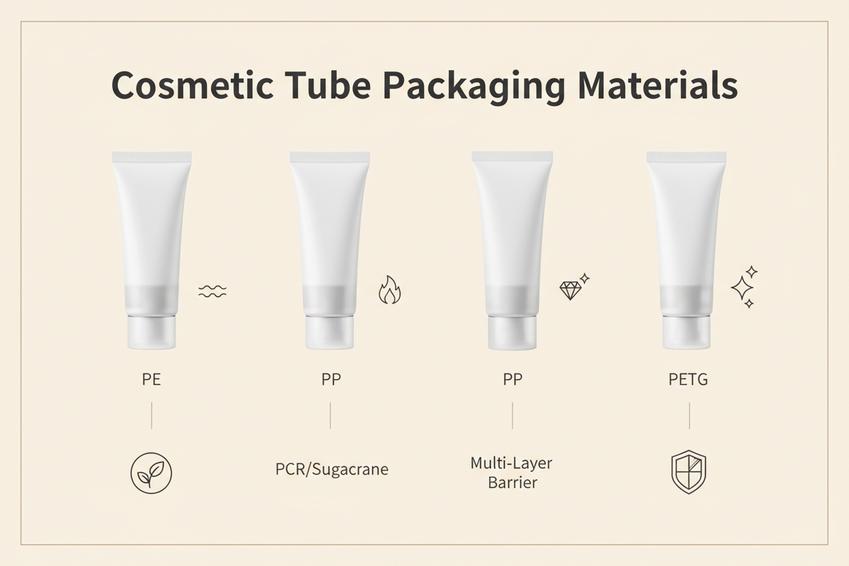
Types Of Cosmetic Tube Packaging Materials
Choosing the right material shapes how a cosmetic tube feels, protects formulas, and supports branding. From budget-friendly squeeze tubes to high-barrier designs, the market offers vast freedom. Topfeelpack highlights material matching as the core of practical, attractive packaging.
Polyethylene (PE) Tubes: Affordable & Flexible
- Why brands pick Polyethylene tubes for cosmetic packaging:
- Optimal tactile squeeze response
- Low mass-production cost
- Wide decoration compatibility
- Common packaging setups:
- Mono-layer PE
- Best for basic creams
- Lightweight plastic structure
- Co-extruded material
- Better product protection
- Improved shelf appearance
- Mono-layer PE
Lotion and cleanser brands heavily utilize PE because the flexibility feels natural. Flip-top closures and custom diameters keep cost-effective packaging easy to scale.
Polypropylene (PP) Tubes: High Heat Resistance
For active formulas requiring higher fill temperatures, Polypropylene excels, backed by continuous growth tracked by Grand View Research.
- Strong heat resistance
- Reliable chemical stability
- Tougher plastic wall structure
Steps often used in production:
- Extrude the PP tube body
- Add sealing layer
- Attach cap or pump
- Apply branding graphics
This style appears frequently in salon-grade products where durability overrides softness.
PETG Tubes: Clarity with Durability
Clear packaging immediately catches attention. PETG tubes combine strong transparency with dependable durability, offering a polished retail look.
A 2025 Smithers packaging outlook noted that transparent beauty packaging continues gaining demand in prestige skincare because shoppers connect visible formulas with product trust.
Key benefits include:
- Glossy finish options
- Sharp label printing
- Strong impact resistance
For gels, PETG helps colors and textures stay visible without sacrificing protection.
PCR & Sugarcane Plastic: Sustainable Options
Eco-minded brands are adopting circular economy principles highlighted by the Ellen MacArthur Foundation:
- PCR (Post-Consumer Recycled)
- Sugarcane plastic
- Mixed bio-based resins
Nested sustainability choices:
- Recycled-content tubes
- Lower virgin resin use
- Support circular packaging goals
- Renewable-source packaging
- Reduced fossil dependence
- Better eco-focused branding
This direction keeps performance near standard PE while delivering the sustainability story consumers demand.
Co-extruded & Multi-layer Constructions: Enhanced Barrier Protection
Advanced formulas rely on Co-extruded walls and multi-layer designs.
- Barrier-focused constructions:
- PBL tubes
- ABL tubes
- Layered hybrid structures
- Protection advantages:
- Blocks oxygen
- Limits moisture transfer
- Reduces UV exposure
These layered construction systems stabilize active ingredients. Topfeelpack frequently implements these layers for premium custom packaging solutions requiring long-term protection.
Plastic Vs. Aluminum Tubes Comparison
Material choice dictates user comfort, shelf life, and recycling potential. Topfeelpack emphasizes this balance when engineered for modern beauty products.
Plastic Tubes
Plastic adapts rapidly to beauty trends. In skincare and travel-size formats, brands prefer PE or PP for their lightweight profile and lower mass-production costs.
- Common strengths:
- Strong Squeezability
- Smooth Flexibility
- Easy decoration printing
- Lower shipping weight from Lightweight structures
- Material options used:
- PE
- Soft texture for facial cleansers
- Consumer comfort during squeezing
- PP
- Added structural stability
- Useful for thicker creams
- PBL structures
- Added Barrier layers
- Improved freshness retention
- PE
Brands favor plastic for rapid customization. Transparency and matte effects drive shelf appeal, aligning with Packaging Europe's data on rising mono-material demand.
“Flexible cosmetic packaging demand continues rising as refill culture and lightweight formats expand across Asia-Pacific and Europe,” noted packaging analysts in a 2025 Smithers industry outlook.
Aluminum Tubes
Aluminum focuses on absolute product safety and premium presentation, providing a total Barrier protection against air and light.
Key advantages include:
- Complete Light protection
- Strong Oxygen barrier
- Built-in Tamper-evident sealing
- Highly Recyclable material recovery
For pharmacy beauty products, aluminum logic follows strict guidelines similar to FDA packaging principles:
- Formula sensitivity increases
- Air exposure becomes risky
- Metal tube selection improves Sterility
- Shelf stability lasts longer
Short observations:
- Rich hand feel creates a Premium feel
- More controlled dispensing
- Better protection for active ingredients (e.g., retinol)
The tradeoff is Rigidity; repeated squeezing leaves permanent folds. Yet, luxury lines choose aluminum when protection outweighs flexibility.
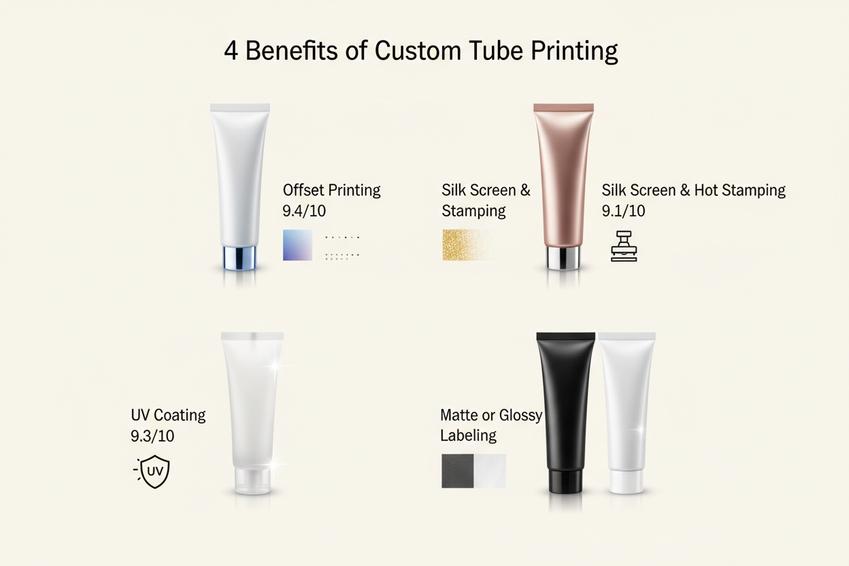
4 Benefits Of Custom Tube Printing
Custom printing transforms generic tubes into polished retail tools, from metallic effects to durable coatings.
Offset Printing for Vivid Brand Colors
For large-run orders, offset Printing technology reduces color drift and maintains crisp artwork, as noted by Cosmetics Business.
- Key visual advantages
- Stable Color consistency across mass orders
- Cleaner gradients with High resolution
- Stronger shelf impact through Vibrant colors
- Production strengths
- Optimized for Mass production
- Supports detailed logos and ingredients
- Fits laminated and seamless formats
| Print Feature | Standard Tube Print | Offset Tube Print | Visual Impact Score |
|---|---|---|---|
| Color Precision | Medium | High | 9.4/10 |
| Artwork Detail | Basic | Advanced | 9.1/10 |
| Batch Consistency | Variable | Stable | 9.3/10 |
Topfeelpack recommends offset decoration for complex palettes or tiny text layouts.
Silk Screen & Hot Stamping for Premium Texture
Luxury packaging relies on touch. Silk screen creates a raised Tactile feel, while foil delivers Metallic effects for high Visual appeal, perfectly matching a companion cream jar line.
- Matte ink layers add subtle depth
- Gold/silver foil boosts Luxury appearance
- Spot decoration supports limited editions
Selective Decorative finish combined with light Embossing drastically improves retail presence.
UV Coating to Boost Durability
UV treatment cures a hardened Protective layer over printed surfaces, ensuring the tube is as durable as a high-contact cosmetic pump.
- Surface protection process
- Ink curing under UV light
- Formation of Scratch resistance
- Added Fade resistance
- Functional benefits
- Better Chemical resistance against lotion residue
- Longer print clarity and Enhanced lifespan
- Optional Glossy finish
Custom Labeling with Matte or Glossy Finish
Labels are ideal for short runs or regional compliance updates.
- Finish options
- Matte textures for soft branding
- Gloss coatings for a brighter Aesthetic choice
- Transparent labels for minimal designs
- Branding flexibility
- Fast updates to Label design
- Strong Product differentiation
- Easy placement of compliance data
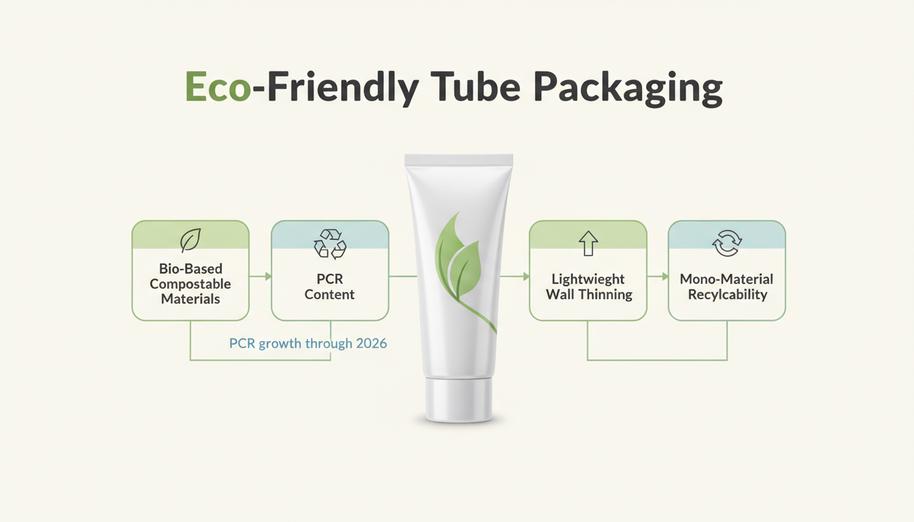
Is Your Tube Packaging Eco-Friendly Enough?
Brands are overhauling material choices to meet consumer expectations tracked by Mintel. Greenwashing is easily spotted; verified sustainability is essential.
Evaluating Bio-based & Compostable Materials
Sustainability claims must match real-world performance, following leads from conglomerates like L'Oreal.
- bio-plastics from renewable feedstocks
- certified compostable polymers
- verified biodegradable testing results
- Check mechanical material properties (barrier, flexibility).
- Confirm industrial composting access.
- Review third-party certification on degradation.
| Material Type | Source Base | Degradation Condition | Barrier Level |
|---|---|---|---|
| PLA | Plant-based | Industrial compost | Medium |
| Bio-PE | Sugarcane | Recyclable stream | High |
| PHA | Microbial | Compost (varied) | Medium |
| Conventional PE | Fossil | Non-biodegradable | High |
Embracing PCR and Renewable Resources
Post-consumer recycled blends maintain squeeze quality while reducing impact.
- Lower virgin plastic reduction
- Improved resource efficiency
- Support for the circular economy
“Post-consumer recycled content in beauty packaging is projected to grow steadily through 2026 as brands align with circular economy targets.” — Euromonitor International, 2025
Under the hood:
- recycled content must meet Plastics Recyclers Europe purity standards
- sustainable sourcing documentation is audited
- material innovation improves clarity
Lightweighting to Reduce Carbon Footprint
Smart material reduction trims transportation emissions and energy consumption.
Step-by-step eco-design logic:
- Analyze wall thickness for weight optimization.
- Test squeeze force and cap torque.
- Validate barrier retention after thinning.
Quick wins include slimmer shoulders, shorter caps, and optimized diameters.
Designing for Recyclability and Closed-Loop Systems
True circularity requires design for recycling principles, applicable to tubes or complex dual chamber packaging.
- Favor mono-material structures
- Simplify material separation
- Align with collection infrastructure
Multi-layer thinking:
- Tube Body (Single polymer, compatible pigments)
- Closure (Same resin stream, easy removal)
- End-of-Life (Mainstream recycling streams, material recovery)
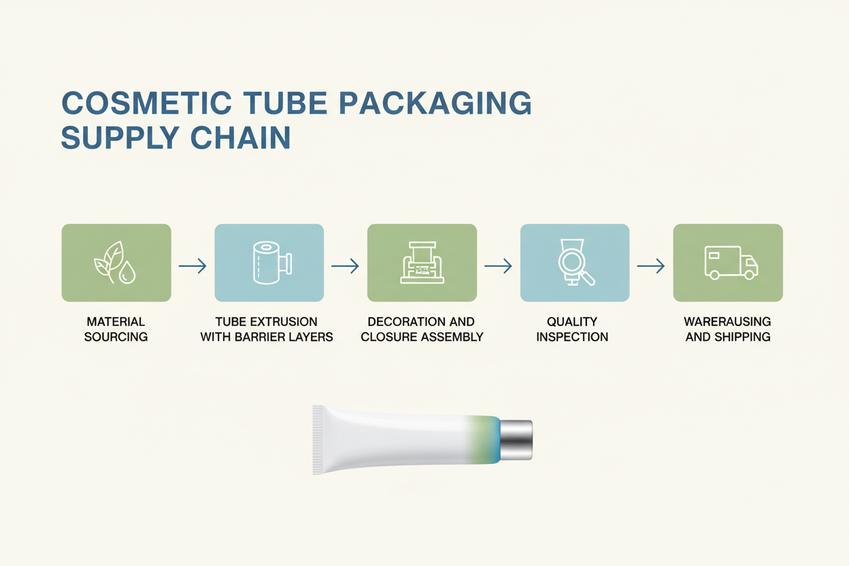
Cosmetic Tube Packaging Supply Chain Steps
Smooth production balances speed, compliance, and consistency. Topfeelpack streamlines this across every stage.
Material Sourcing and Certification
Reliable packaging requires verified inputs, mitigating risks tracked by S&P Global.
- Polymers and Resins
- Virgin plastic and PCR blends
Key checks include reviewing MSDS, confirming Certifications, and conducting Supplier audits.
- Material screening (Food-grade safety, Heavy metal restrictions, Migration testing)
- Sustainability validation (PCR tracking, Carbon reduction, Recycling compatibility)
“Demand for recyclable and mono-material cosmetic packaging continues to rise sharply through 2025, especially in personal care tubes,” noted Packaging Europe.
Tube Extrusion and Barrier Laminate Formation
The factory shapes the Tube body and Shoulder via Extrusion. For extra resistance, producers add:
- Barrier layer (EVOH or Aluminum barrier)
- Multi-layer Co-extrusion
- Flexible Laminate structures
Decoration and Closure Assembly
Visual branding and functional closures must perfectly align, whether on tubes or premium airless pump bottles.
- Decoration: Printing, Hot stamping, Labeling, Matte/Gloss finish.
- Closures: Torque consistency, color matching.
- Caps: Hinge durability, snap-fit testing.
- Flip-top: Opening pressure, leak prevention.
Topfeelpack precisely aligns decoration tones with cap textures.
Quality Inspection and Regulatory Compliance
Inspection teams strictly monitor:
- Leak testing
- Compatibility testing
- Print sharpness and seam durability
Compliance routines include:
- Maintaining Batch records
- Tracking Defect rates
- Following GMP (Good Manufacturing Practices)
Packaging, Warehousing and Distribution
Approved units, from tubes to sunscreen packaging, move into secondary (retail cartons) and tertiary (pallets) packaging.
Warehouse management focuses on humidity control, FIFO rotation, and transport scheduling. Efficient Logistics and Shipping ensure products—like sensitive refillable airless pump bottles—arrive pristine and ready for retail.
References
- McKinsey - https://www.mckinsey.com/industries/packaging-and-paper/our-insights/sustainability-in-packaging-inside-the-minds-of-us-consumers
- Euromonitor - https://www.euromonitor.com/article/beauty-and-personal-care-packaging-trends
- Grand View Research - https://www.grandviewresearch.com/industry-analysis/cosmetic-packaging-market
- Smithers - https://www.smithers.com/en-gb/services/market-reports/packaging
- Ellen MacArthur Foundation - https://www.ellenmacarthurfoundation.org/topics/plastics/overview
- FDA - https://www.fda.gov/cosmetics/cosmetics-labeling-regulations/cosmetics-labeling-guide
- Cosmetics Business - https://www.cosmeticsbusiness.com/packaging
- L'Oreal - https://www.loreal.com/en/commitments-and-responsibilities/for-the-planet/
- Plastics Recyclers Europe - https://www.plasticsrecyclers.eu/
- S&P Global - https://www.spglobal.com/commodityinsights/en/chemicals/polymers
Post time: Jul-02-2026
