
Essentials Review: Glass Cosmetic Jars
➔ Material Protection: Choose flint, amber, or borosilicate glass for UV shielding, chemical stability, and premium clarity in serums and creams.
➔ Design & Shape: Opt for wide-mouth, straight-sided, or double-wall jars to balance access, insulation, and shelf appeal.
➔ Secure Closures: Pair with screw caps, droppers, or tamper-evident seals to ensure airtight, hygienic dispensing and child resistance when needed.
➔ Sustainable Sourcing: Favor PCR-content glass and refillable systems, backed by quality control and eco-friendly manufacturing to reduce carbon impact.
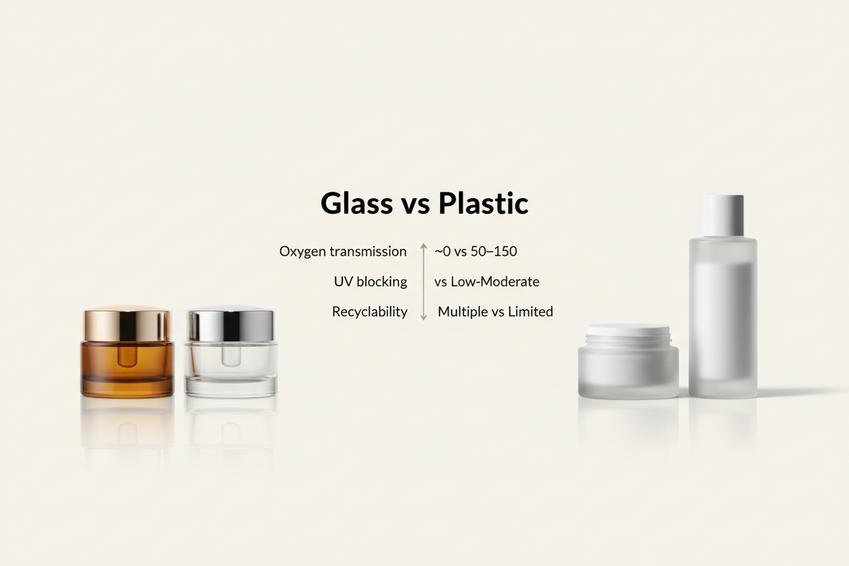
Why Choose Glass Cosmetic Jars Over Plastics?
Quick take: when formulas matter and shelf appeal counts, glass cosmetic jars keep things clean, stable, and good-looking. You’ll see why glass cosmetic jars often beat plastic on purity, reuse, and vibe—while plastic still wins on weight and price. Understanding the core advantages of glass helps brands choose the right container for high-performance formulations.
Glass Cosmetic Jars
- Core traits of glass cosmetic jars
- Material behavior
- inertness→ won’t react with actives
- chemical resistance → acids, retinoids stay true
- Protection layer
- UV protection via amber; flint gives clarity for display
- Build quality
- durability (thick walls), lab-grade borosilicate options
- Material behavior
- Why brands keep picking cosmetic glass jars
- Formula safety
- zero permeability, low risk of oxidation
- Circular use
- high recyclability, easy refill systems
- Shelf presence
- premium feel and aesthetic appeal that sells
- Formula safety
- Where Topfeelpack fits
- design + filling compatibility
- tight tolerances for pumps, caps, liners
- finish options
- frosted, tinted, screen print on glass cosmetic jars
- design + filling compatibility
- Bottom line snippets
- clean formula in, clean formula out
- looks expensive, feels it too
- glass cosmetic jars = stable + stylish
Plastic Containers
- What plastic containers do well
- Practical perks
- lightweight, shatterproof, easy shipping
- flexibility for squeezable formats
- Budget angle
- cost-effective for large runs
- Practical perks
- Trade-offs to watch
- Interaction risk
- permeability allows oxygen ingress
- potential material degradation over time
- Protection limits
- weaker UV shielding vs amber glass cosmetic jars
- Sustainability
- mixed environmental impact; recycling streams vary
- Interaction risk
- Material notes
- PET and PP
- often labeled BPA-free, still not fully inertness-level
- Additives
- stabilizers can migrate in harsh formulas
- PET and PP
- Practical pairing guide
- Short shelf-life gels → plastic ok
- Potent serums/actives → choose glass cosmetic jars
- Premium lines → cosmetic glass jars win on perception
- Wrap-up bites
- plastic is convenient, not always protective
- for purity + polish, glass cosmetic jars stay ahead
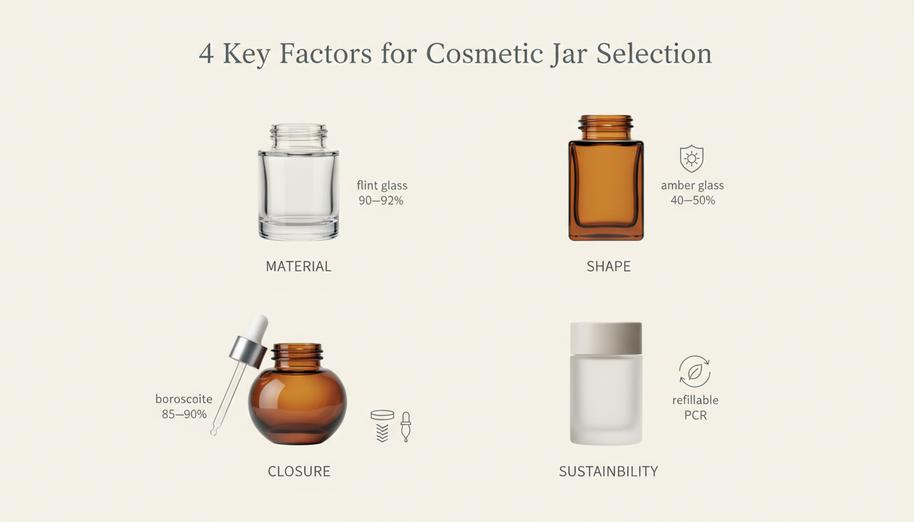
4 Key Factors for Cosmetic Jar Selection
Getting glass cosmetic jars right isn’t just about looks—it shapes product safety, shelf appeal, and how people actually use your formula day to day. From cream jar selections that feel luxe in hand to cosmetic glass containers built for durability, each choice quietly impacts performance. Let’s break it down in a practical, no-fuss way.
Material Composition: Flint glass, Amber glass & UV protection
- clear flint glass shows off color and texture
- amber glass boosts UV protection for light-sensitive blends
- opaque options balance branding with stability
| Material Type | Light Transmission (%) | UV Blocking (%) | Typical Use Case |
|---|---|---|---|
| Flint Glass | 90–92 | Low | Display-focused creams |
| Amber Glass | 40–50 | High | Serums, oils |
| Borosilicate | 85–90 | Medium | Active formulas |
- Match material composition with formula sensitivity
- Check compatibility with acids or oils
- Align clarity with brand vibe
For brands like Topfeelpack, dialing in glass cosmetic jars often means balancing visual clarity with real protection.
Jar Design Shapes—from wide mouth to tapered body
- wide mouth improves access for thicker creams
- tapered body adds grip and a sleeker silhouette
- single wall cream jar or double-wall builds a clean shelf line
Short notes:
A cylindrical design feels classic.
A square base stacks better in transit.
Thicker bottoms signal premium weight.
Closure Types including screw cap, dropper assembly & tamper-evident seal
- closure choice affects hygiene and leakage control
➤ Core options
- screw cap with liner: simple, reliable
- dropper bottle assembly: precise dosing for serums
- airless cream jar pump or dispenser: cleaner daily use
➤ Safety layers
- tamper-evident seal builds trust
- child-resistant lid supports compliance
Good glass cosmetic jars don’t stop at the jar—the closure system completes the experience. Transitioning from an open jar of lotion to sealed dispensing protects sensitive actives from daily exposure.
Refillable systems and post-consumer recycled content
- Build a refillable system
- Inner pod swaps
- Durable outer glass shell
- Add post-consumer recycled (PCR) content
- lowers footprint
- keeps strength intact
- Communicate sustainability clearly
- reusable formats cut repeat waste
- eco-friendly messaging resonates when it’s honest
Topfeelpack integrates recycled content with a durable refillable cosmetic jar, keeping performance intact while nudging brands toward smarter, reusable packaging.
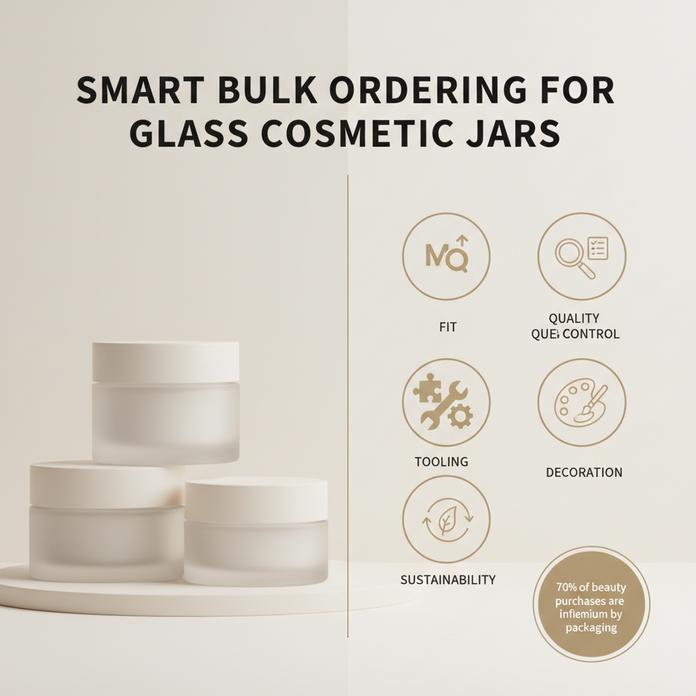
Bulk Ordering Glass Cosmetic Jars: Top Tips
Quick intro: Bulk buying glass cosmetic jars isn’t just about price—it’s about fit, finish, and future scaling. Here’s how to keep your glass jars, cosmetic glass containers, and small cream jars dialed in.
Negotiate MOQ across 5ml–100ml capacity ranges
Balancing MOQ, capacity, and ranges gets real fast when you juggle 5ml to 100ml volume options for glass cosmetic jars.
- Small runs (5ml, 15ml): better for sampling, but higher per-unit minimums
- Mid sizes (30ml, 50ml): sweet spot for negotiation and steady demand
- Larger (100ml): ideal when forecasts are stable
- Match sizes to your filling line
- Confirm neck finish compatibility
- Push flexible MOQ tiers with suppliers like Topfeelpack
When brands scale, switching between cosmetic glass jars and glass cream jars should feel seamless, not chaotic.
Partner for custom tooling, molding technique & batch consistency
Custom tooling shapes your identity, while molding technique defines durability.
- Step into customization
- Shape design → mold creation → pilot production
- Check wall thickness and stress points
- Lock in batch consistency
- Annealing control
- Dimensional checks across runs
Topfeelpack keeps manufacturing tight so every batch of glass cosmetic jars lands consistent—no surprises mid-fill.
Prioritize defect inspection and rigorous quality control
Tiny flaws ruin big batches.
- Watch for defect types: bubbles, cracks, uneven rims
- Apply strict inspection checkpoints
- Build quality control with measurable standards
A simple flow helps:
- Incoming material testing
- In-line visual checks
- Final assurance against defined criteria
Clean, reliable cosmetic glass containers mean fewer returns and smoother filling.
Explore decoration methods like screen printing and UV coating
Looks sell—fast.
- Decoration choices:
- screen printing for sharp logos
- UV coating for gloss and protection
- color plating, hot stamping, subtle finishing
Mix aesthetics with durability. Glass jars cosmetic buyers notice shelf impact first, then feel. Topfeelpack supports layered embellishment and precise labeling that won’t peel mid-shipment.
“Premium packaging continues to influence over 70% of beauty purchase decisions, especially in skincare segments,” noted a 2025 McKinsey beauty market update.
Confirm eco-friendly manufacturing and recyclable material use
Sustainability isn’t optional anymore.
- Choose eco-friendly manufacturing routes
- Ask for recyclable materials and pcr pp or post-consumer glass content
- Reduce weight without losing strength
A quick check:
• Carbon footprint data
• Reuse potential
• Certified green practices
Glass cosmetic jars already score high on recyclability, but smarter sourcing pushes it further. Topfeelpack aligns environmental goals with real production outcomes, not just talk.
References
[1] Which Type of Plastic is FDA Approved for Cosmetics Packaging? - JC Cosmopack: https://jccosmopack.com/which-type-of-plastic-is-fda-approved-for-cosmetics-packaging/
[2] USP Light Transmission Testing of Containers - TestingLab: https://www.testinglab.com/usp-light-transmission-testing-of-containers
[3] USP Light Transmission Testing of Containers - TestingLab: https://www.testinglab.com/usp-light-transmission-testing-of-containers
[4] Why Recycling Glass Bottles is Crucial for the Environment - Glass Packaging Institute (GPI): https://www.gpi.org/blog/why-recycling-glass-bottles-is-crucial-for-the-environment
[5] A Comprehensive Guide to Cosmetic Stability Testing Guidelines - Alfa Chemistry: https://www.alfachemic.com/testinglab/resources/a-comprehensive-guide-to-cosmetic-stability-testing-guidelines.html
[6] A Comprehensive Guide to Cosmetic Stability Testing Guidelines - Alfa Chemistry: https://www.alfachemic.com/testinglab/resources/a-comprehensive-guide-to-cosmetic-stability-testing-guidelines.html
[7] Which Type of Plastic is FDA Approved for Cosmetics Packaging? - JC Cosmopack: https://jccosmopack.com/which-type-of-plastic-is-fda-approved-for-cosmetics-packaging/
[8] Global Commitment 2022 - Cosmetics Insights - Ellen MacArthur Foundation: https://www.ellenmacarthurfoundation.org/global-commitment-2022-cosmetics-insights
[9] Global Commitment 2022 - Cosmetics Insights - Ellen MacArthur Foundation: https://www.ellenmacarthurfoundation.org/global-commitment-2022-cosmetics-insights
[10] Beauty and Cosmetic Industry Trends 2025 - Siemens: https://blogs.sw.siemens.com/consumer-products-retail/2025/07/22/beauty-and-cosmetic-industry-trends-2025/
[11] ISO 22716 Good Manufacturing Practices for Cosmetics - Intertek: https://www.intertek.com/assurance/iso-22716/
[12] 2025 Mid-Year Beauty Care Report - Berlin Packaging / McKinsey & Company: https://www.berlinpackaging.com/content/market-insights/2025-Beauty-Care-Trends-English.pdf
[13] North American Glass Packaging & Recycling - Glass Packaging Institute (GPI): https://www.gpi.org/
Post time: Jul-29-2026
