
Cosmetic filling and packaging drives shelf pull, margins, and product integrity; at scale, small misses become expensive headaches.
Analyses fromMcKinsey and Euromonitor cite surging demand for sustainable formats, tighter FDA scrutiny, and persistent fill-accuracy issues in contract manufacturing. Pick your materials, match filling tech to viscosity, lock compliance, and scale lines without sacrificing quality.
Quick Insights: Cosmetic Filling and Packaging
➔ Material Matching: Select glass, plastic, or aluminum based on formula compatibility, aesthetics, and barrier needs.
➔ Filling Technology: Pair viscosity with volumetric, piston, gravity, peristaltic or vacuum systems for precision and speed.
➔ Compliance & Quality: Adhere to FDA, GMP, ISO and REACH standards; perform stability and compatibility testing.
➔ Sustainability Focus: Use recyclable or biodegradable materials, mono-material design, lightweighting, and refillable design.
Cosmetic Filling And Packaging: Key Steps Explained
From picking the right container to dialing in the perfect filling machine, every move shapes quality and safety. Here is how smart decisions turn formulas into finished products people trust.
Selecting the Right Packaging Materials (Glass, Plastic, Aluminum)
Smart material selection sets the tone for product safety and brand vibe.
- Glass
- Plastic
- Aluminum
Each packaging type reacts differently to formula texture and light sensitivity.
- Glass jar
- Plastic bottle
- Aluminum bottle
When evaluating a container, consider:
- ◦ Product compatibility
- ◦ Brand positioning
- ◦ Environmental goals
Decision flow for material selection
- Product characteristics
- Viscosity and reactivity
- Light or oxygen sensitivity
- Functional expectations
- Dropper, cosmetic pump, or screw closure
- Travel durability
- Market positioning
- Premium: thick-wall glass
- Mass market: lightweight plastic
- Active skincare: coated aluminum or a deodorant stick
Topfeelpack helps brands align material choices with performance and cost targets—without overcomplicating things.
Choosing Optimal Filling Technologies (Volumetric, Piston, Gravity)
Filling is where formulas meet machinery. The right technology keeps dosing tight and waste low.
Core options:
- Volumetric filling
- Piston filling
- Gravity filling
How to match product to equipment:
- Low-viscosity toner → Gravity filling
- Lotion or cream → Piston filling
- High-speed serum line → Volumetric filling
Detailed matching logic:
- Formula viscosity
- Water-like → gravity-based dispensing
- Medium cream → piston-driven dosing
- Accuracy requirement
- High precision SKUs → servo-controlled filling machine
- Sensitivity
- Aromatic oils → closed-loop equipment
- Foaming liquids → bottom-up fill method
Even small dosing shifts affect margin. Topfeelpack fine-tunes cosmetic packaging equipment so operations stay synced from tank to bottle.
Integrating Essential Packaging Processes (Labeling, Sealing, Capping)
Once filled, the product moves into the finishing stages.
Main packaging process elements:
- Labeling
- Sealing
- Capping
Operational structure:
- Filling output
- Bottle alignment
- Transfer via conveyor
- Application systems
- Wrap-around labeling
- Induction sealing for tamper control
- Final closure stage
- Screw capping
- Pump pressing
- Tamper-evident band inspection
According to Smithers’ 2025 packaging outlook, demand for automated automation systems continues to rise as brands seek faster changeovers and reduced labor dependency.
Incorporating Sustainability Features (Biodegradable, Recyclable, Lightweighting)
Green thinking is a mandatory strategy.
Key directions:
- Biodegradable materials
- Recyclable mono-material design
- Lightweighting
Sustainable packaging roadmap:
- Material audit
- Material reduction
- PCR content integration
- Refill model testing
Layered sustainability approach:
- Design level
- Simplify packaging type
- Remove mixed plastics
- Manufacturing level
- Reduce resin use through lightweighting
- Improve line efficiency to cut waste
- Market level
- Communicate eco-friendly claims clearly
- Measure environmental impact
With practical upgrades, brands working with Topfeelpack move toward lower-impact production without sacrificing protection.
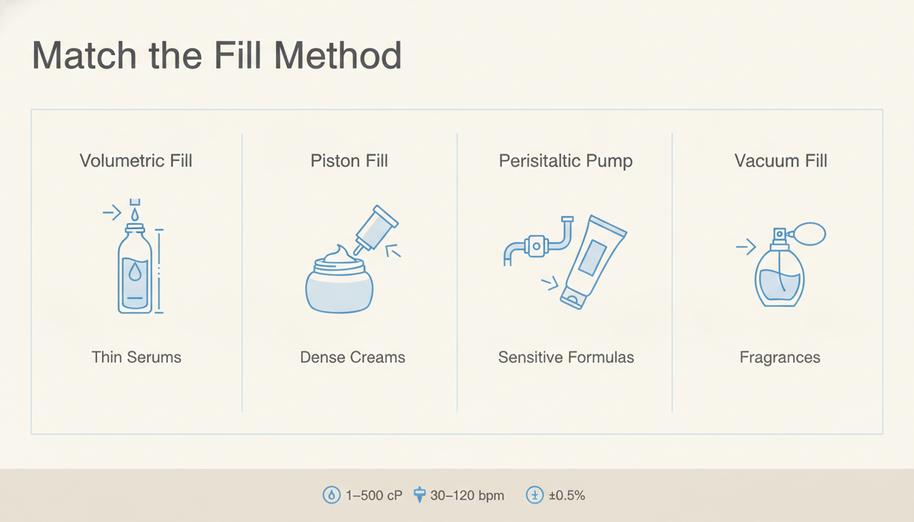
Which Fill Method Suits Your Formula?
From flowy serums to dense creams, the correct handling method keeps formulas stable and supports scalable cosmetic manufacturing.
Volumetric Filling for Thin Serums
When working with volumetric systems, precision is the primary goal.
- Works best for thin liquids
- Maintains accuracy across high-speed lines
- Compatible with various nozzles and bottles
Operational setup:
- Calibration Phase1.1 Measure chamber capacity1.2 Test flow rate of low-viscosity liquids
- Filling Phase2.1 Controlled release into syringe bottles2.2 Anti-drip nozzles engaged
- Quality Check3.1 Volume verification3.2 Seal integrity inspection
| Parameter | Typical Range | Impact on Precision |
|---|---|---|
| Viscosity (cP) | 1–500 | Higher flow stability |
| Fill Speed (bpm) | 30–120 | Output efficiency |
| Volume Tolerance | ±0.5% | Dosage accuracy |
For brands partnering with Topfeelpack, this method is ideal for droppers and mist sprayers.
Piston Filling with High-Viscosity Creams
Thick formulas need muscle. The piston system pushes high-viscosity creams, gels, and lotions into jars with tight dosage control.
Process flow:
- Product loading into hopper
- Measured piston draw
- Forward stroke into containers
- Cut-off valve prevents stringing
Inside the operation:
- Material Handling
- ▪ Dense thick emulsions
- ▪ Stable texture retention
- Filling Accuracy
- ▪ Repeatable dosage cycles
- Container Match
- ▪ Wide-mouth jars
- ▪ Laminated tubes
The result? Less trapped air and smoother top surfaces.
Peristaltic Pump Filling of Sensitive Formulations
For peristaltic pump systems, hygiene rules everything. Fluid touches only sterile tubing, vital for sensitive, shear-sensitive, or sterile formulations.
Operation logic:
- Roller compression rotates
- Flexible tubing pulses fluid forward
- Gentle, low-shear transfer protects actives
Nested control points:
- Contamination Prevention
-
- Closed-loop fluid path
-
- Quick tubing replacement
-
- Product Integrity
-
- Maintains structure of delicate actives
-
- Reduces oxidation exposure
-
“Aseptic and low-shear filling systems are gaining traction as brands shift toward preservative-free beauty,” notes a 2025 McKinsey beauty industry update.
Topfeelpack applies this approach where formula safety equals brand trust.
Vacuum Filling to Preserve Aromatics
Vacuum systems remove headspace air before filling, protecting aromatics, volatile notes, and essential oils from early oxidation.
Operational handling:
- Air extraction from container
- Controlled bottom-up fill
- Immediate sealing for preservation
Key advantages:
- Maintains fragrance intensity
- Reduces bubble formation
- Extends shelf life
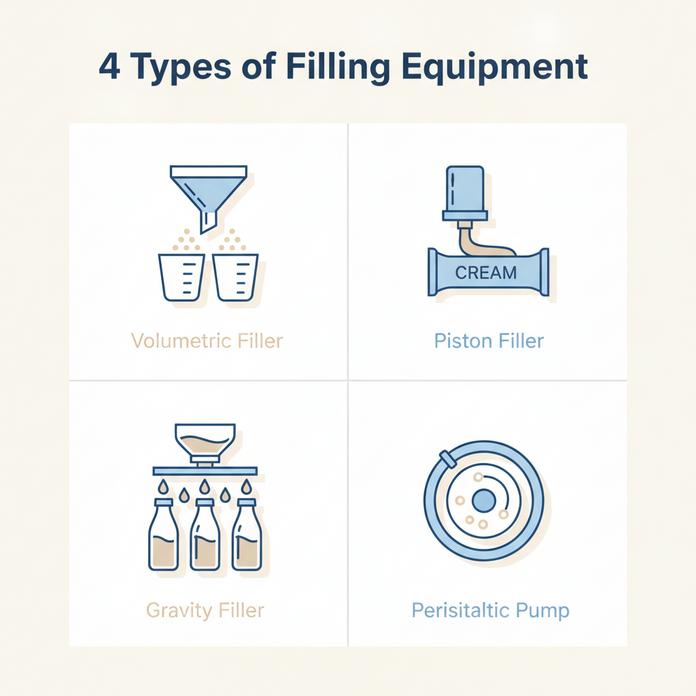
4 Types Of Filling Equipment
Understanding how equipment works helps fine-tune operations without wasting time or product.
Volumetric Filling Machine
This system keeps precise volume under control.
- Key capabilities:
- Maintains consistent fill across varying container size
- Adjusts for viscosity and product density
- Ideal for airless pump bottles
- Core working logic1.1 Timed flow control1.2 Chamber-based measurement
1.3 Calibration for accuracy
- Application2.1 Ideal for cosmetic products like toners2.2 Works best with free-flowing formulas
Piston Filling Machine
Where positive displacement shines.
- Handles thick liquids, creams, lotions, and gels
- Designed for high viscosity formulas
- Ensures accurate dosing with mechanical force
- How it operates1.1 Piston retracts to draw product1.2 Chamber seals
1.3 Piston pushes exact volume out
- Why brands choose it2.1 Strong control over fill weight2.2 Reliable for jars and tubes
Gravity Filling Machine
Simple gear, low fuss.
• Best for thin liquids
• Built for low viscosity and water-like products
• Supports free-flowing formulas with simple operation
- Flow principle1.1 Tank positioned above container1.2 Liquid descends naturally
1.3 Achieves basic level filling
Peristaltic Pump Filler
Clean transfer. Minimal contact.
- Works for sensitive products and sterile filling
- Suitable for abrasive liquids and shear-sensitive formulas
- Ensures no product contact with machine parts
- Tubing-based transfer1.1 Rollers compress tube1.2 Fluid moves forward
1.3 Tubing replacement keeps hygiene high
- Production style2.1 Ideal for small batches2.2 Reduces waste
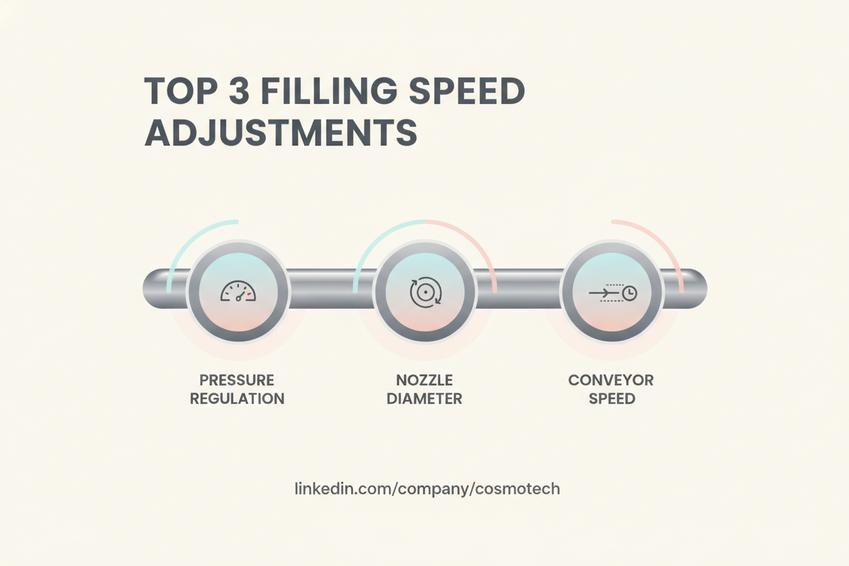
Top 3 Filling Speed Adjustments
Fine-tuning speed without sacrificing accuracy is critical for high-output environments.
Pressure Regulation for Faster Throughput
Control of pressure control inside a pneumatic system keeps flow rate steady.
- Core adjustments1.1 Calibrate valve adjustment to stabilize output1.2 Balance filling speed with container tolerance
1.3 Monitor foam when increasing throughput optimization
- Practical workflow2.1 Test small pressure increments2.2 Inspect splash level
2.3 Lock in repeatable settings
- Why brands care3.1 Higher throughput without rework3.2 Cleaner bottle necks
Nozzle Diameter Changes to Match Viscosity
Matching nozzle size to product viscosity prevents bottlenecks. Fluid behavior follows simple fluid dynamics.
- Thick creams demand wider orifice diameter
- Thin serums need tighter control for filling accuracy
- Proper dispensing head design reduces clogging
“Manufacturers are increasing automation investment to meet tightening global compliance expectations,” notes a 2025 outlook from Deloitte’s manufacturing analysis.
Conveyor Speed Tweaks for Optimal Cycle Time
Speeding up a conveyor belt without syncing the cycle time causes jams.
Step-by-step alignment:
- Measure real container spacing during container handling
- Adjust speed adjustment settings inside the automation system
- Verify timing across filling, capping, and labeling
Filling Accuracy Vs. Speed: Finding Balance
Filling Accuracy
Accuracy is about keeping precision, consistency, and tight tolerance.
- Calibration Foundation1.1 Machine Setup
- Fine-tune calibration settings based on product viscosity.
- Verify measurement systems before each shift.
1.2 Formulation Match
- Adjust filling heads for flow behavior.
- Maintain stable pressure to protect repeatability.
- Quality Control Loop2.1 In-Process Checks
- Random weight inspections ensure correct dosage.
- Monitor deviation against internal tolerance limits.
2.2 Post-Fill Verification
- Cross-check batch data.
Filling Speed
Speed drives throughput. High-performing lines stay quick by:
- Optimizing cycle time without stressing pumps.
- Balancing air pressure with product flow.
- Syncing conveyors to protect overall efficiency.
A practical rhythm:
- Increase production rate gradually.
- Monitor fill variance.
- Adjust automation timing.
- Recheck output stability.
Topfeelpack supports operations that want strong production numbers and dependable fill control.
Cosmetic Filling And Packaging Compliance Guide
Compliance connects safety, labeling, and global rules into one market-ready system.
FDA Regulations for Cosmetic Bottles and Jars
FDA oversight focuses on cosmetic packaging, labeling requirements, and safe container materials.
- Approved resins and glass types
- Accurate INCI ingredient display
- Tamper-evident closures
- Confirm material safety data.
- Validate formula-container compatibility.
- Review claims for regulatory compliance.
GMP Compliance in Assembly and Labeling
Strong GMP systems, adhering to Good manufacturing practices (ISO 22716), keep lines traceable.
Key controls include:
- Batch control
- Lot coding
- Digital trace systems
- Sanitation protocols
- Line clearance
- Allergen cleaning validation
- Personnel training
- SOP refreshers
ISO Certification for Filling Machines
Reliable manufacturing depends on rigorous ISO standards tied to filling equipment.
- Calibration schedules
- Process validation records
- Verified machine calibration
Under structured oversight:
- International certification
- ISO 9001 documentation
- Audit trails
- Operational control
- Output variance tracking
Brands like Topfeelpack align machinery with ISO-backed benchmarks.
REACH Compliance of Packaging Components
For EU markets, REACH regulation strictly shapes material choices.
- Screen chemical substances
- Check against the SVHC list
- Maintain updated safety data sheets
Compliance layers include:
- Substance registration
- Supplier declarations
- Lab verification
- EU compliance audits
- Import documentation
Stability Testing and Compatibility Testing
Validation relies heavily on stability testing and compatibility testing. For specialized products like sunscreen packaging, this is vital.
Multi-step flow:
- Fill pilot batches.
- Run accelerated aging at varied environmental factors.
- Measure material degradation and seal strength.
- Confirm projected shelf life and product integrity.
Testing also checks:
- Packaging interaction
- Color shift
- Odor change
- Leakage risk
Passing these trials protects brand trust. Topfeelpack integrates testing feedback into design tweaks, keeping products ready for launch.
References
- McKinsey and Euromonitor - https://www.mckinsey.com/industries/retail/our-insights/the-beauty-market-in-2023-a-special-state-of-fashion-report
- mono-material design - https://www.ellenmacarthurfoundation.org/topics/plastics/overview
- Glass - https://www.gpi.org/glass-recycling-facts
- Smithers’ 2025 packaging outlook - https://www.smithers.com/en-gb/services/market-reports/packaging
- sterile formulations - https://www.cosmeticsdesign.com/Article/2023/10/24/Aseptic-packaging-trends-in-beauty
- fluid dynamics - https://www.chemicalprocessing.com/fluid-handling/pumps/article/11300062/understand-the-basics-of-fluid-dynamics
- Deloitte’s manufacturing analysis - https://www2.deloitte.com/us/en/insights/industry/manufacturing/manufacturing-industry-outlook.html
- Good manufacturing practices - https://www.iso.org/standard/36437.html
- ISO 9001 - https://www.iso.org/iso-9001-quality-management.html
- REACH regulation - https://echa.europa.eu/regulations/reach/understanding-reach
Post time: Jul-07-2026
