
Sustainable development has become an irreversible trend in the global beauty industry. More consumers prioritize eco-conscious brands, and mainstream beauty markets continue to upgrade environmental protection regulations. Sourcing qualified, cost-effective, and brand-aligned eco friendly cosmetic packaging is no longer a marketing gimmick, but a core part of brand sustainable operation and market competition. Whether for startup beauty brands or mature cosmetic enterprises, standardized green packaging procurement can reduce carbon footprint, enhance brand image, and boost consumer trust.
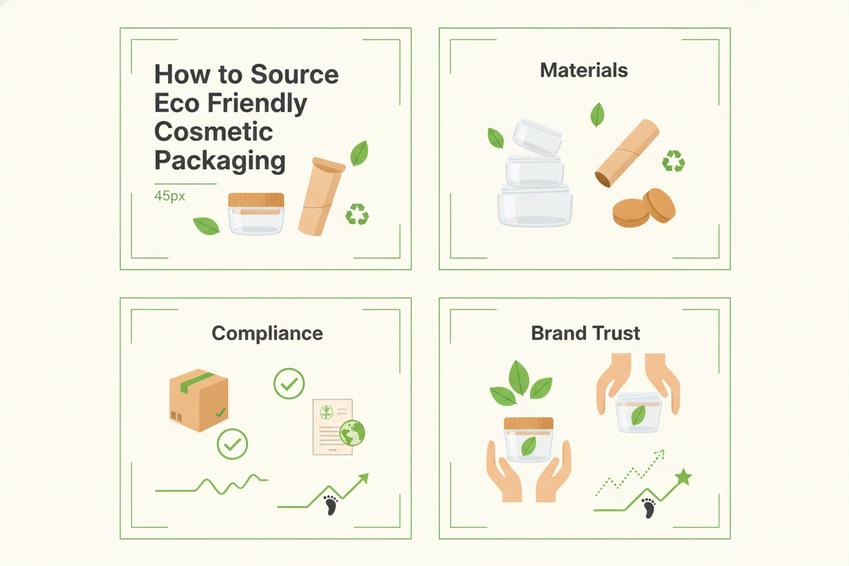
1. Core Standards of Eco-Friendly Cosmetic Packaging
Before formal sourcing, brands need to clarify the unified evaluation standards of green cosmetic packaging, to avoid confusing ordinary recyclable materials with professional eco-friendly packaging. Clear core standards can help teams accurately screen qualified sustainable cosmetic packaging products and lay a foundation for standardized procurement.
1.1 Basic Definition of Green Packaging
- Full-cycle environmental protection: The whole process from raw material extraction, production and processing, use cycle to waste disposal is low-carbon, pollution-free and resource-saving, meeting the requirements of green supply chain management.
- Non-toxic and harmless: No harmful chemical components, no heavy metal residues, safe for human skin and ecological environment, compliant with global beauty packaging safety specifications.
- Recyclable/degradable attributes: It has reusable, recyclable or biodegradable properties, effectively reducing plastic waste and environmental pressure, and solving the pain points of traditional cosmetic packaging pollution.
- Anti-over packaging: Adhere to lightweight and minimalist design, abandon redundant multi-layer packaging, realize resource conservation and meet the requirements of green consumption policies.
1.2 Global Universal Certification Standards
- Material environmental certification: Including FSC forest certification for paper materials, GRS global recycling standard, OK Compost biodegradation certification, etc., to verify the authenticity of eco-friendly materials.
- Production environmental certification: Supplier factories pass ISO14001 environmental management system certification, with standardized low-carbon production processes and waste discharge management.
- Market access certification: Comply with EU packaging environmental protection directives, domestic green packaging procurement specifications and other regional regulatory requirements to ensure cross-border sales compliance.
2. Main Types of Eco-Friendly Packaging Materials & Applicable Scenarios
There are diverse types of eco-friendly cosmetic packaging materials with different performance characteristics and applicable product scenarios. Brands need to select targeted materials according to product attributes, shelf life and positioning, so as to balance environmental protection, practicability and aesthetics. The following table sorts out mainstream green packaging materials, characteristics and matching cosmetic categories in detail.
| Eco-Friendly Material Type | Core Material Traits | Applicable Cosmetic Products | Brand Application Advantages |
|---|---|---|---|
| Recycled Paper & Kraft Paper | Lightweight, degradable, low cost, customizable printing, no plastic coating or degradable coating | Cosmetic outer boxes, gift boxes, manual packaging, sample sets | Strong texture, natural and high-end, obvious environmental protection attributes, suitable for brand low-carbon image building |
| Biodegradable Plant Fiber | Made from corn starch, bamboo fiber, sugarcane fiber, fully biodegradable in natural environment, zero pollution | Disposable cosmetic packaging, mask packaging, small trial packaging, cosmetic accessories | Completely eco-friendly, solves disposable packaging waste problem, fits zero-waste brand concept |
| Recycled Glass | 100% recyclable, reusable, good barrier performance, stable texture, safe and non-irritating | Essence bottles, essential oil bottles, lotion and cream bottles, high-end skin care packaging | High-grade appearance, strong product protection, reusable after cleaning, enhances user secondary utilization value |
| RPET Recycled Plastic | Reprocessed from waste plastic products, low carbon emission, durable, flexible and diverse in shape | Cleanser bottles, spray bottles, portable cosmetic packaging, plastic inner containers | Balances cost and environmental protection, rich molding styles, meets daily cosmetic packaging versatility |
| Refillable & Reusable Packaging | Detachable and replaceable inner container, reusable outer shell, minimal material consumption | Liquid foundation, loose powder, cream products, long-term repetitive use cosmetics | Reduces long-term packaging cost, conveys circular economy concept, improves user stickiness |
3. Step-by-Step Eco-Friendly Packaging Sourcing Process
Standardized procurement process is the key to avoid quality risks, compliance problems and cost waste. Brand purchasers need to follow scientific steps from demand confirmation to final supplier cooperation, to ensure that the sourced green cosmetic packaging meets brand positioning and market standards.
3.1 Clarify Brand & Product Sourcing Demands
- Product attribute matching: Determine packaging material performance requirements according to cosmetic texture (liquid, powder, cream), shelf life and storage environment, such as barrier, leak-proof and moisture-proof properties.
- Brand positioning alignment: High-end brands prioritize recycled glass and high-grade plant fiber materials; daily cost-effective brands choose RPET recycled plastic and recycled paper materials to balance quality and cost.
- Compliance demand confirmation: Confirm target sales market environmental protection certification requirements to ensure packaging meets local regulatory standards.
3.2 Screen Qualified Packaging Suppliers
- Qualification audit: Check supplier's environmental certification, production qualification, material inspection report, reject manufacturers without formal green certification.
- Production capacity inspection: Verify factory low-carbon production process, waste treatment capacity, batch production stability and delivery cycle to avoid supply interruption.
- Customization capability: Evaluate whether the supplier supports personalized design, logo printing, structural optimization and other customized services to meet brand differentiation needs.
3.3 Sample Testing & Mass Production Confirmation
- Performance test: Conduct packaging barrier test, compression test, high and low temperature resistance test to ensure adaptability to cosmetic products and logistics transportation.
- Environmental attribute verification: Test whether the materials meet degradable and recyclable standards, and check the authenticity of certification documents.
- Cost negotiation: On the premise of meeting environmental protection and quality standards, negotiate batch pricing, after-sales service and replacement mechanism to control procurement cost.
4. Key Challenges & Optimized Sourcing Solutions
In the actual procurement process of eco-friendly cosmetic packaging, brands often face problems such as high cost, unstable material quality and insufficient certification. Targeted optimization solutions can help brands avoid pitfalls and realize efficient and high-quality green packaging procurement.
4.1 Common Sourcing Pain Points
- High comprehensive cost: The production process of eco-friendly materials is more complex than traditional materials, resulting in higher unit procurement cost.
- Uneven material quality: The market green packaging industry is mixed, with many products falsely labeled as eco-friendly, lacking authoritative certification.
- Single design style: Some degradable materials have limited molding performance, single packaging style, difficult to meet brand aesthetic customization needs.
- Unstable supply: High-quality certified green packaging manufacturers have tight production capacity, easy to delay delivery in peak seasons.
4.2 Practical Optimization Solutions
- Long-term cooperative procurement: Establish long-term strategic cooperation with formal manufacturers to reduce unit cost through batch orders and stabilize supply.
- Certification priority screening: Take authoritative environmental protection certification as the primary screening standard to eliminate unqualified counterfeit green packaging.
- Material combination design: Adopt mixed matching of different eco-friendly materials, balance environmental protection, aesthetics and practicability, and enrich packaging design styles.
- Phased replacement: Priority to replace outer packaging and auxiliary packaging with green materials, gradually realize full product packaging greening, and reduce one-time investment pressure.
5. Brand Value of Eco-Friendly Packaging Sourcing
Sourcing high-quality eco-friendly cosmetic packaging is not only a response to environmental protection policies, but also an important layout for brand long-term development. It can bring multi-dimensional value improvement to brands in market competition, user reputation and sustainable operation.
- Enhance market competitiveness: Differentiated green packaging helps brands stand out in the homogeneous beauty market and attract environmentally conscious consumer groups.
- Comply with industry policy trends: Adapt to global plastic restriction and green consumption policies, avoid market access risks, and support long-term brand overseas layout.
- Improve user trust: Transparent environmental protection packaging concept and safe materials enhance consumer recognition and brand loyalty.
- Shape social responsibility image: Practicing green environmental protection concepts enhances brand social value and realizes win-win of commercial value and social value.
Post time: Jun-26-2026
