
When selecting packaging for acidic cosmetic formulas, evaluate the finished formula against every material it can contact, the closure’s sealing performance, the dispensing system, and any required protection from light or oxygen. Validate the complete decorated package under conditions that reflect storage, transport, and consumer use before approving bulk production.
For brands developing exfoliating toners, acid serums, or treatment lotions, the key question is whether a specific formula and packaging configuration work together throughout the intended shelf life. Neither an “acid-resistant” bottle description nor a single pH value answers that question. The bottle, pump, seals, and closure need a coordinated review.
Define What “High-Acid” Means for Your Formula
High acid concentration and low pH describe different aspects of a formula. pH describes acidity; it does not state the total acid concentration. Two formulas with similar pH values can contain different acids, solvent systems, and amounts of neutralized acid.
Start the packaging brief with:
- Acid identity and concentration: Identify glycolic, lactic, salicylic, ascorbic, or other acids, including blends and whether percentages describe active acid or a supplied ingredient solution.
- Finished-product pH: Provide the target range and measurement method where pH is meaningful. Do not assign an aqueous pH specification to an anhydrous formula without a justified method.
- Neutralization and buffering: Describe the relevant acid/salt system; ask the formulator whether titratable acidity or another measurement is useful.
- Other ingredients: Include alcohol, glycols, oils, fragrance, solubilizers, preservatives, and other components relevant to compatibility.
- Product behavior: State viscosity, suspended particles, filling conditions, intended dose, and expected storage conditions.
For example, a water-based AHA toner and an alcohol-containing salicylic acid serum should receive separate compatibility assessments. Their shared positioning as exfoliants does not establish the same packaging requirements.
Evaluate the Complete Formula-Contact System
A bottle can remain visually unchanged while a seal loses function or a pump component interacts with the product. Request a component drawing and a bill of materials identifying the parts exposed during filling, storage, dispensing, and foreseeable handling.
The Cosmetics Europe/CTFA stability testing guidelines identify corrosion, migration, chemical reactions, and product–container interactions as packaging considerations. Compatibility therefore involves both the package’s condition and the formula’s stability.
Bottle Bodies: Screen Candidates Without Promising Compatibility
Glass, PP, PET, and PETG may appear on a shortlist, depending on the proposed format. Their material names do not establish suitability for a particular acid blend. Obtain the exact specification and assess the finished package.
| Packaging area | Information to request | Evidence needed before approval |
|---|---|---|
| Glass bottle | Glass specification, any internal treatment, closure and dropper materials | Formula stability, container integrity, closure performance, and relevant interaction assessment |
| Plastic bottle or inner reservoir | Resin grade, colorants, additives, and recycled content if used | Absence of unacceptable cracking, distortion, discoloration, or formula change |
| Coated or lined contact surface | Coating identity, coverage, and intended exposure conditions | Integrity after storage and use, including vulnerable edges or joints |
| Pump, piston, and dip tube | Materials and locations of all product-contact parts | Function after aging and acceptable formula/package interaction |
| Seals, liners, and dropper bulbs | Exact compound, construction, and exposure route | Retained sealing, elasticity, and dispensing performance |
Use this review to identify test priorities. It is not a universal ranking of materials from best to worst.

Metal Components and Seals Need Specific Questions
Ask whether a spring, ball, or other metal part contacts the formula. If it does, request its specification and relevant compatibility evidence. An external spring design can remove one contact route, but the remaining liquid path still needs evaluation.
For gaskets, liners, and dropper bulbs, request more than the word “rubber.” Specify the compound and whether exposure is continuous, intermittent, or possible when the package is inverted. Include checks for swelling, hardening, softening, tackiness, and loss of sealing function in the test plan where relevant.
“Metal-free” and “mono-material” descriptions can help narrow questions. Neither substitutes for a complete component specification or finished-formula testing.
Match the Dispensing Format to the Product
Choose a format around viscosity, dose, application, and exposure during use. Then verify that it still performs after storage.
Airless Pumps
An airless format is worth evaluating when the brief calls for controlled dispensing and reduced exposure during use. Topfeelpack’s airless bottle range provides candidate formats for this discussion.
Confirm how the selected mechanism works, which parts contact the formula, and whether its output suits the application. Test priming, restarting after a pause, dose consistency, leakage, and dispensing near empty. The term “airless” alone does not establish oxygen-barrier performance or shelf life.
Dropper Bottles
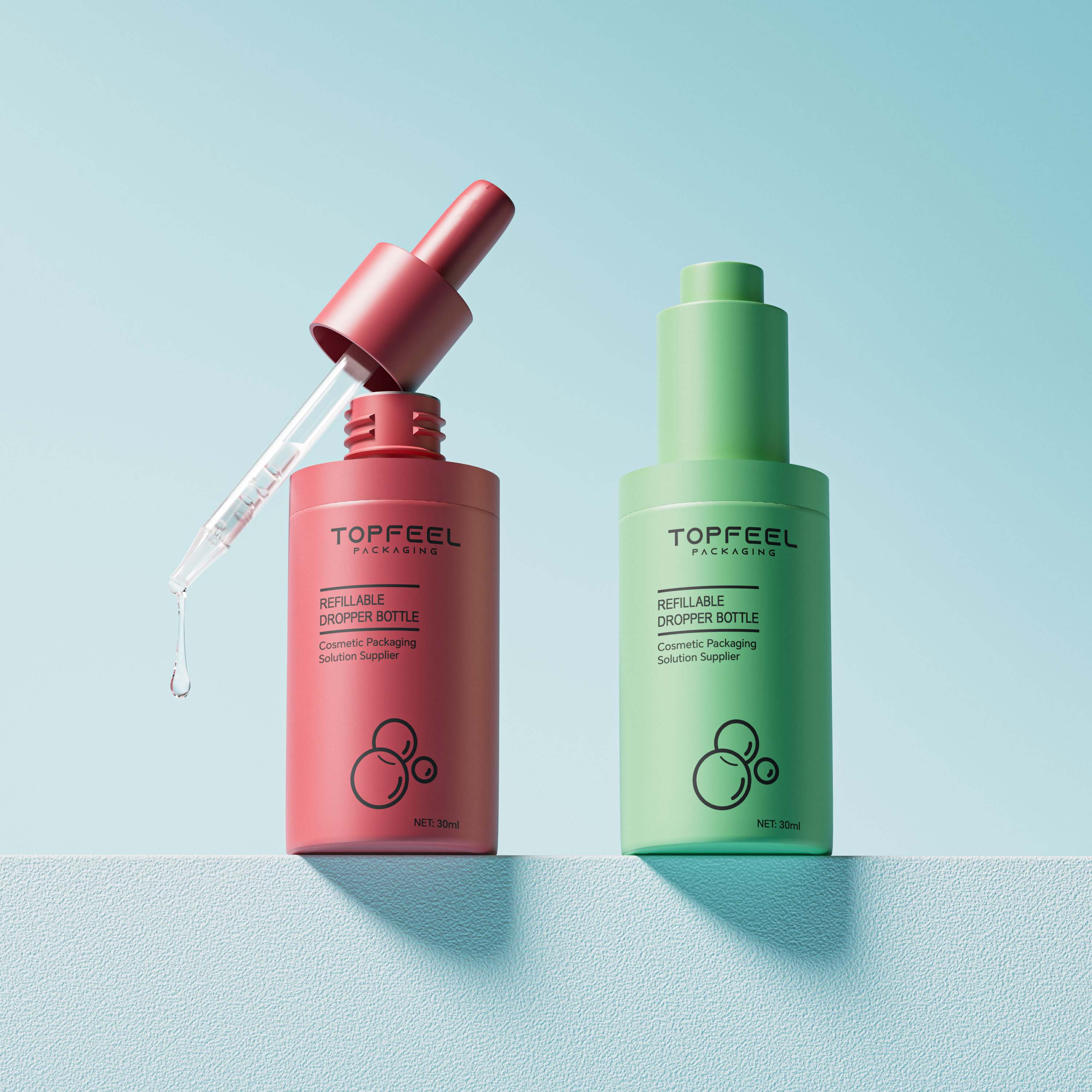
A dropper may suit a fluid serum and an application routine built around small quantities. Review the pipette, wiper if present, closure, and bulb as an assembly. Include opening, squeezing, reclosing, and foreseeable product contact with the bulb in the assessment.
Topfeelpack’s dropper bottle range can support initial format selection. Ask for the proposed assembly’s materials and samples rather than assuming that a glass bottle qualifies the whole pack.
Restricted-Opening Bottles and Treatment Pumps
For a fluid toner, a restricted opening may be useful when the application involves dispensing onto a pad. A treatment pump may suit a measured serum application. Check delivered quantity, dripping, leakage after reclosing, and restart behavior after residue has remained around the outlet.
If the formula can form deposits during drying or cold storage, evaluate whether those deposits interfere with the orifice or valve. Assess this with the actual formula rather than assuming every acidic product will crystallize.
Separate Acid Compatibility From Light and Oxygen Protection
Acidity is only one part of a stability brief. Establish whether the specific active system also needs protection from light, oxygen, or water loss.
Vitamin C illustrates why ingredient identity matters. A published review of topical vitamin C formulations describes differences in stability between L-ascorbic acid and certain derivatives. A “vitamin C serum” label is therefore insufficient for setting packaging requirements.
Ask the formulator to define the necessary protection, then evaluate the complete system. Clear glass does not establish light protection, and a dark-looking bottle does not quantify it. Likewise, a barrier bottle body does not establish the performance of its closure or repeated opening during use.
The Cosmetics Europe/CTFA guidelines recommend light stability testing where packaging permits exposure. Use relevant light conditions and analytical endpoints instead of choosing a color solely by appearance.
Build an Acid-Specific Validation Plan
Have the brand, formulator, packaging supplier, and testing laboratory agree on responsibilities and acceptance limits before testing starts. Prioritize the risks identified in the formula and component review.
Use production-representative assemblies. Include the intended resin or glass, seals, pump, decoration, closure settings, and fill conditions. Generic water-filled samples can reveal mechanical issues but cannot establish compatibility with an acid formula.
Create a baseline and a suitable control. Record pH where applicable, appearance, odor, viscosity, relevant active-content results, package mass, and dispensing performance. A justified reference container helps investigate whether a change originates in the formula or its interaction with the proposed package.
Challenge relevant contact routes. Include upright, side, or inverted storage where justified. Evaluate expected temperature conditions, light exposure where relevant, and repeated opening or actuation. Inversion is particularly useful for examining components that may have little liquid contact during upright storage.
Measure chemical and functional changes together. An unchanged appearance does not establish active retention. A stable pH does not establish that seals, valves, or metal components remain acceptable. Use analytical methods appropriate to the formula and evaluate aged dispensing assemblies.
Define an actionable pass/fail decision. Set justified limits for formula changes, leakage, component damage, delivered dose, and other relevant endpoints. Include decoration and label checks where spilled product may contact them. Avoid assigning one universal pH-drift limit, storage temperature, or test duration to all acid products.
The Cosmetics Europe/CTFA guidance on study design and confirmatory monitoring supports product-specific protocols and real-time follow-up. A short accelerated study does not automatically prove a stated shelf life. Coordinate microbiological and distribution assessments as separate parts of the overall validation program.
Frequently Asked Questions
Can several acid strengths use the same packaging approval?
Only with a documented technical rationale. Changes in concentration, neutralization, solvent content, or viscosity can change the assessment. Ask the formulator and laboratory whether representative testing can cover the range and what additional evidence is needed.
What if we change only the packaging color or recycled content?
Review the change before relying on earlier approval. Confirm whether the material specification, additives, light transmission, or manufacturing process has changed. Determine the scope of retesting from those differences rather than automatically accepting or rejecting the new configuration.
Does a compatibility pass establish permission to sell an acid product?
No. Packaging compatibility addresses a defined formula/package combination. Ingredient restrictions, product classification, claims, safety assessment, and labeling require a separate review for each destination market. Packaging results alone do not resolve those requirements.
Share Your Acid-Formula Packaging Brief With Topfeelpack
To discuss candidate packaging, contact Topfeelpack with the acid system, concentration basis, pH range where applicable, solvent system, viscosity, capacity, dispensing needs, decoration, destination market, and expected storage conditions.
Request component specifications and representative samples, then agree on the validation work required before bulk approval. Confirm MOQ, customization options, lead time, and change-control arrangements for the selected configuration as part of the quotation.
Post time: Oct-21-2026
