
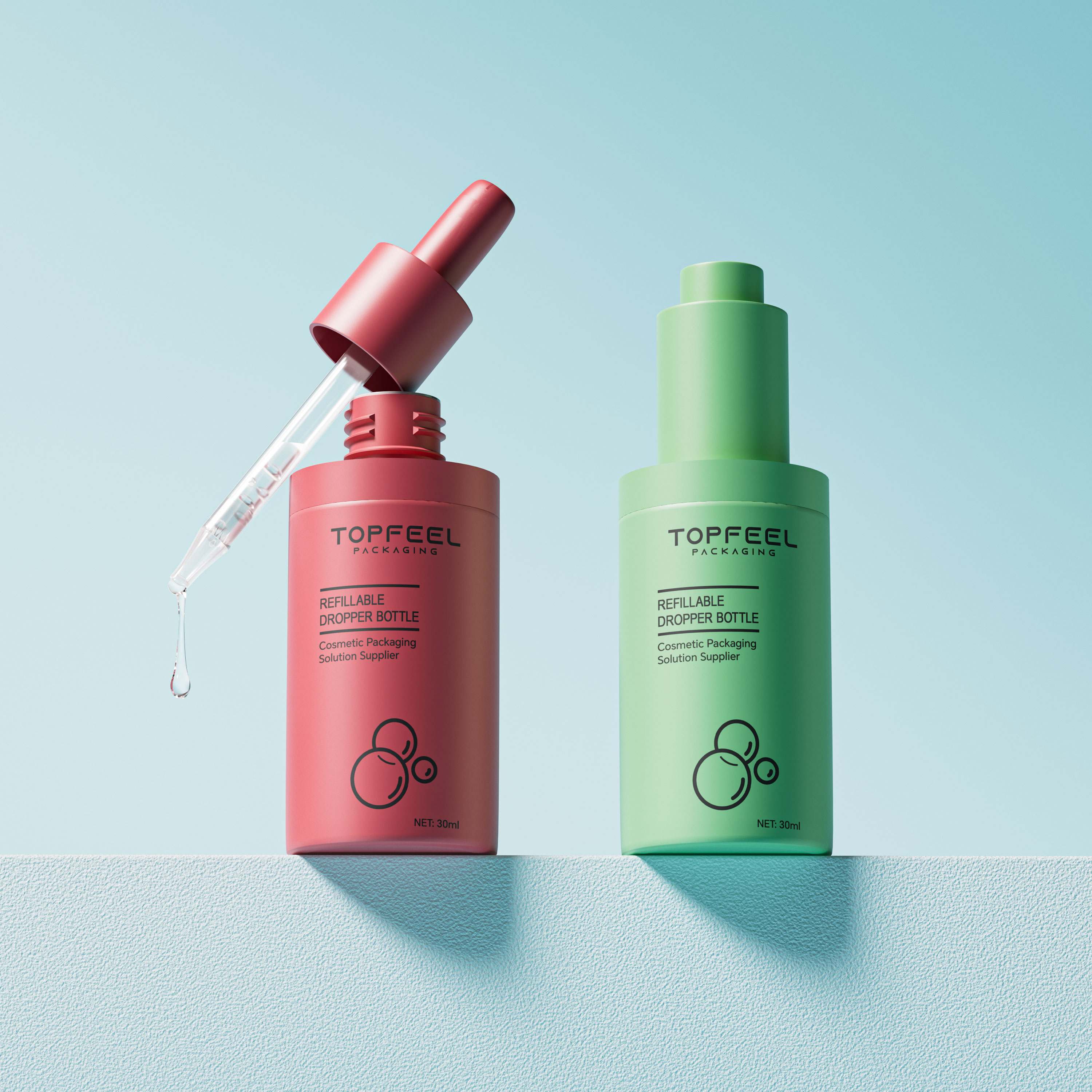
Why Conventional Dropper Bottles Are Difficult to Recycle
A serum dropper may look like one small component, but it is often a multi-material assembly. A typical design can include a glass bottle, glass or plastic pipette, rubber or silicone bulb, polypropylene collar, aluminum shell, label adhesive, and decorative coating.
Each material may be recyclable in isolation. The difficulty is that household recycling systems do not necessarily process a fully assembled dropper as one clean, recyclable item. If components cannot be separated easily, sorting facilities may reject the pack, remove parts manually, or direct the item into a lower-value waste stream.
This problem matters because plastic recycling outcomes are still limited globally. According to the OECD, only 9% of plastic waste generated in 2019 was ultimately recycled. The rest was largely landfilled, incinerated, or mismanaged. Better package design cannot replace collection infrastructure, but it can reduce unnecessary barriers to recycling before the product reaches the consumer.
What Is a Recyclable Dropper Bottle?
A recyclable dropper bottle is a packaging system designed to work with real-world recycling processes after use. It should not rely solely on a recycling symbol or a broad sustainability claim. Instead, it should be evaluated component by component.
- Use a recyclable primary container.Glass cosmetic packaging is a strong option for many serums, facial oils, and active skincare formulas because glass is inert, premium in appearance, and commonly accepted in established glass-recycling systems.
- Reduce or separate mixed materials.If the bottle and dropper use different materials, consumers should be able to remove the dropper without tools or confusion.
- Avoid decoration that interferes with recycling.Heavy coatings, full-body shrink sleeves, metallic finishes, dark pigments, and excessive adhesive can make a package harder to identify, sort, or reprocess.
- Use accurate recycling claims.A package may be technically recyclable but not accepted by all local collection systems. Claims should reflect the markets where the product is sold.
The U.S. Federal Trade Commission advises brands to qualify recyclable claims when suitable recycling facilities are not available to a substantial majority of consumers. The FTC uses 60% as its benchmark for a “substantial majority.”
Why Glass Cosmetic Packaging Is a Strong Starting Point
Glass cosmetic packaging remains a popular choice for prestige skincare, facial oils, ampoules, essential-oil blends, and high-value treatment products. It offers excellent barrier performance, a premium tactile experience, and broad compatibility with many cosmetic formulas.
Glass can also be recycled repeatedly without losing its essential material properties when it is collected, sorted, and processed correctly. This makes it a valuable material in a circular packaging strategy.
However, a recyclable glass bottle does not automatically mean that the complete package is recyclable. The dropper closure is often the weak point. A conventional dropper may combine rubber, plastic, aluminum, and glass in a way that is difficult for consumers and recycling facilities to separate.
For that reason, brands should provide practical disposal guidance, such as:
- Use the product fully where possible.
- Remove the dropper assembly from the bottle.
- Recycle the empty glass bottle through local glass collection where accepted.
- Check local instructions for the dropper, bulb, collar, and pipette.
Clear instructions are far more useful than placing a generic recycling icon on the bottom of a bottle.
What Is a Mono-Material Dropper?
A mono-material dropper is a dropper system designed primarily from one material family, usually plastic. Its purpose is to reduce the material conflicts that occur when a closure combines glass, metal, rubber, silicone, and several different plastics.
In reality, creating a fully mono-material dropper is technically challenging. Different parts must do different jobs: the bulb needs flexibility, the pipette needs rigidity, the closure needs durable threads, and the whole assembly must provide a reliable seal. Formula compatibility also remains essential.
Even so, packaging teams can move closer to a mono-material approach by:
- Selecting compatible polymers for the collar and pipette.
- Removing decorative aluminum shells that do not serve a functional purpose.
- Reducing inserts, liners, and unnecessary material layers.
- Using clear or naturally colored plastic where appropriate.
- Designing the closure for simple consumer separation.
- Testing compatibility with the cosmetic formula before final production.
For some products, a simplified mono-material plastic dispensing system may be more practical for recycling than a visually premium but highly mixed-material dropper. The best environmental decision is not always the package with the most elaborate appearance. It is the package that protects the formula, performs well for the consumer, and has a realistic end-of-life pathway.
Recyclable Glass Bottle vs. Mono-Material Dropper
| Packaging Approach | Main Benefit | Key Limitation | Suitable Applications |
|---|---|---|---|
| Glass bottle with conventional removable dropper | Premium appearance and strong formula protection | Dropper parts may require separate disposal | Serums, facial oils, prestige skincare |
| Glass bottle with simplified removable dropper | Fewer material conflicts and clearer disposal route | Requires careful engineering and component testing | Brands focused on improved recyclability |
| Mono-material plastic dropper system | Potentially easier sorting and recycling compatibility | May not provide the desired luxury look or fit every formula | Lightweight skincare and mass-market products |
| Refillable glass bottle with durable dropper | Can reduce single-use packaging over multiple refill cycles | Requires a practical refill model and hygiene controls | Direct-to-consumer, loyalty, and professional beauty programs |
Six Design Rules for a More Recyclable Dropper Bottle
1. Start with the Recycling System in Your Target Market
Before selecting packaging, identify where the product will be sold and how consumers dispose of beauty packaging in those markets. A bottle that works in one recycling system may not be accepted in another. This is especially important for brands selling internationally.
2. Make Separation Easy and Obvious
If the glass bottle and dropper use different materials, consumers need a simple method to separate them. Avoid permanent assemblies when possible. If separation is necessary, communicate it on the carton, product page, or through a QR-code disposal guide.
3. Reduce Material Variety
Every additional material increases complexity. Use only the materials necessary for dosing accuracy, sealing, product stability, and safety. Removing a non-functional metal shell or simplifying a collar can improve the package’s recyclability profile.
4. Use Decoration Responsibly
Premium cosmetic packaging does not need excessive decoration. Heavy spray coatings, metallization, complex sleeves, and strong adhesives can interfere with sorting and recycling. When possible, choose minimal decoration, compatible inks, and labels designed for the intended recycling pathway.
5. Protect the Formula First
Recyclability must not compromise formula protection. Packaging for skincare products should be tested for compatibility, leakage, stability, dosage accuracy, and consumer safety. This is especially important for products containing essential oils, acids, retinoids, antioxidants, or volatile ingredients.
6. Give Consumers Specific Disposal Instructions
“Recycle where facilities exist” may be legally appropriate in some situations, but it is not always helpful. Brands should tell consumers which parts to separate and which components are likely to be accepted locally. Disposal instructions should be reviewed for each market before publication.
How Topfeelpack Can Support Recycling-Focused Cosmetic Packaging
When developing a recyclable dropper bottle with Topfeelpack or another cosmetic packaging manufacturer, brands should provide a complete packaging brief rather than focusing only on bottle color, capacity, or shape.
A useful brief should include:
- Product category and formula characteristics
- Required dosage and consumer-use experience
- Target markets and sales regions
- Preferred material strategy: glass, plastic, refillable, or mono-material
- Decoration requirements and limitations
- Recycled-content targets, if applicable
- Recycling-claim requirements
- Consumer disposal guidance
This helps packaging teams evaluate real trade-offs. For example, a premium facial serum may require a glass cosmetic bottle for formula stability, combined with a simplified removable dropper. A lightweight daily-use product may be better suited to a mono-material dispensing solution.
The key is to treat recyclability as a complete packaging-system decision. It involves materials, engineering, decoration, filling compatibility, consumer behavior, local infrastructure, and legally sound communication.
Frequently Asked Questions
Are glass dropper bottles recyclable?
The glass bottle itself is often recyclable where glass collection is available. The dropper assembly may not be accepted with the bottle because it can contain several different materials. Consumers should generally remove the dropper before recycling the empty bottle, subject to local recycling guidance.
Is a mono-material dropper always recyclable?
No. Mono-material design can improve compatibility with recycling systems, but actual recyclability still depends on collection access, sorting technology, package size, color, contamination, and local requirements.
Can rubber dropper bulbs be recycled?
Many rubber or silicone dropper bulbs are not accepted in standard household recycling programs. Requirements vary by material and location. Brands should avoid claiming that the entire dropper is recyclable unless this has been verified for the intended market.
Is glass more sustainable than plastic for cosmetic packaging?
It depends on the complete packaging system. Glass is inert, durable, and recyclable, but it is heavier to transport. Plastic is lightweight and can be efficient when designed carefully, but recycling depends heavily on resin type, format, color, and collection infrastructure. The best choice is product- and market-specific.
What is the best recyclable claim for a dropper bottle?
Use a precise, substantiated statement. For example: “Glass bottle recyclable where glass is accepted; remove dropper before recycling.” Always review packaging claims against the applicable rules in each market before printing or publishing them.
Final Takeaway
Dropper bottles can be designed for recycling, but the outcome depends on more than selecting a glass bottle. The strongest designs combine glass cosmetic packaging for the primary container, fewer unnecessary mixed materials, a removable or simplified dropper, and clear consumer disposal guidance.
For brands developing a recyclable dropper bottle, the most important question is not “Can we add a recycling logo?” It is: “What happens to every component after the customer finishes the product?” That question leads to more credible sustainability claims and better packaging decisions.
Sources
- OECD, Global Plastics Outlook: Economic Drivers, Environmental Impacts and Policy Options (2022).
Read the OECD report - U.S. Federal Trade Commission, Guides for the Use of Environmental Marketing Claims, 16 CFR Part 260.
Read the FTC Green Guides - European Union, Regulation (EU) 2025/40 on Packaging and Packaging Waste.
Read the regulation - Association of Plastic Recyclers, APR Design Guide for Plastics Recyclability.
Read the APR Design Guide
Post time: Aug-03-2026
