
Natural skincare brands worldwide are shifting their development focus to green packaging in 2026. Modern consumers who favor plant-derived, clean formulas now take packaging sustainability as a core purchasing reference. Eco-friendly packaging has evolved from a simple marketing selling point into a core brand competitiveness. This blog systematically sorts out four major mainstream sustainable packaging trends for natural skincare, covering innovative eco-materials, refill circular packaging, zero-waste minimalist design, and full-cycle low-carbon production models, with matched packaging solutions for brand reference.
1. Core eco-materials applied widely in natural skincare packaging
Packaging raw materials form the foundation of sustainable beauty lines. Different skincare items such as cream, serum, toner and masks have differentiated requirements on barrier performance, texture and degradability. Four mature eco-material systems dominate the market in 2026, with targeted cosmetic containers for each material type.
1.1 Plant-based bioplastics
- Core advantagesApplicable skincare categories: Face cream, moisturizer, body lotion
- Raw materials sourced from sugarcane, wheat straw and corn starch, fully renewable without petroleum dependence
- Low carbon emission during production, effectively cutting brand carbon footprint
- High compatibility with airless bottle, lotion bottles and matched plastic caps
- Smooth surface without sharp edges, matching the mild positioning of natural skincare
1.2 Recycled glass
- Core advantagesApplicable skincare categories: Facial serum, plant essential oil, floral hydrosol
- Infinite recyclable, no harmful chemical residues after repeated recycling
- Premium transparent texture to intuitively display natural plant extracts inside
- Excellent oxygen isolation capacity to extend shelf life of preservative-free skincare
1.3 Compostable soft films
- Core advantagesApplicable skincare categories: Disposable facial masks, sample sachets, travel mini sets
- Fully degradable under industrial and household compost conditions, zero microplastic residue
- Ultra-lightweight design reduces logistics weight and carbon output
- Supports plant ink matte printing for customized brand visual effects
1.4 Lightweight recycled PP plastic
- Core advantagesApplicable skincare categories: Foam cleanser, travel-sized skincare kits
- Thinned wall structure reduces overall raw material consumption
- Recycled PP particles can be circularly reprocessed into cosmetic packaging
- Stable waterproof and leak-proof performance suitable for portable skincare
Eco-Material Matching Reference Table
| Packaging Material | Core Sustainable Value | Suitable Natural Skincare | Matching Main Container |
|---|---|---|---|
| Plant-based bioplastic | 100% renewable feedstock | Cream, moisturizer | Airless bottle |
| Recycled glass | Infinite recyclable & high barrier | Serum, essential oil | Glass dropper bottle |
| Compostable composite film | Complete biodegradation | Mask, sample pouch | Soft sachet packaging |
| Lightweight recycled PP | Material reduction & circular use | Cleanser, travel set | Pump bottle, small jar |
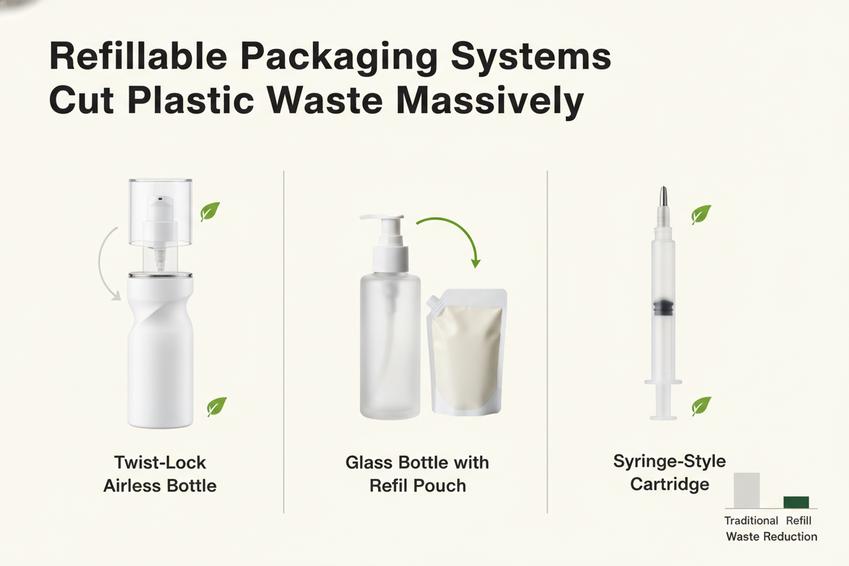
2. Refillable replaceable packaging systems cut plastic waste massively
Single-use disposable packaging generates massive plastic waste every year. In 2026, refill and replaceable packaging systems are recognized as the most effective circular solution by global beauty regulatory authorities. Meanwhile, reusable packaging can strengthen customer repurchase willingness and long-term brand loyalty.
2.1 Mature replaceable container structures
- Classic structural schemesBrand operation benefits: Lower long-term packaging procurement cost, improve customer stickiness
- Twist-lock replaceable airless bottle: Reuse outer shell, only replace internal storage liner
- Separated glass dropper bottle: Reuse glass body, replace liquid inner cartridge
- Replaceable syringe bottle core: Customized for high-concentration plant extracts
2.2 Standard design rules of refill pouches
- Design specifications for eco refill pouchesApplication scenarios: Offline brand refill stations + online refill pouch delivery service
- Adopt fully compostable multi-layer composite film as pouch material
- Equipped with leak-proof spout for convenient, spill-free refilling
- Minimalist plant ink printing, remove redundant plastic lamination layers
Refill Packaging Mode Comparison Table
| Packaging Mode | Waste Reduction Mechanism | Target Skincare Products | Core Packaging Components |
|---|---|---|---|
| Inner liner replaceable | Reuse outer shell, swap inner material cup | Facial cream, moisturizer | Airless bottle outer jar + replaceable inner liner |
| Hard bottle + refill pouch | Reuse rigid container, replace soft refill bag | Serum, floral toner | Recycled glass bottle + compostable refill pouch |
| Replaceable syringe cartridge | Reuse outer tube, replace essence core | Concentrated plant extract | Reusable syringe bottle housing |
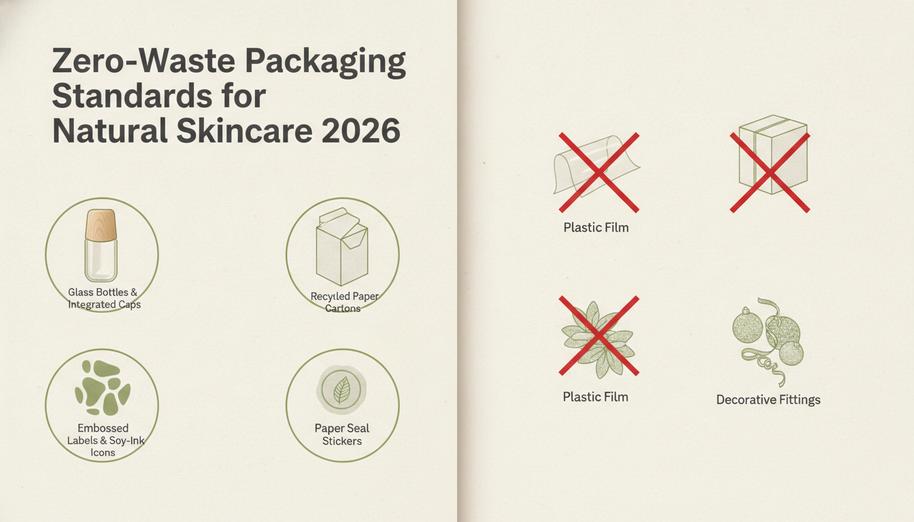
3. Zero-waste minimalist packaging design standards for natural skincare
Excessive color boxes, plastic shrink films and complicated decorative accessories bring unnecessary packaging waste. Natural skincare brands adhering to zero-waste concepts have formed unified minimalist packaging standards in 2026, balancing high-end visual texture and environmental protection performance.
3.1 Streamline redundant secondary packaging
- Core design standardsEnvironmental benefits: Cut consumption of paper and plastic, lower post-consumer waste volume
- Cancel independent color boxes for single bottles; adopt unified recyclable cartons for product sets
- Abolish plastic sealing film, replace with recycled paper sealing stickers
- Remove metal decorative fittings, adopt integrated injection molding caps
3.2 Low-carbon printing and labeling solutions
- Eco-friendly printing optionsMatching container range: All glass bottles, bioplastic airless bottles, recycled PP pump bottles
- Soy and plant ink printing without toxic volatile solvents
- Embossed logos and text to reduce ink usage instead of full-color printing
- Plastic-free recycled paper labels without lamination coating
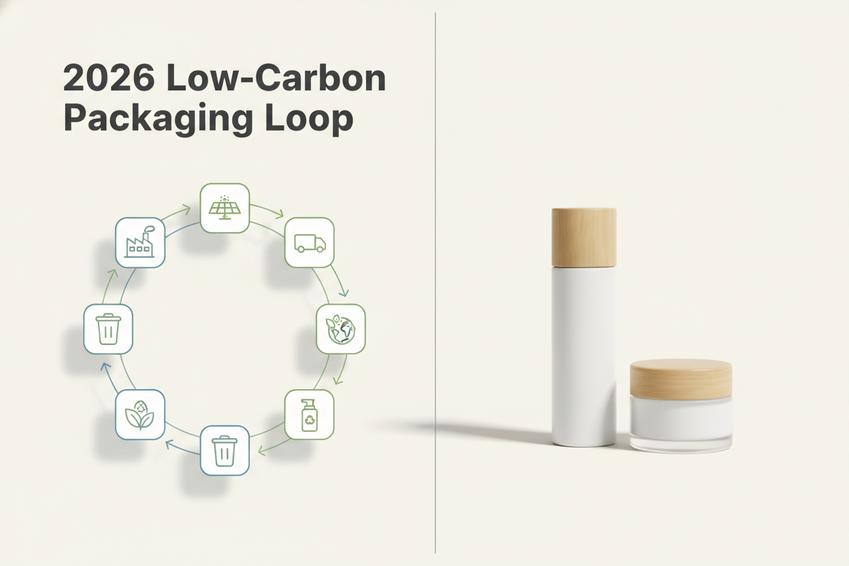
4. Full-life-cycle low-carbon packaging cooperation models popular in 2026
Transition Paragraph: Sustainable packaging is not limited to container materials. The whole industrial chain covering production, transportation and post-consumer recycling has been included in brand ESG evaluation indicators. Two mainstream circular cooperation modes between skincare brands and packaging suppliers will be widely promoted this year.
4.1 Carbon-neutral customized production realized by packaging manufacturers
- Factory green production measuresBrand gains: Obtain carbon-neutral packaging certification for brand marketing materials
- Solar power supply system for injection molding and glass blowing workshops
- Recycle leftover plastic and glass scraps for secondary processing
- Short-distance regional logistics cooperation to reduce transportation carbon emissions
4.2 Closed-loop recycling plans jointly launched by brands and consumers
- Feasible closed-loop recycling schemes
- Empty container recycling activity: Customers exchange returned empty bottles for store discounts
- Long-term recycling cooperation with local waste recovery enterprises
- Raw material circular loop: Recycle empty packaging to produce new cosmetic containers
Conclusion
In 2026, sustainable packaging is no longer an optional marketing highlight for natural skincare brands, but a necessary threshold to capture eco-conscious consumers. Brands can build a complete green packaging system by matching bioplastic airless bottles, recycled glass dropper bottles and replaceable refill structures. While reducing environmental pollution, circular eco-packaging strengthens the natural and clean brand positioning, creating differentiated competitive advantages in the fiercely competitive clean beauty market.
Post time: Jun-29-2026
