
Twist-up vs. push-up deodorant packaging: the short answer
Choose the format that can be validated with your actual formula, filling route and intended consumer action. A twist-up format typically uses a rotating base to advance the product. A push-up format typically relies on a platform moved upward by the user. Neither format is automatically better: the relevant question is which mechanism, component set and operating sequence the project can specify and test with confidence.
Treat this as a structure decision, not a visual-design decision. Before a brand commits to artwork, it should verify what the consumer does, what the filler needs, and how the package is expected to perform during normal handling and distribution.
How the two formats differ
In a twist-up deodorant container, the user rotates a base or dial to move the product platform. Depending on the chosen construction, the system may be intended to advance only or to support both advancing and returning the product. Confirm the exact behavior with the proposed sample.
In a push-up format, the user directly moves the product platform upward. This can create a simpler interaction, but the formula, pack geometry and intended use need to be evaluated together. Do not assume that a pack that looks similar to another push-up tube will behave the same way once filled.
Comparison table for packaging selection
| Decision factor | Twist-up deodorant packaging | Push-up deodorant packaging | Buyer action |
|---|---|---|---|
| Consumer action | User rotates a base or dial | User pushes a platform upward | Define the desired application and control experience. |
| Mechanism scope | Includes a drive or rotating mechanism | Relies on a direct push action and platform | Request a component map and operating demonstration. |
| Filling discussion | Must be evaluated against the intended filling route | Must be evaluated against the intended filling route | Provide the formula and process assumptions before samples are selected. |
| Product management | Advancement and any return action depend on the design | Advancement is direct; product management depends on the design | Test with representative filled samples. |
| Format perception | Often associated with controlled dial operation | Often associated with a direct, simple action | Keep design preference secondary to validated project fit. |
The table describes a selection framework, not guaranteed performance. A supplier, formulation team and filling partner should agree the project-specific evidence needed for approval.
When a twist-up format may be the better starting point
Start with a twist-up option when the brand wants to evaluate a dial-operated dispensing experience and needs a defined mechanism discussion with the supplier. It can be a practical shortlist route when the project team wants to assess product advancement, cap use and the feel of the base as part of the sample review.
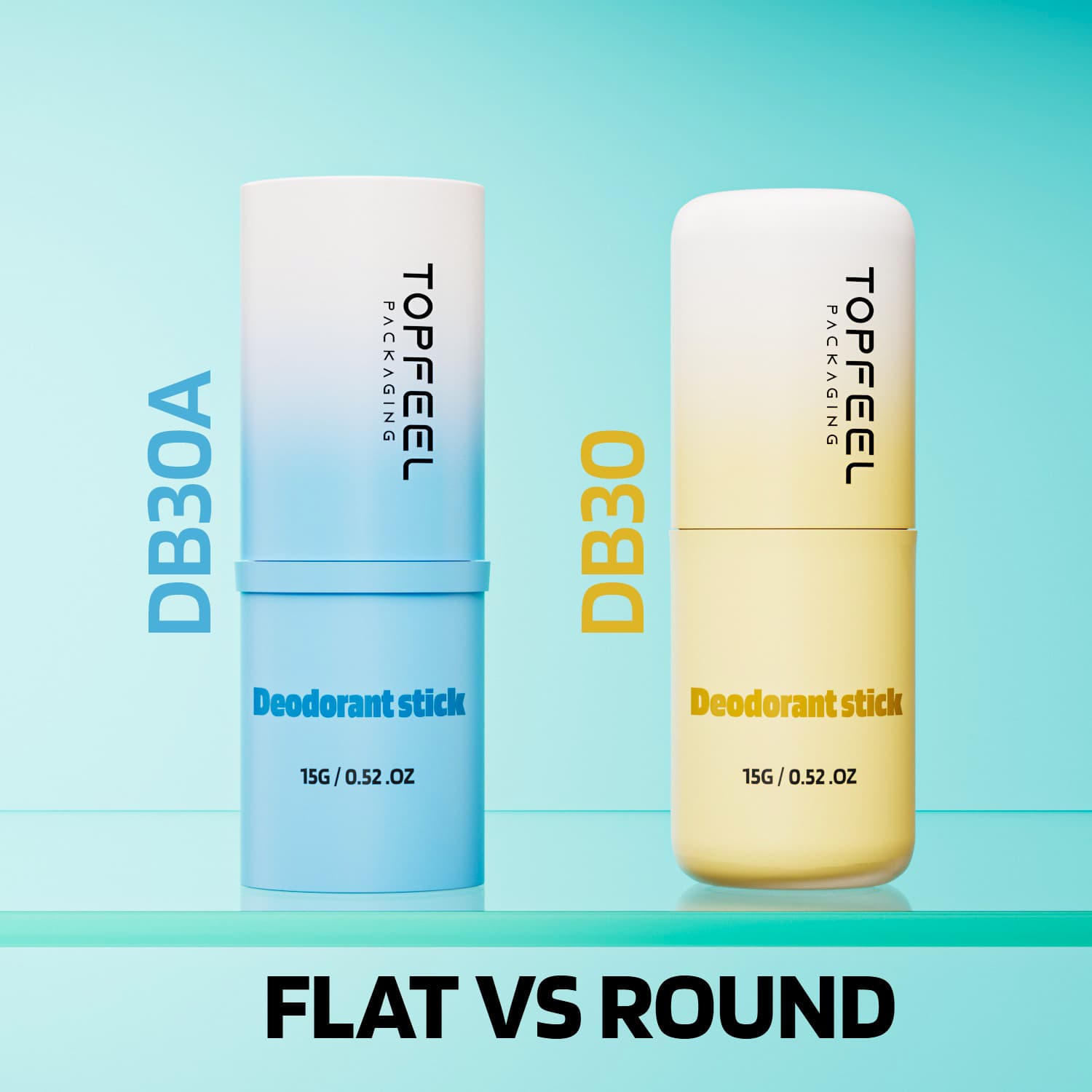
Ask for clarity on the actual proposed component set. For example, Topfeelpack's DB16 deodorant stick packaging page can be used to begin a format conversation, but a new project still needs confirmation of its own formula, dimensions, decoration and sampling requirements.
Deodorant Stick Container
When a push-up format may be the better starting point
Start with a push-up option when the desired consumer interaction is a direct upward movement and the team wants to evaluate that experience with the proposed formula. The key question is not whether push-up is simpler in the abstract; it is whether the platform action, product support and cap system are appropriate for the actual filled pack.
If the project is also considering paper-based, plastic-based or mixed-material routes, keep the structure decision separate from environmental claims. Material selection, local collection infrastructure, component separability and documented evidence all matter before any recyclability or sustainability statement is made.
Questions to resolve before sampling either format
Use the same technical brief for both formats so the comparison is fair:
- What formula description and fill conditions can the development team share?
- What net content, stick profile and finished dimensions are required?
- Which user action must the package provide, and is product return required?
- Which components are included in the quoted sample and in the intended commercial pack?
- Which filling, handling and transit checks will be used to review samples?
- Who records acceptance criteria and signs off on changes?
- What evidence would be required before making any material, recycling or refill claim?
For a category starting point, review Topfeelpack deodorant stick packaging. For supplier qualification beyond the mechanism decision, use the Cosmetic Packaging Supplier Checklist.
A practical sample-evaluation plan
Ask the team to compare the two formats under the same defined conditions:
- inspect empty components and assembly;
- fill representative samples through the agreed development process;
- check cap engagement, dispensing action and intended product return where applicable;
- examine samples after conditions relevant to the product's planned distribution; and
- document results, open questions and the owner of each corrective action.
This process makes the selection defensible across product development, procurement and the supplier conversation. It also helps prevent the common problem of approving a package on appearance before the filled system has been assessed.
Decision checklist: twist-up or push-up?
- The formula and fill route have been described for suppliers.
- The desired consumer action is clear.
- Both formats are being compared with the same net-content and dimensional assumptions.
- Component scope is visible in the quotation and sample record.
- Acceptance criteria cover the filled pack, not just empty parts.
- Sustainability and compliance statements remain conditional on market-specific evidence.
Compare your deodorant-stick format before sampling
Send your formula profile, filling method, target net content and preferred user experience. Topfeelpack can help frame a twist-up versus push-up deodorant packaging discussion before samples are requested.
External sources for editor verification
- U.S. Food and Drug Administration, Cosmetics: Good Manufacturing Practice (GMP) Guidelines/Inspection Checklist: https://www.fda.gov/cosmetics/cosmetics-guidance-regulation/cosmetics-good-manufacturing-practice-gmp-guidelinesinspection-checklist
- U.S. Food and Drug Administration, Modernization of Cosmetics Regulation Act of 2022 (MoCRA): https://www.fda.gov/cosmetics/cosmetics-laws-regulations/modernization-cosmetics-regulation-act-2022-mocra
Post time: Aug-06-2026
