
Packaging costs are creeping up, and empty plastic containers ordered in small batches quietly drain margins faster than most teams notice day to day.
Topfeelpack engineers and project managers emphasize in recent product briefs that bulk planning improves consistency, cuts freight cycles, and stabilizes long term supply relationships for growing brands.
Bulk buying turns packaging into a system, cutting costs, smoothing operations, and keeping production running without last minute chaos.
Key Takeaways: Empty Plastic Containers
➔ Cost Savings: Bulk HDPE, PET, and PP orders slash per-unit and packaging costs.
➔ Material Match: Choose PET for clarity, PP for chemical resistance, or PCR for sustainability.
➔ Supply Stability: Secure lead times with high-volume contracts and bulk inventory.
➔ Negotiation Tips: Bundle closures, ask about volume breaks, and highlight molding features.
Wow! Bulk Empty Plastic Containers Slash Your Packaging Costs
Buying empty plastic containers in volume immediately alters unit economics. Lower purchasing costs, steadier inventory, and streamlined freight optimization keep spending controlled while maintaining market readiness.
Dramatic Unit-Cost Reduction with HDPE Jars and Bottles
When empty plastic containers are sourced in larger quantities, the cost advantages become easier to measure.
- Manufacturing efficiency
- HDPE processing benefits from long production runs.
- Consistent tooling output reduces variation across cream jars and bottles.
- Factory setup costs are spread across more containers, maximizing manufacturing efficiency.
- Purchasing impact
- Lower unit cost is achieved at higher order volumes.
- Bulk buying supports stronger reduction in packaging expenses over time.
- Brand operations
- Stable stock levels help avoid rush orders.
- Large-volume packaging programs simplify forecasting.
Many cosmetic and personal-care brands working with Topfeelpack use bulk HDPE formats to balance quality requirements with budget targets.
Save on Freight: Bulk PET Pump Bottles vs. Small Orders
Shipping economics heavily favor larger purchases of PET lotion bottles.
- Freight optimizationCost comparison
- Better pallet utilization lowers shipping cost per unit.
- Fewer deliveries simplify logistics planning.
| Order Type | Units | Avg. Pallets | Freight Cost per 1,000 Units |
|---|---|---|---|
| Small Order | 2,000 | 2 | $180 |
| Medium Bulk | 10,000 | 6 | $95 |
| Large Bulk | 25,000 | 12 | $62 |
- Operational benefits
- Reduced repeat freight charges.
- More predictable packaging supply schedules.
- Lower administrative workload from fewer purchase cycles.
For companies purchasing empty plastic containers regularly, minimizing freight waste is a primary driver of cost control.
Minimized Waste from Reusable PP Spray Bottles
Reusable PP spray bottles support practical sustainability without making daily operations complicated.
- Refill programs directly minimize unnecessary waste, aligning with global circular sustainability goals.
- Durable bottle bodies extend product life.
- Customers increasingly reward brands prioritizing reusable containers.
A common approach is simple:
- Fill and distribute.
- Encourage reuse.
- Refill through retail or professional channels.
- Reduce replacement demand.
This model lowers the footprint associated with single-use post consumer recycle bottles. Empty containers designed for multiple use cycles often provide exceptional long-term value.
Customizable Opaque Acrylic Tubes for Brand Differentiation
Premium presentation heavily influences buying decisions in the beauty category.
- Visual customization
- Customizable decoration options include printing, hot stamping, and color matching.
- Opaque finishes help create a refined shelf presence.
- Structural advantages
- Acrylic cosmetic tubes can incorporate double-wall construction.
- Enhanced durability supports premium positioning.
- Market identity
- Strong brand recognition grows through distinctive packaging choices.
- Product differentiation becomes easier when visual elements are unique.
- Matte and glossy design options allow varied aesthetic directions.
Topfeelpack offers packaging solutions combining appearance, function, and high-volume cost efficiency.
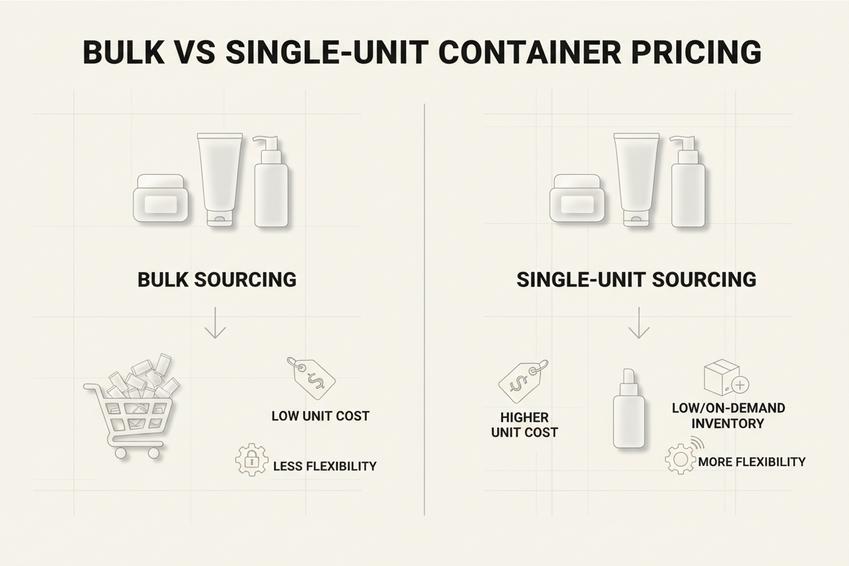
Comparative: Bulk Vs. Single-Unit Container Pricing
Your buying model dictates cost structure, supply stability, and branding options.
Bulk Purchasing
Ordering empty plastic containers in larger quantities secures stronger pricing and smoother planning.
- Cost and supply
- Lower per-unit pricing supports better efficiency.
- Stable inventory reduces reordering pressure.
- Predictable logistics helps scheduling.
- Packaging options
- For plastic containers, customization is usually broader (e.g., frosted finishes, clear finishes, specific brand standards).
- Topfeelpack supports sourcing choices that suit scaling goals.
- Operational value
- Higher volume purchasing simplifies storage planning.
- Consistent packaging materials maintain product uniformity.
- Secured availability over longer production cycles.
Single-Unit Purchasing
Single-unit buying works well when flexibility matters more than scale.
- Immediate access to individual containers aids formula testing.
- Small orders reduce upfront spending.
- Empty plastic containers purchased one at a time suit small-scale projects.
For dropper bottles and jars, batch availability may fluctuate, affecting future accessibility.
✓ Useful for retail needs and short production runs.
✓ Supports quick product trials.
✓ Offers convenience when demand is uncertain.
While Topfeelpack supports smaller quantities, bulk purchasing ultimately unlocks broader customization and superior unit economics.
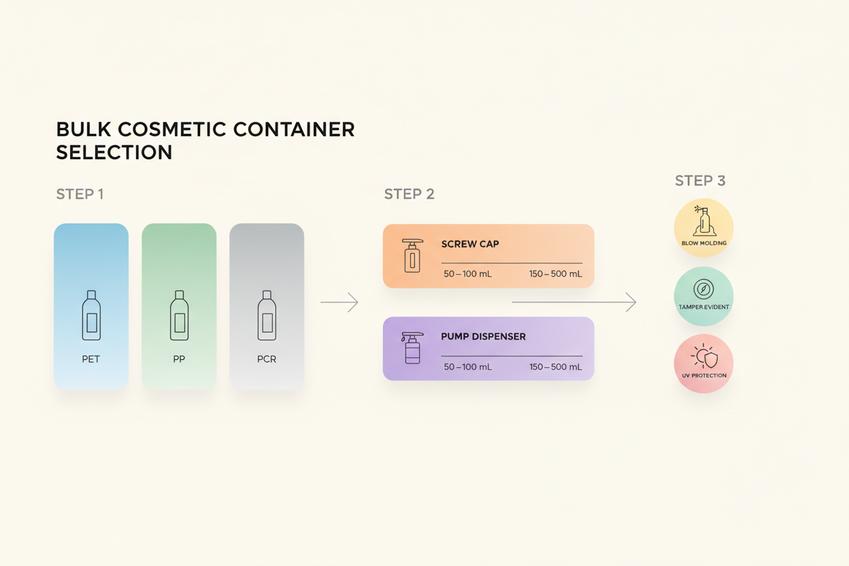
3 Steps To Choose Ideal Bulk Containers
Choosing bulk packaging is easier when material, dispensing style, and production features are aligned practically.
Recent packaging analyses from organizations including Smithers and industry reporting released in 2024–2025 continue to highlight growing demand for recycled-content packaging and product-protection features in personal care containers.
Step 1: Match Material (PET, PP, PCR) to Your Product
- PET
- High clarity for showcasing product color.
- Standard for empty plastic containers used in toners.
- PP
- Strong chemical resistance.
- Suitable when formulas are highly active.
- PCR
- Recycled plastic lowers carbon footprints.
- Useful for brands seeking lower environmental impact.
Topfeelpack offers formats that balance compatibility and presentation across beauty categories.
Step 2: Select Closure and Capacity (Screw Cap, Pump Dispenser, 50–500 mL)
- Choose the closure type.
- Screw cap for simple storage.
- Airless pump bottle dispensers for controlled, hygienic application.
- Match the required capacity.
- 50–100 mL for travel sizes.
- 150–500 mL for daily-use products.
- Confirm user experience.
- Smooth dispenser action.
- Secure cap fit preventing leaks.
- Appropriate volume for the formula.
Step 3: Verify Manufacturing Features (Blow Molding, Tamper-Evident, UV Protection)
- Check the manufacturing method.
- Blow molding can improve consistency and durability.
- A stable molding process helps reduce defects.
- Review safety details.
- Tamper-evident elements add confidence during retail distribution.
- Assess product preservation.
- UV protection supports sensitive formulas and longer shelf life.
- Strong protection features are especially useful for empty plastic containers stored in bright environments.
Topfeelpack supplies empty containers designed with these practical features to maximize brand performance.
Pain Point: Inconsistent Supply? Bulk Gives You Stability
Steady packaging flow keeps production moving and prevents last-minute scrambles. Large-scale procurement creates better visibility across inventory schedules. Topfeelpack supports growing brands needing reliable flow, from standard tubs to specialized dual chamber bottles.
Lock in Lead Times with High-Volume HDPE Lotion Bottles
- Build consistency through Production planning
- Secure recurring volumes of HDPE Lotion bottles.
- Improve Lead time visibility.
- Reduce pressure across the Supply chain.
- Standardize key Packaging material
- Maintain the exact Container type across batches.
- Secure recurring volumes of HDPE Lotion bottles.
- Strengthen forecasting
- Match demand with empty plastic containers purchasing cycles.
- Keep production schedules on track with fewer supply surprises.
Ensure Continuous Stock of Refillable Serum Bottles
For fast-moving skincare, keeping Serum bottles available matters. A practical approach combines:
- A targeted buffer stock of refillable packaging.
- Ongoing Inventory management reviews.
- Monitoring Stock availability trends.
Short pauses affect launches; strong Supply stability supports growth. Topfeelpack guarantees dependable replenishment continuity for dispensers and related formats.
Partner for Predictable Delivery of Matte-Finish Cream Jars
- Create a dependable supplier relationship
- Align forecasts for Cream jars.
- Support Delivery predictability.
- Improve Logistics planning.
- Align forecasts for Cream jars.
- Maintain visual consistency
- Preserve the exact Matte finish.
- Protect brand appearance.
- Keep Surface treatment standards steady.
- Preserve the exact Matte finish.
- Grow with confidence
- Strengthen the Supplier partnership.
- Ensure deodorant sticks and Jar design remain available when empty plastic containers are needed most.
Question-Based: How To Negotiate Bulk Discounts?
Pricing improves significantly when order size, packaging mix, and contract length are structured properly. Topfeelpack routinely supports procurement teams seeking cost efficiency without sacrificing quality.
What Volume Breaks Trigger Lower PCR Bottle Pricing?
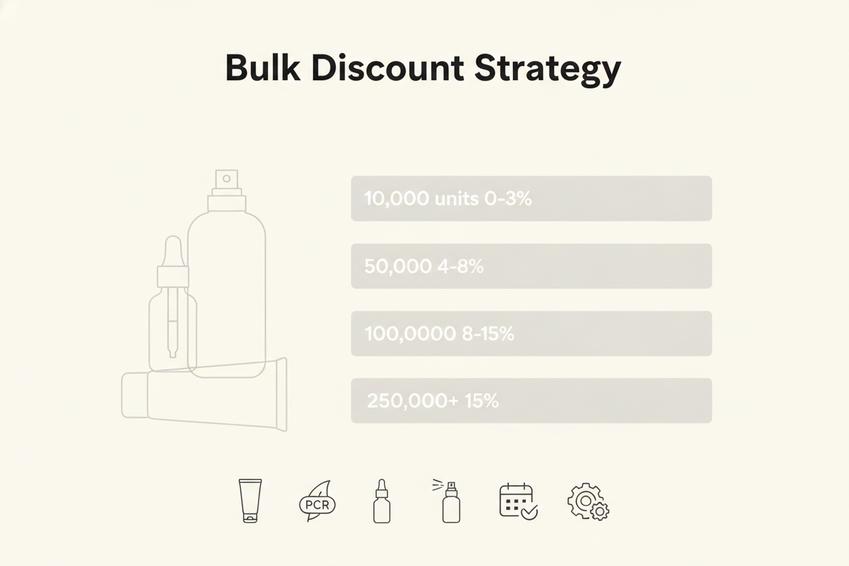
When discussing PCR bottles and supplier cost structure, demand clear volume tiers rather than a single quote.
| Annual Units | Typical Tier | Estimated Discount Range | Notes |
|---|---|---|---|
| 10,000 | Entry | 0–3% | Small runs |
| 50,000 | Mid | 4–8% | Better material utilization |
| 100,000 | High | 8–15% | Stronger purchasing position |
| 250,000+ | Strategic | 15%+ | Large-scale production planning |
- Review:
- Material percentage of PCR resin.
- Tooling allocation.
- Confirm:
- Future volume commitments.
- Available discounts.
How to Bundle Tube, Dropper Bottle, and Spray Atomizer Orders
Bundling across tubes, dropper bottles, and spray atomizers generates leverage:
- Combine related packaging components.
- Request a consolidated freight quote.
A practical path:
- Calculate total annual demand.
- Merge purchase schedules.
- Negotiate based on overall consolidation volume.
Suppliers offer stronger pricing when empty plastic containers and dispensing components are sourced together. Topfeelpack can actively construct these coordinated programs.
When to Leverage Multi-Year Contracts for Eco-friendly Closure Deals
Long-term multi-year contracts hedge against inflation when demand forecasts are stable.
- Year 1:
- Lock pricing for eco-friendly closures.
- Years 2–3:
- Add volume-growth incentives.
- Review supply terms.
Benefits include improved sustainability planning, more predictable agreements, and reduced exposure to material fluctuations.
Why Mention Injection Molding and Double Wall Options for Better Terms
Advanced manufacturing requirements indicate strategic intent, strengthening negotiations.
- Explain expected customization needs.
Then organize the conversation:
- Manufacturing scope
- Injection molding requirements.
- Specialized materials.
- Product development
- Double wall design.
- Branding customization.
- Commercial discussion
- Partnership goals.
- Preferred terms.
Suppliers view these projects as strategic anchor accounts, creating room for aggressive pricing—especially when matched with high-value manufacturing programs through partners such as Topfeelpack.
References
- Packaging Costs & Efficiency: McKinsey - The Future of Packaging
- Polymer Chemical Resistance: Plastics Technology Online
- Volume Discount Strategies: Procurement Leaders
- Freight Optimization: Inbound Logistics
- Injection Molding Economics: Plastics Today
- Circular Economy & Sustainability Goals: Ellen MacArthur Foundation
- Packaging Market Analyses & Growth: Smithers Report
- Recycled-Content Packaging Demand: Packaging Digest
- Tamper-Evident Regulations: FDA Guidance
- UV Protection Standards in Packaging: Cosmetics Design
- Supply Chain Inventory Schedules: Supply Chain Brain
- Strategic Buffer Stock Implementation: Supply Chain Management Review
- Supply Chain Carbon Footprints: EPA Scope 3 Guidance
Post time: Jul-15-2026
