
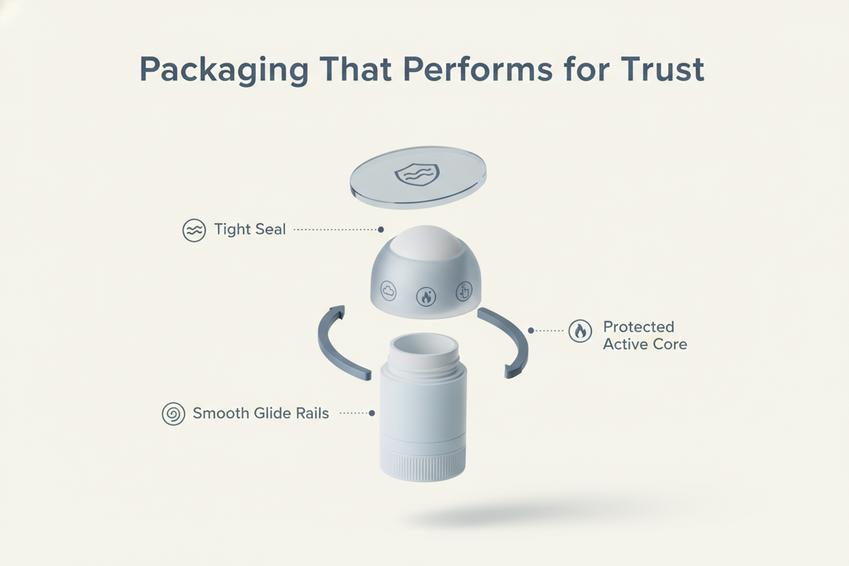
Your antiperspirant promises all-day control, yet often waves a white flag by noon. Performance isn’t purely chemical; packaging quietly dictates every swipe. When air intrudes, heat meddles, and application gets patchy, trust slips. By fixing the container, refining the glide, and protecting the active ingredients, the product finally performs as intended.
Reading Notes: Antiperspirant Stick Deodorant Essentials
➔ Active Penetration: Ensure aluminum salts reach sweat ducts to form gel plugs for effective blockage.
➔ Even Coverage: Swipe thoroughly across dry, clean skin to avoid gaps.
➔ Packaging Integrity: Choose sticks with tight seals to protect actives from air and moisture.
➔ Application Timing: Apply at night; 6-8 hours on cooled skin ensures optimal plug formation before heat triggers sweat.
5 Reasons Antiperspirant Stick Deodorant Underperforms
That trusty solid stick sometimes can't keep up. From skin barrier issues to fading product efficacy, technical gaps quietly ruin sweat control.
Insufficient Active Ingredient Penetration
When an antiperspirant fails, weak absorption is usually the culprit. The formula must pass the epidermis and settle inside sweat ducts to create actual pore blockage.
- Surface drag without depth
- Poor delivery mechanism
- Disrupted plug formation
- Product meets the skin barrier
- Aluminum salts attempt migration
- Incomplete gel formation reduces efficacy
Sweat easily bypasses shallow plugs. Thick wax matrices often limit transfer, but a refined formula balances glide and penetration. Packaging precision from Topfeelpack preserves ingredient stability so your deodorant stick performs reliably.
Formula Incompatibility with Skin pH
Skin naturally maintains a pH around 4.7–5.5. If an alkaline formula disrupts this acid mantle, the chemical balance shifts, encouraging odor-causing Corynebacterium.
- High alkaline levels
- Reduced formula stability
- Rising bacterial growth
- pH imbalance starts irritation
- Irritation weakens tolerance
- Reduced product efficacy follows
A properly tuned formulation respects the acidic environment, keeping actives stable while limiting odor.
Inadequate Application Coverage
An antiperspirant only works where it physically touches.
- Uneven product distribution
- Missed spots near folds
- Weak skin contact
Underarm area focus:
- Upper arc
- Central sweat glands zone
- Outer edge sweep
- Use steady application technique
- Apply two to three passes
- Check for uniformity
Rapid Wear-Off Under Heat
High humidity, friction, and rising sweat production break down structural integrity rapidly.
- Softened base
- Reduced product longevity
- Shorter protection duration
Sequence under stress:
- Environmental factors increase temperature
- Wax base loosens
- Actives migrate away
- Sweat wins
Smart component sealing, like the eco-friendly deodorant stick container designs seen from Topfeelpack, prevents formula shift during storage and use.
Loss of Efficacy Over Time
Long-term exposure dulls performance. Fragrance oils oxidize within months if poorly sealed.
- Gradual formulation degradation
- Shortened shelf life
- Perceived effectiveness decline
Nested causes:
- Storage issues
- Air exposure
- Moisture contact
- Skin response
- Mild bacterial adaptation
- Possible tolerance development
- Cap left loose
- Actives oxidize
- Product efficacy drops
If an old stick feels weak, it may be time for a fresh empty deodorant container filled with a newly sealed formula.
Why Sweat Breaks Through Your Stick Deodorant
When an antiperspirant taps out, it comes down to how eccrine and apocrine glands react under thermal pressure.
Overloaded Sweat Glands and Blocked Pores
When output spikes, glands overload. Even heavily concentrated salts inside a 75g pp deodorant stick packaging can fail.
- Heavy blockage shifts under rising pressure.
- Active plugs weaken as body temperature climbs.
- Excess output pushes through tiny pores.
- High heat raises internal pressure.
- Duct walls expand slightly.
- Moisture forces past partial plugs.
Nested breakdown:
- Sweat response cycle
- Trigger: rising core heat
- Result: rapid sweat production
- Barrier stress
- Plug softening
- Breakthrough moisture
- Trigger: rising core heat
Inconsistent Drying Time After Application
Rushing ruins results. The formula requires proper drying time for adequate absorption.
- Apply to dry skin contact areas only.
- Avoid layering over moisture or residue.
Multi-level sequence:
- After shower routine
- Towel dry fully
- Wait 2–3 minutes
- Apply thin layer
- Allow full set before dressing
- Towel dry fully
Topfeelpack designs airtight components that protect formula integrity, ensuring consistent stick container packaging control.
Impact of High-Intensity Workouts
High-intensity workouts change physiological dynamics fast.
- ↑ Body temperature
- ↑ Perspiration rate
- ↑ Sweat volume
Under strong physical activity:
- Heat surge
- Elevated exertion
- Reduced antiperspirant efficacy
- Elevated exertion
Choosing a well-formulated stick paired with durable packaging from Topfeelpack helps maintain stability when the heat is on.
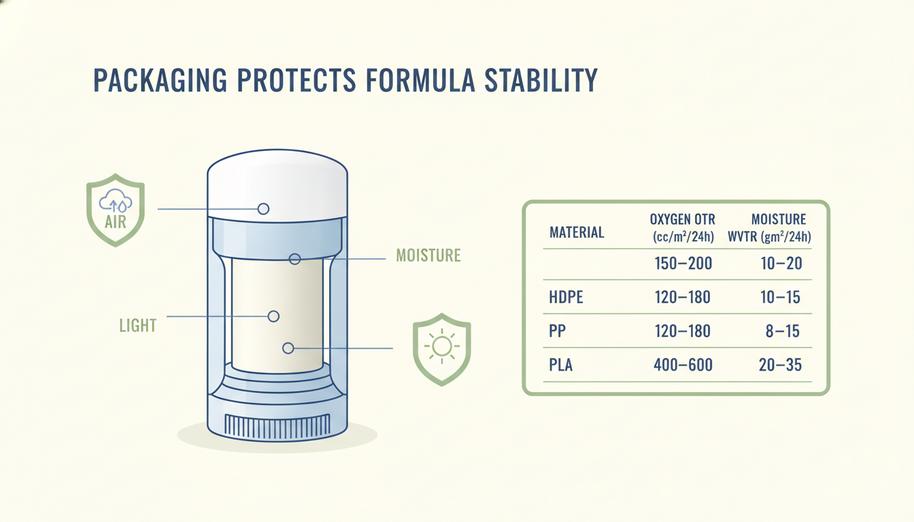
How Packaging Affects Deodorant Stability
For any antiperspirant, the container dictates texture and real-world shelf performance.
Air Exposure and Oxidation Risks
The formula meets air every time the cap twists off.
- Air exposure increases contact with oxygen
- Oxidation weakens fragrance molecules
- Damaged active ingredients shorten shelf life
- Surface Contact1.1 Oxygen touches exposed balm1.2 Early chemical stability shifts begin
- Repeated Opening2.1 Trapped air circulates inside the cap2.2 Gradual formula degradation affects scent throw
- Long-Term Storage3.1 Micro-oxidative reactions continue3.2 Reduced product efficacy over months
Tight caps and low headspace in plastic packaging dramatically slow these reactions.
Material Choices: Plastic vs. Biopolymer
Not all packaging guards formulas equally.
- Barrier Performance1.1 Traditional plastic
- Lower oxygen transmission
- Strong barrier properties
1.2 Biopolymer options
- Improved sustainability profile
- Higher gas permeability in some grades
- Light Interaction2.1 Opaque container design protects fragrance oils2.2 Clear tubes may accelerate oxidation
- Environmental Impact3.1 Fossil-based material properties vs plant-derived inputs3.2 End-of-life outcomes shape overall environmental impact
Scientific comparison of materials:
| Material Type | Oxygen Transmission Rate (cc/m²/day) | Moisture Vapor Rate (g/m²/day) |
|---|---|---|
| HDPE Plastic | 150–200 | 10–20 |
| PP Plastic | 120–180 | 8–15 |
| PLA Biopolymer | 400–600 | 20–35 |
High performance brands increasingly utilize pcr pp for cosmetic packaging to balance sustainability with strict moisture vapor rates.
Seal Integrity and Moisture Control
A smooth glide depends on dryness.
- Weak packaging closure invites water vapor
- Compromised seal integrity risks softening
- Poor moisture barrier control affects product quality
Inside the tube:
- Cap Fit1.1 Compression against rim1.2 Reduced leakage prevention
- Base Mechanism2.1 Tight screw elevation system2.2 Limits internal air pockets
- Storage Conditions3.1 High humidity climates3.2 Faster formula stability changes
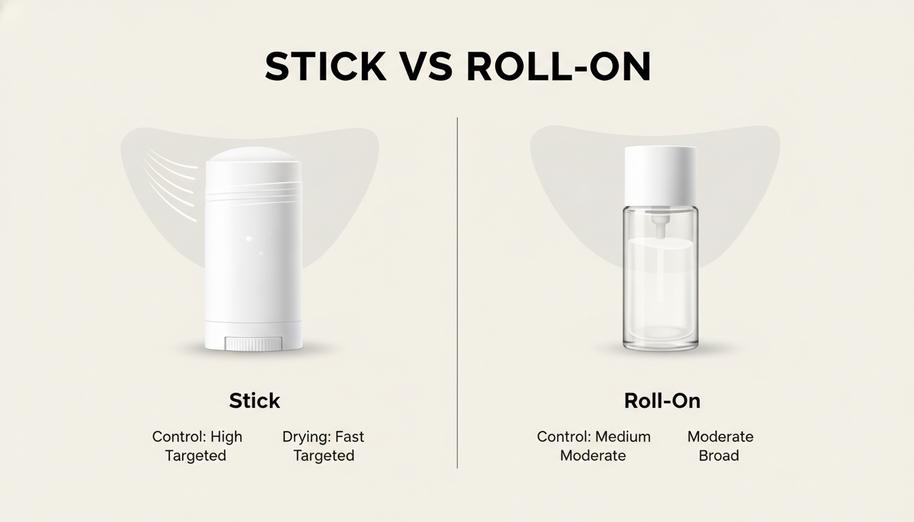
Antiperspirant Stick Deodorant Vs. Roll-On: Which Wins?
Both promise control, but their physical mechanisms differ drastically.
Antiperspirant Stick Deodorant
Solid forms rely on direct, controlled swipes.
- Core features:
- Solid form texture
- Focused sweat reduction
- Noticeable fragrance
- Performance factors
- Coverage
- May leave white residue on darker fabrics
- Requires even strokes for consistent layer
- Skin response
- Thicker texture can clog pores if overused
- Possible skin irritation for sensitive users
- Effect duration
- Strong barrier for long workdays
- Better for heavy perspiration
- Coverage
For busy mornings, a refillable deodorant stick container remains the reliable, no-fuss choice.
Roll-On Deodorant
Liquid formulas deliver smoother spread and deeper skin absorption.
- Key traits:
- Fluid glide
- Typically even coverage
- Mild wet feeling at first
- Functional breakdown
- Application
- The ball applicator distributes active ingredients evenly
- Helps minimize missed spots
- Drying phase
- Needs brief air time for quick drying
- Rushing can increase stain potential
- Skin comfort
- Lightweight finish
- Less visible residue than stick deodorant
- Application
Why Your Gym Routine Defeats Deodorant
When sweat, friction, and heat collide, standard cosmetics fail.
Sweat Volume Surpasses Antiperspirant Capacity
Intense workouts flood glands instantly.
- Sweat vs. Capacity Breakdown
- Sweat production rises beyond antiperspirant capacity.
- Aluminum salts struggle to maintain blockage.
- Reduced efficacy shows as damp patches.
- Measured Gym Output
| Activity Level | Avg. Sweat (ml/hr) | Aluminum Salt Block (%) | Breakthrough Time (min) |
|---|---|---|---|
| Light cardio | 300 | 60 | 120 |
| HIIT | 800 | 45 | 45 |
| Heavy lifting | 600 | 50 | 60 |
| Spin class | 900 | 40 | 35 |
Friction and Product Smearing
Movement creates friction.
- Arm swings
- Shirt seams
- Towel rubbing
- Application looks solid at 7 a.m.
- By warm‑up, product residue shifts.
- During lifts, constant rubbing against clothing causes smearing.
Brands working with Topfeelpack design twist-up systems that reduce excess drag, ensuring smoother application.
Rapid Temperature Swings in Gym Environments
Temperature climbs, thermal regulation activates, and sweating ramps up.
- Cool start → product feels set.
- Rising body heat → micro-melting at the skin surface.
- Post-set cooling → sudden sweat bursts.
“High-performance personal care products must maintain stability under heat stress exceeding 40°C skin-surface conditions,” noted a 2025 Mintel global personal care report.
Durable packaging helps a stick stay reliable when gym air shifts from chill to blazing.
Layered Approach To Lasting Dry Feel
Small prep tweaks seriously boost sweat control.
Pre-Application Skin Prep
Deodorants perform best on balanced, deeply clean skin.
- Quick wins:
- cleanse gently to clear oil and residue removal
- ensure full dryness
- avoid applying right after shaving
- Skin Readiness1.1 Surface Care
- Mild exfoliation once or twice weekly keeps pores clear.
- Protect the skin barrier; harsh scrubs reduce efficacy.1.2 Chemistry Check
- Healthy pH level supports better adhesion of active salts.
- Damp skin dilutes formula and slows sweat-duct targeting.
Multi-Phase Active Delivery
Smart formulation layers actives for steady performance.
- Performance Layers1.1 Immediate Control
- Fast absorption rate reduces wetness within minutes.1.2 Extended Defense
- time-release systems and encapsulation improve sustained efficacy.
- Strong ingredient stability keeps the antiperspirant deodorant stick reliable in heat.
- Layering tip: light first swipe, short pause, second pass for optimized layered application.
“Consumers are increasingly seeking long-wear sweat protection with skin-friendly formats,” notes a 2025 Euromonitor beauty and personal care update.
FMCG packaging innovations from Topfeelpack support this evolution with controlled glide engineering.
Post-Workout Touch-Up Strategies
Smart recovery keeps things fresh.
- Reset Routine1.1 Quick Clean
- Use hygiene wipes with antibacterial properties.1.2 Refresh
- Reapply antiperspirant stick deodorant for renewed sweat control.
- Target odor neutralization, not heavy layering.1.3 On-the-Go Boost
- Compact, portable products fit gym bags.
- A light swipe adds cooling sensation without buildup.
Topfeelpack's tsa deodorant size travel-friendly designs make mid-day reapplication mess-free.
References
- sweat glands - https://www.aad.org/public/diseases/a-z/hyperhidrosis-treatment
- body temperature - https://www.mayoclinic.org/diseases-conditions/hyperhidrosis/symptoms-causes/syc-20367152
- oxygen - https://pubchem.ncbi.nlm.nih.gov/compound/Oxygen
- exfoliation - https://www.aad.org/public/everyday-care/skin-care-secrets/routine/safely-exfoliate-at-home
Post time: Jul-06-2026
