

How Each Tube Protects an Ointment
An ointment is usually an oil-based, low-water formula such as a petrolatum balm, a lanolin nipple cream, a zinc barrier paste or a medicated rub. The packaging has three jobs: keep oxygen and moisture out, keep the formula from reacting with the wall, and deliver a clean dose every time. Aluminum and plastic tubes do these jobs in different ways.
Aluminum: a barrier you can fold
Collapsible aluminum tubes are made by impact extrusion. A slug of high-purity aluminum is struck so that the metal flows up a punch and forms a seamless tube with an integral shoulder and neck. Because aluminum is a metal, it blocks light, oxygen and water vapor almost completely. The second advantage is dead-fold. When you press an aluminum tube, it stays pressed. No air is pulled back through the nozzle, so the product left inside is not exposed to fresh oxygen after every use. This is why many pharmaceutical eye ointments and topical creams have used aluminum for decades.
Aluminum also has weak points. Bare aluminum reacts with acidic, alkaline or high-water formulas, so the inside must be coated with a lacquer, typically an epoxy-phenolic or polyester system. A latex or synthetic sealant is applied at the crimped end. Repeated flexing can crack the metal near the crimp, and a dented tube looks damaged on a shelf.
Plastic: flexible, decorated and springy
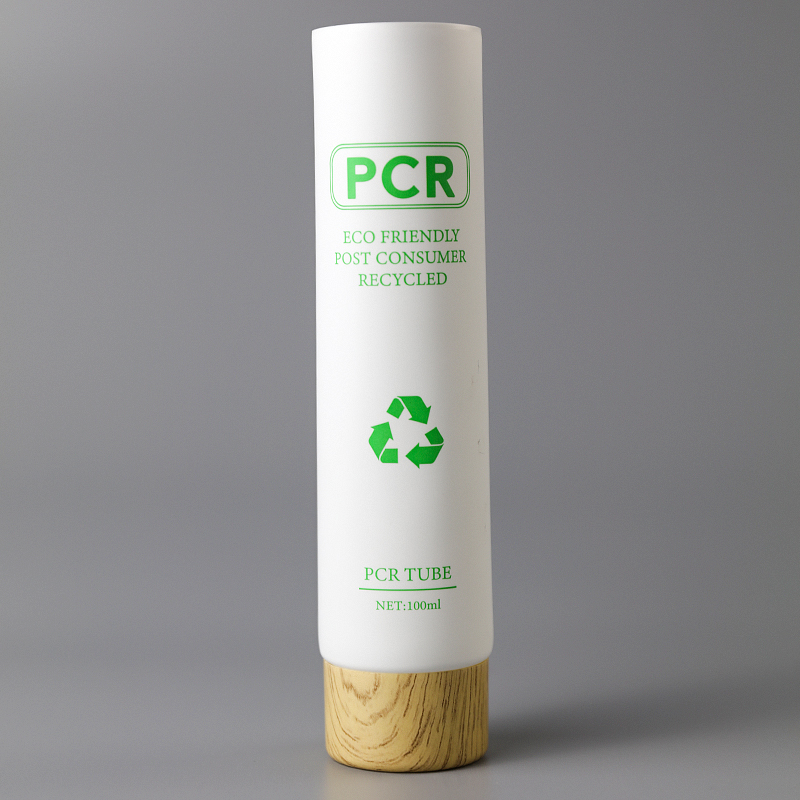
Plastic tubes are extruded from polyethylene (PE), sometimes blended with PCR or bio-based PE, then sealed at the end after filling. A monolayer PE tube is soft and easy to decorate, but PE lets oxygen and some volatile ingredients pass through over time. A plastic tube also springs back after squeezing. That spring-back pulls air into the tube, which is fine for most creams and a problem for oxidation-sensitive actives.
Multilayer tubes answer the barrier problem. A five-layer build places an EVOH (ethylene vinyl alcohol) oxygen-barrier layer between PE layers with two tie layers. Laminated tubes go further: ABL (aluminum barrier laminate) puts a thin aluminum foil inside a plastic laminate, and PBL (plastic barrier laminate) uses EVOH or similar resins instead of foil. For a full comparison of layer structures, read our guide to monolayer vs multilayer cosmetic tubes.
Aluminum vs Plastic Tubes: Key Parameters
| Parameter | Aluminum tube | Monolayer PE tube | Multilayer PE/EVOH or PBL tube |
|---|---|---|---|
| Oxygen and light barrier | Near total | Low | Medium to high (EVOH layer) |
| Suck-back after squeezing | None (dead-fold) | Yes | Yes, reduced with airless pump head |
| Inner contact surface | Lacquer coating | PE | PE |
| Feel and look on shelf | Rigid, dents easily | Soft, keeps shape | Soft, keeps shape |
| Decoration options | Offset print, limited effects | Silkscreen, offset, hot stamping, labels | Same as monolayer |
| Typical uses | Medicated ointments, eye ointments, hair color, artist paint | Hand cream, cleanser, body lotion | SPF, vitamin C, retinoid creams |
| Recycling | Aluminum is widely recycled, but small tubes with residue are often lost in sorting | Mono-PE fits the PE stream | Harder; depends on EVOH share and local sorting |
Which Tube Should You Choose for Your Ointment?
- If the formula contains oxidation-sensitive actives and must keep potency for 24 months or more, then start with aluminum or ABL, or use an airless plastic tube.
- If the ointment is a stable petrolatum or wax balm, then a monolayer PE tube usually works and costs less.
- If the product is sold as skincare and shelf appeal matters, then choose a multilayer plastic tube with an EVOH barrier and full-surface decoration.
- If your formula is acidic, high in water or contains strong solvents, then an aluminum tube needs a lacquer validated for that formula, and plastic may be the simpler route.
- If the product is a regulated drug, then packaging must meet the registration file in your market, and the material choice may already be fixed.
Common Mistakes When Comparing Tube Materials
“Aluminum is always better.” The barrier is better, but the barrier only matters if your formula actually degrades through oxygen or moisture. Many stable balms gain nothing from metal and lose on cost and dent resistance.
“A plastic tube cannot protect actives.” A five-layer EVOH tube or an airless tube can protect a vitamin or SPF formula for a normal shelf life. The right answer comes from stability testing with your formula in the final pack, not from a material label. In the EU, the Cosmetics Regulation (EC) No 1223/2009 expects the safety report to consider packaging, so this testing is part of compliance.
“Metal tubes are automatically recyclable.” The European Tube Manufacturers Association reports that aluminum is highly recyclable as a material. Whether a used ointment tube is actually recovered depends on local collection and how much product remains inside.
Topfeelpack Tubes for Ointments and Balms
Topfeelpack’s function tube range focuses on plastic tubes, and we build barrier into them instead of switching to metal. For brands moving away from aluminum, these are the formats we recommend testing first:
- TU06 PCR Cosmetic Tube: available as a 2-layer or 5-layer tube. The 5-layer version adds an EVOH barrier with two tie layers, and the tube body can contain up to 30% PCR. Caps include screw, flip and disc styles, and the neck can be adapted for an airless pump head.
- TU56 Oval Airless Tube: 50–80 ml, 35 mm diameter, made in PP, PE and AS. The airless head stops air from flowing back into the tube, which removes the main weakness of plastic compared with aluminum.
- TU73 PE Squeeze Tube: a cost-efficient monolayer PE option for stable balms and barrier creams.

How we test a tube before you fill it
Our Shenzhen factory runs injection molding, blow molding, silk screen and hot stamping workshops in-house, under ISO 9001, ISO 14001 and ISO 13485 management systems. Before mass production, tubes and caps go through cap torque checks, high-temperature (50 °C) and low-temperature (−15 °C) storage tests over 48 hours, abrasion tests on printed surfaces, and UV aging, where 24 hours in the chamber represents about two years of normal exposure. We recommend you also run your own compatibility and stability study with the filled tube. You can see our full QC process on the production capacity page.
Our engineering team holds 277 patents, including 17 invention patents and 29 EU design patents. We can usually supply a drawing within 1 day and a 3D prototype within 3 days, with standard MOQ from 10,000 pieces and production lead time of 40–50 days. For a wider view of how to choose a packaging supplier, read our custom cosmetic packaging buyer’s guide.
FAQ
Why are some ointments still packed in aluminum tubes?
Aluminum blocks light, oxygen and moisture almost completely and does not suck air back in after squeezing. Medicated and oxygen-sensitive ointments benefit most from that protection.
Can a plastic tube match an aluminum tube’s barrier?
A 5-layer tube with an EVOH layer, an ABL laminate or an airless tube can come close for most cosmetic formulas. Stability testing with your formula confirms whether it is enough.
Do aluminum tubes need an inner coating?
Yes. Most aluminum tubes are lined with an internal lacquer so the formula does not react with the metal, and the lacquer must be checked for compatibility.
Which tube is more sustainable?
It depends on local recycling. Aluminum is valuable as a material, while mono-PE tubes with PCR content fit the PE stream. Multilayer tubes are the hardest to recycle.
Find the Right Tube for Your Formula
Tell us your formula type, target shelf life and market, and our engineers will suggest a tube structure and send samples for testing.
Post time: Nov-25-2026
