
Packaging choices hit margins and plastic cosmetic tubes are edging past jars on shelves and in production lines.
Jars premium, freight climbs, fingers contaminate, and formulas fade—tubes stay sealed, lighter, and built for scale without fuss.
Market studies from Smithers and Euromonitor highlight rising preference for hygienic, lightweight formats, as the global cosmetic packaging market expands toward $44.3 billion by 2030, with plastic materials holding over 60.8% market share.
Quick Insights: Plastic Cosmetic Tubes
➔ Material & Layers: Co-extruded PE/PP with EVOH barriers ensures strength, flexibility and ingredient protection.
➔ Barrier & Hygiene: EVOH layers and airless-pump designs block oxygen, moisture and contamination, extending shelf life.
➔ Design & Branding: Choose oval or round tubes, matte or glossy finishes, and flexo or digital printing for standout aesthetics.
➔ Sustainability & Sizes: Opt for PCR or bioplastic options, recyclable formats and volumes ranging from 5 ml travel sizes to 200 ml retail packs.
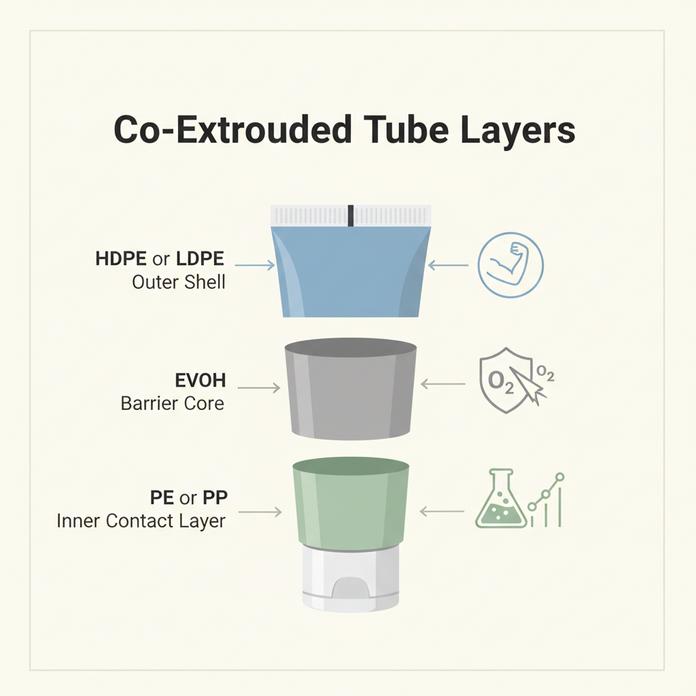
Material & Layer Composition in Co-extruded Plastic
Plastic cosmetic tubes are more than just simple containers—they’re layered systems designed to protect, dispense, and look good doing it. When people talk about plastic tubes, cosmetic tube packaging, or even squeeze tubes for skincare, what they’re really seeing is smart material engineering at work.
Material & Layer Composition in Co-extruded Plastic
- Core structure of plastic cosmetic tubes often follows a multi-layer logic:
- Outer layer
- Uses HDPE or LDPE
- Adds flexibility and a smooth finish for branding
- Middle barrier
- Includes EVOH as a barrier layer
- Blocks oxygen, keeping formulas like SPF or serums stable
- Inner contact layer
- Built from PE or PP
- Ensures safe contact with creams and gels
- Outer layer
- This multi-layer co-extrusion process blends different polymer types into one unified tube wall
- Result: lightweight but tough
- Feel: squeezable yet resilient
- Performance: better shelf life for cosmetic tube packaging
- Why it matters in real use:
- ▸ Sunscreen stays effective longer
- ▸ Lotion doesn’t oxidize quickly
- ▸ Active ingredients remain stable
“Barrier-enhanced packaging formats are seeing increased adoption in personal care, with multi-layer plastic structures improving product longevity and reducing waste,” notes Smithers market insights (2025).
- Quick material comparison inside plastic cosmetic tubes:
- HDPE: sturdy, slightly rigid
- LDPE: softer, easy squeeze
- PP: heat-resistant, great for sealing
- EVOH: high-performance oxygen barrier
- How brands like Topfeelpack approach it:
- Step 1: Select resin blends based on formula sensitivity
- Step 2: Align barrier strength with product shelf life goals
- Step 3: Fine-tune wall thickness for feel and dispensing
- In everyday cosmetic packaging tubes, this layered build quietly does the heavy lifting. You squeeze an airless tube, get the perfect amount, and don’t think twice—but behind that moment sits carefully engineered co-extruded plastic working exactly as intended.
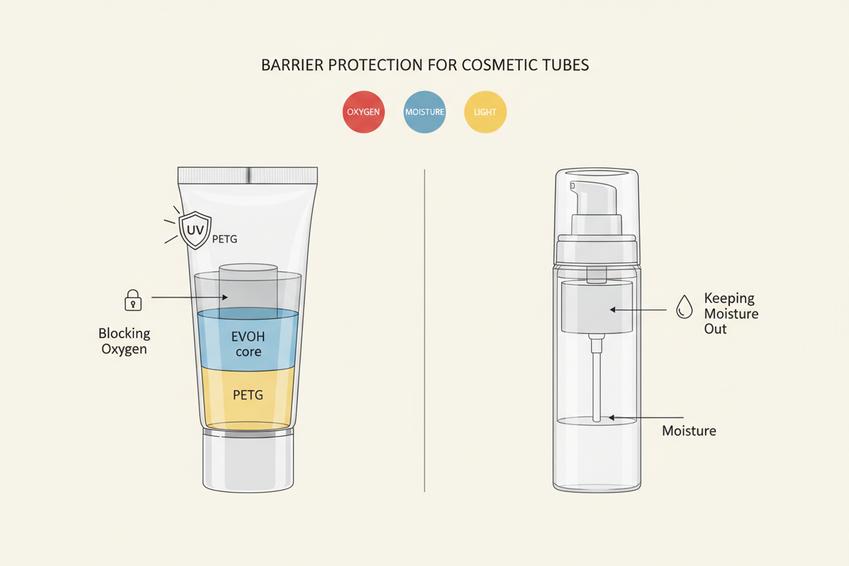
Barrier Properties: Oxygen, Moisture, Light Protection
Barrier performance is where plastic cosmetic tubes really earn their keep. From oxygen to UV, every layer and closure detail matters. Brands like Topfeelpack keep pushing plastic cosmetic tube designs that protect formulas without killing shelf appeal. Think smarter materials, tighter seals, and less product stress over time.
EVOH Barrier Layers for Superior Oxygen Block
In modern plastic cosmetic tubes, EVOH sits quietly in the middle of a multi-layer wall, doing heavy lifting. Advanced barrier resin technology slows permeation, acting as a tight gas block that keeps oxygen out and protects sensitive actives up to 300 times better than commodity LDPE.
- Why it works:
- High oxygen barrier efficiency
- Compatible with coextrusion processes
- Stable polymer performance across climates
- Outer layer protects structure
- EVOH core blocks gas
- Inner layer maintains formula safety
This setup is common in cosmetic plastic tubes used for SPF and liquid base. Topfeelpack often integrates EVOH into plastic cosmetic tubes to prevent oxidation in sensitive formulas without adding bulk.
Airless Pump Tubes to Prevent Moisture Intrusion
Airless formats flip the script. Instead of letting air sneak in, a vacuum system pushes product upward using a piston.
- Key benefits:
- Reduced oxidation
- Strong moisture barrier
- Lower contamination risk
Process flow:
- Product fills chamber
- Airless pump activates
- Base piston rises with each dispensing action
Short take: cleaner use, longer life, less waste. These airless cosmetic containers cut residual product loss while protecting serums and creams that hate air exposure.
UV-Resistant PETG and Bioplastic Formulations
Light can wreck a formula faster than air. That’s where UV resistance steps in.
| Material | UV Blocking (%) | Clarity | Sustainability Score |
|---|---|---|---|
| PETG | 85–92 | High | Medium |
| Bioplastics | 70–88 | Medium | High |
| Standard PE | 40–60 | Medium | Low |
- PETG offers strong protection with high clarity, shielding light-sensitive ingredients
- Bioplastics balance eco goals and light degradation control
- Additives enhance polymer shielding without clouding the formulation
Topfeelpack applies these in plastic cosmetic tubes where branding still needs to shine.
Sealing Processes and Quality Control for Light Defense
A tube is only as good as its closure. Even the best light barrier fails with poor sealing.
Nested checks keep things tight:
- Closure system
- Cap-thread precision
- Seal compression strength
- Quality control
- Leak inspection under pressure
- UV exposure simulation
- Final integrity
- Transport vibration tests
- Shelf stability validation
Tiny gap? Big problem. High-speed cosmetics filling equipment ensures precise sealing to keep packaging defense intact, especially for plastic cosmetic tubes traveling long distances.
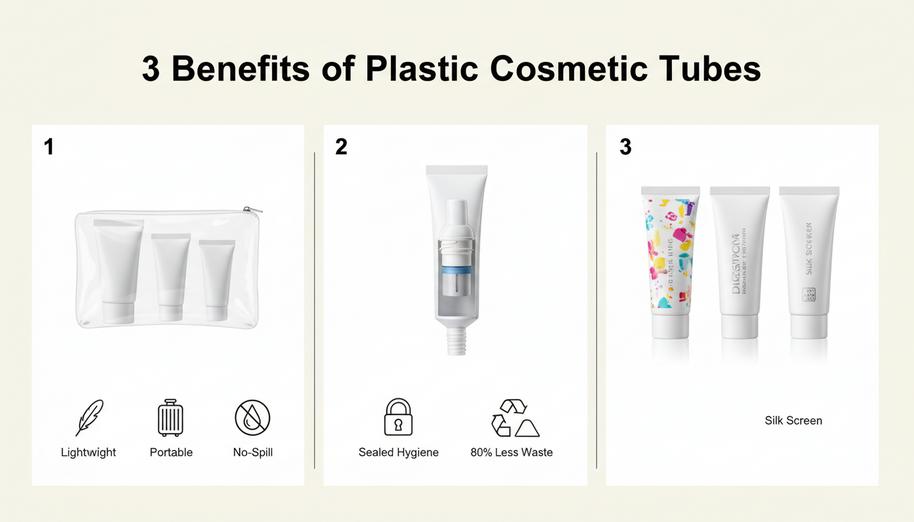
3 Key Benefits of Plastic Cosmetic Tubes
Plastic cosmetic tubes, or broken down as plastic + cosmetic + tubes, keep showing up everywhere for a reason. From daily skincare to travel kits, plastic cosmetic tubes balance convenience, hygiene, and branding without making things complicated.
Lightweight Travel Convenience (30ml, 50ml, 100ml)
Small sizes quietly win the game. With lightweight, portable, and compact builds, plastic cosmetic tubes fit into bags without fuss, making travel feel less like packing and more like tossing essentials together.
- 30ml: quick trips, carry-on friendly
- 50ml: weekend balance
- 100ml: longer stays, still on-the-go
- pick size
- squeeze control
- seal tight
No spills, no bulky jars
Plastic cosmetic tubes reduce weight while keeping products accessible. Modern plastic containers optimize transport efficiency, avoiding the awkward handling common with a open cream jar. For brands like Topfeelpack, this size flexibility matches real-life routines seamlessly.
Short bursts of convenience:
Small bag, no stress.
Light hand feel.
Fast access.
Enhanced Hygiene with Airless Pump Tube Design
Clean handling matters more than people admit. Airless, pump, tube, and design choices directly affect hygiene and contamination control.
- Outer shell
- protects formula
- blocks air
- Inner system
- vacuum push
- minimal exposure
- Output tip
- controlled flow
- sanitary contact
Steps in action:
- press pump
- product rises without air
- formula stays fresh
Plastic cosmetic tubes with airless systems extend preservation, especially when paired with an airless bottle format for sensitive creams. Integrating a hybrid bag-in-tube mechanism cuts residual product waste by up to 80% while keeping bacteria away. Topfeelpack focuses on this sealed approach, helping formulas last longer without overusing preservatives.
Custom Branding via Digital & Flexographic Printing
Looks sell before formulas do. Custom, branding, and visual identity rely heavily on digital and flexographic printing options.
Here’s how choices stack up:
| Method | Color Range | Cost Level | Detail Precision | Best Use Case |
|---|---|---|---|---|
| Digital Printing | High | Medium | Very High | Small batch designs |
| Flexographic | Medium | Low | Medium | Large volume runs |
| Silk Screen | Low | Medium | High | Bold logos |
| Hot Stamping | Metallic | Medium | Medium | Premium accents |
| Offset Printing | High | High | Very High | Complex artwork |
Plastic cosmetic tubes become brand messengers. A plastic tube cosmetic finish can shift perception from basic to premium instantly. Cosmetic plastic tubes with thoughtful personalization stand out on shelves, and plastic cosmetic tubes designed by Topfeelpack often combine multiple techniques for sharper impact.
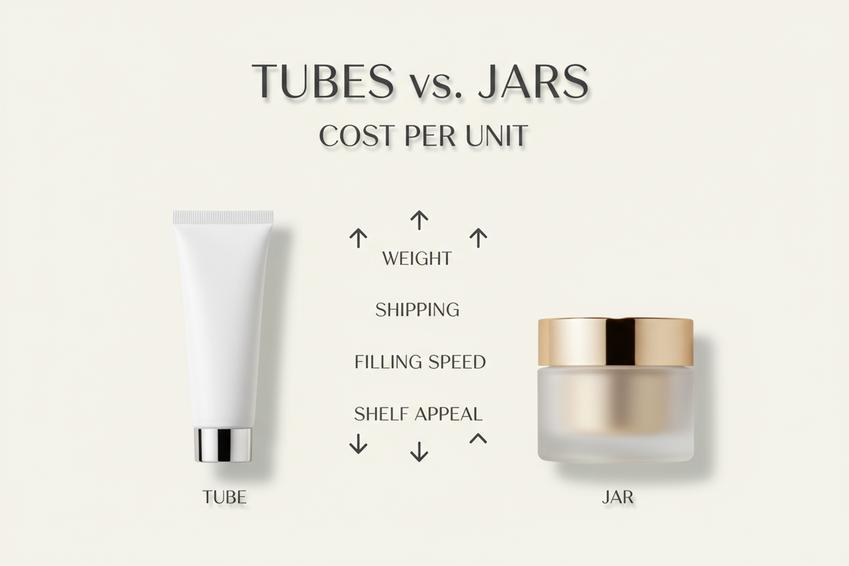
Cost Per Unit: Tubes vs. Jars
Quick reality check—cost per unit isn’t just about raw material; it’s tied to weight, shipping, filling speed, and shelf vibe. plastic cosmetic tubes often sneak ahead on efficiency, while jars flex in premium looks but raise logistics costs.
Tubes
- Cost drivers for plastic cosmetic tubes break down like this:
- Material side
- Material composition: PE and PP blends keep resin usage low while maintaining flexibility
- Barrier properties: multilayer tweaks can add cost, yet still lighter than rigid formats
- Production flow
- Manufacturing technique: multi-layer extrusion keeps cycle times fast and scrap minimal
- Filling process:
- Bottom-fill sealing
- Heat or ultrasonic Sealing method
- Quick inline QC
- Design + usability
- Dispensing orifice size affects product waste and perceived value
- Cap design (flip-top vs screw) nudges unit cost slightly
- Material side
Now zooming out a bit—cosmetic plastic tubes win in freight. Lower weight per unit means more units per carton, less fuel burned across flexible packaging routes. That’s why brands scaling fast tend to stick with plastic tubes for cosmetics.
A quick snapshot from production floors:
- Faster runs = lower labor per unit
- Lightweight builds = cheaper outbound shipping
- Decoration flexibility via Decoration application without major cost spikes
Topfeelpack keeps pushing refinements here, especially incorporating sustainable pcr-pp options and thin-wall extrusion, making plastic cosmetic tubes even more cost-friendly at scale.
Jars
- Jars tell a different story:
- Structure + material
- Material type: thicker PP, PET, or even glass raises base cost
- Wall gauge increases durability but adds weight
- Manufacturing chain
- Molding process: injection cycles are longer and more energy-heavy
- Filling operation:
- Open-top fill
- Surface leveling
- Inner seal placement
- Closure system
- Closure mechanism impacts sealing integrity and cost
- Lid style (double-wall, metallized) pushes premium positioning
- Structure + material
Short bursts to keep it real:
- Heavier units → higher freight bills
- More material → higher resin spend
- Better shelf presence → higher perceived value
And yeah, that’s the trade-off. Choosing between an airless pump bottle for cosmetics and skincare or a traditional jar of lotion comes down to target margins. Jars look luxe and justify higher pricing, but from a pure unit economics angle, plastic tubes usually come out leaner.
Topfeelpack balances this by offering functional designs like an airless cream jar with twist lock pump that trims excess weight without killing that upscale feel.
References
- Cosmetic Packaging Market Size & Share Report - grandviewresearch.com/Grand View Research
- Cosmetics and Personal Care Packaging Equipment Market - grandviewresearch.com/Grand View Research
- Rigid Plastic Packaging: How to Choose Buckets and Pails - packagingdigest.com/Packaging Digest
- 'Super PE' Film, with 300x Oxygen Barrier, is Recyclable - packagingdigest.com/Packaging Digest
- Dialing in Stable Packaging for Sensitive Drugs - packagingdigest.com/Packaging Digest
- 3 Ways Packaging Should Address Changes in Food Dyes - packagingdigest.com/Packaging Digest
- Cosmetics Filling, Closing Systems - packagingdigest.com/Packaging Digest
- Dow Awards Take the Pulse of Global Innovation - packagingeurope.com/Packaging Europe
- Flexible Plastic Packaging Market Growing in Southeast Asia - packagingdigest.com/Packaging Digest
- Plastic Container Overview - wikipedia.org/Wikipedia
Post time: Jul-28-2026
