
Before approving a cosmetic packaging decoration for production, complete checks for substrate and surface preparation, coating or print adhesion, rubbing and scuffing, relevant chemical exposure, environmental conditioning, and appearance. Also confirm that decoration does not interfere with assembly, dispensing, sealing, or information legibility. Select tests according to the actual material, decoration system, formula, and intended handling conditions.
Cosmetic packaging testing before decoration approval should establish whether a production-representative finish meets agreed visual and durability requirements. A color-approved sample alone does not establish that its ink, foil, coating, or label will survive filling, transport, and consumer use.
For brands, the practical goal is to connect the approved appearance to a documented, repeatable specification before committing to decorated inventory.
Define What the Approval Actually Releases
Separate three decisions in the project schedule:
- Design approval: Confirm artwork, color direction, placement, and finish on mockups or early samples.
- Decoration performance approval: Confirm the selected process on representative components after the agreed tests.
- Production release: Confirm that decoration results and the wider package validation support the intended order.
Physical decorated samples are necessary to evaluate decoration performance. “Before approval” therefore means testing trial-decorated components before final sign-off, rather than testing only undecorated bottles.
Longer formula compatibility or stability work may still be running when a brand approves a visual direction. Record that decision as conditional, with named owners and restrictions on production release. Do not let an artwork signature silently become approval of unfinished technical work.
Build the Test Plan Around the Finished Component
Record the exact substrate, resin grade or glass specification, colorant, surface texture, and recycled-content specification where applicable. Then identify the complete decoration sequence: cleaning, surface activation, primer, ink or coating, foil, protective layer, and curing conditions.
Adhesion depends on both the substrate and its preparation, as explained in ASTM D3359′s discussion of coating adhesion. A passing result on one material or surface treatment should not automatically qualify another.
Use samples made through the intended production process wherever possible. A hand-finished prototype may establish an aesthetic direction without demonstrating repeatable production performance.
The following is a planning framework, not a universal mandatory test list:
| Check | What it should establish | What to agree before testing |
|---|---|---|
| Substrate and surface preparation | The tested surface represents the ordered component | Material specification, cleaning, treatment, and treatment-to-print interval |
| Adhesion | Print or coating remains attached under the selected method | Method suitability, conditioning, tape or tool, and acceptance rating |
| Rub and scuff resistance | Graphics and finish withstand relevant contact | Contact material, load, cycles, speed, and inspection criteria |
| Chemical exposure | Expected splashes or handling do not cause unacceptable damage | Finished formula, other relevant liquids, exposure time, and recovery period |
| Environmental conditioning | The finish retains agreed performance after relevant storage conditions | Temperature, humidity, duration, and any justified light exposure |
| Appearance and legibility | Delivered samples match the approved visual specification | Lighting, reference sample, viewing conditions, and defect limits |
| Assembly and handling | Decoration works on the completed pack | Mating parts, contact areas, actuation, and representative packing configuration |
1. Verify the Surface and Decoration Process
Inspect components for contamination, visible defects, and inconsistent surface texture before decorating. Ask the decorator which cleaning or activation steps the selected substrate requires and how those steps are controlled.
Where a surface-energy or wetting check is appropriate, agree on the method and target with the material and ink suppliers. Treat that result as a process check; it cannot replace adhesion testing of the finished decoration.
For multilayer finishes, record the layer order. If a clear coat remains attached to an ink layer while the ink separates from the bottle, the decoration system has still failed. Investigate the failing interface before changing the whole specification.
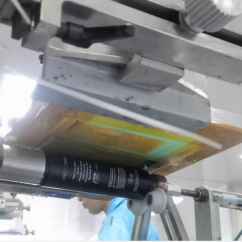
TOPFEELPACK lists spraying, screen printing, hot stamping, and labeling on its production and decoration capabilities page. Confirm which process combination is proposed for your selected component and request samples representing that combination.
2. Test Adhesion With a Suitable Method
Adhesion testing asks whether a decorative layer remains attached. Specify the method rather than requesting an undefined “tape test.”
ASTM D3359 assesses relatively ductile coating films on metallic substrates using pressure-sensitive tape over cuts. Its published scope and notes matter: it was developed for metal, and supporting precision and bias data for nonmetallic substrates are lacking. Its ratings also do not measure an absolute bond-breaking force.
For plastic bottles, curved components, small logos, or foil details, have the laboratory or decorator establish a suitable method and document any adaptation. A modified procedure should be identified clearly rather than described as unqualified compliance with the standard.
Agree on sample conditioning, tape identification, cut geometry where relevant, application and removal procedure, and the rating system. Photograph the affected area and retain the result with the sample identity. These controls make supplier and brand results easier to compare.
3. Check Rubbing, Scuffing, and Contact Wear
A decoration can remain bonded yet lose surface gloss, transfer color, or become unreadable through repeated contact. Adhesion and abrasion therefore answer different questions.
Consider bottle-to-bottle contact, carton dividers, cap removal, and repeated handling. For each applicable scenario, specify the rubbing material, load, motion, number of cycles, and pass criteria. Add wet rubbing when moisture exposure is relevant.
ASTM D5264 provides a laboratory comparison of abrasion resistance using a Sutherland Rub Tester or equivalent. Its scope covers applied graphics on flat substrates, including labels and cartons. Testing a curved bottle requires an appropriately selected fixture or another agreed procedure; do not assume the flat-substrate method transfers unchanged.
Inspect more than the logo. Include fine text, foil edges, raised features, and areas that contact neighboring components. Define acceptable changes using agreed photographs or reference samples, with specific protection for required information.

4. Evaluate Formula Splashes and Relevant Chemicals
External decoration may encounter product residue around a pump outlet, oily hands, water, or another liquid associated with the intended use. Select exposures from realistic product use rather than an arbitrary list of harsh chemicals.
Use the finished formula for the relevant splash or wipe assessment. Record concentration where applicable, quantity, contact time, wiping material, and inspection timing. Look for color transfer, tackiness, swelling, staining, whitening, or loss of adhesion. Check both immediate effects and changes after an agreed recovery period.
Distinguish this assessment from a coating cure check. ASTM D5402 describes solvent rubbing for organic coatings that chemically change during curing. It does not prescribe one solvent, rub count, or passing result, and solvent resistance alone does not establish full cure.
Likewise, an external formula wipe test does not establish the compatibility of the formula with the bottle, pump, seals, and other product-contact materials. Keep that broader validation as a separate release requirement.
5. Recheck Performance After Relevant Conditioning
Choose temperature, humidity, and exposure periods around the expected storage and distribution conditions. Add light exposure when the product’s display or use creates a relevant risk.
After conditioning, inspect color, gloss, cracking, lifting, and distortion, then repeat the relevant adhesion or rub assessment on designated samples. Keep an unexposed reference for comparison.
Agree whether inspection occurs immediately after exposure, after recovery, or both. ASTM D3359 notes that temperature and relative humidity can affect tape or coating adhesion, so uncontrolled testing conditions can complicate comparisons.
Treat accelerated exposure as evidence within the chosen protocol. Do not convert a short heat or UV test into a claimed number of years of service without a validated correlation for that decoration system.
6. Confirm Appearance and Finished-Pack Function
Create a physical master sample for appearance and agree on lighting, viewing distance, orientation, and background. Define color tolerance, gloss or matte appearance, print registration, foil coverage, and acceptable cosmetic defects. A digital rendering cannot serve as the sole physical color reference.
Check the assembled component, too. Confirm that coatings or labels do not obstruct threads, sealing surfaces, pump movement, cap fit, or refill interfaces. For airless bottle projects, include the selected actuator, cap, and bottle combination in the review.
Check required text and any barcode or QR code in its final position. Where machine reading matters, use an agreed verification method rather than relying only on one successful phone scan. Inspect again after durability testing.
For transport-related scuff concerns, assess representative packed assemblies. A laboratory rub result alone cannot demonstrate performance in every shipping configuration.
Turn Test Results Into a Written Approval
Before signing off, keep one approval record containing:
- Component drawing revision, artwork version, material specification, and decoration process identification.
- Sample quantity, batch identification, production date, and conditioning history.
- Test procedures, conditions, acceptance criteria, results, and photographs.
- Approved master sample and any agreed boundary samples showing acceptable variation.
- Outstanding work, conditional approvals, and the person authorized to release production.
Set acceptance criteria before testing. “No obvious damage” leaves too much room for disagreement about viewing conditions and defect severity.
Also agree on change control. A new resin, recycled-content specification, ink, primer, foil, cure setting, or decoration location should trigger a review of which tests need repeating. Confirm the sampling plan separately; one attractive sample cannot establish consistency across a production order.
Frequently Asked Questions
Can one tested color qualify every shade in a packaging range?
Do not assume it does. Ask the decorator whether pigment, ink, coating, or curing differences justify separate testing. Any decision to group shades should have a documented technical basis and a representative selection.
Can destructive tests be performed on the appearance master?
Keep the signed appearance master intact. Use separately identified samples for destructive or contaminating tests, so the retained reference remains useful for later production comparisons.
Who should resolve conflicting supplier and brand test results?
The designated quality owners should first compare sample batches, conditioning, equipment, consumables, and procedures. If results still conflict, use the agreed referee laboratory or dispute-resolution procedure established in the purchase specification.
Discuss Decoration Sample Approval With TOPFEELPACK
To discuss decorated samples with TOPFEELPACK, share your component reference, substrate, artwork, desired finish, formula exposure risks, expected order quantity, and launch schedule. Include any brand-specific durability requirements or test procedures.
Ask which samples can represent the intended production process, which checks are available for the selected finish, and which assessments need coordination with your quality team or an external laboratory. Agree on the approval scope and acceptance criteria before releasing the decorated order.
Post time: Oct-10-2026
